Category: LGBTQ

  • Gay ‘cure’ victim in China petitions World Health Organization for help and sues clinic

    Gay ‘cure’ victim in China petitions World Health Organization for help and sues clinic

    90,000+ All Out members join call to WHO Director-General:

    “Being gay is not a mental disease”

    Paris/Beijing | August 29, 2014

    In 72 hours, more than 90,000 All Out members will have signed the petition of a Chinese gay ‘cure’ survivor. The petition urges the World Health Organization’s (WHO) Executive Director to re-affirm the organisation’s stated position that being gay is not a mental disease and to unequivocally condemn gay ‘cures’ for the first time.

    Chinese petition starter Xiao Zhen*, 30, is the first person to sue an anti-gay clinic in China, after it used electroshock therapy to try to “shock the gayness” out of him. Xiao Zhen* is leading a global outcry to push WHO to speak out and help convince Chinese officials to ban sham gay ‘cures’ that are spreading throughout the country.

    “I’ve been through electro shocks at a gay ‘cure’ clinic in China. Now I’m fighting back to tell everyone in China and beyond that being gay is Okay and to make sure that gay ‘cures’ are banned,” said Xiao Zhen*. “Together with 90,000 All Out members, I’m calling on WHO to back me up and send a simple message to Chinese authorities and the Chinese medical community: Being gay is okay! It’s not a disease. No one should have to endure the trauma that I have, ever again.”

    Last July, after enduring the sham ‘treatment’, Xiao Zhen* filed the first lawsuit against a gay ‘cure’ clinic in China. The ruling of this landmark legal battle is expected in September and could mean that gay ‘cures’, or so-called ‘conversion therapy’, could be banned nationwide.

    “The global mobilisation and the trial could be a game changer for lesbian, gay, and bisexual people in China and the rest of the world. The World Health Organization has the authority to persuade the political and medical authorities to ban gay ‘cures’, said Andre Banks, All Out’s Co-founder and Executive Director. “WHO Executive Director, Dr Margaret Chan can use her powerful voice to help ban gay ‘cures’ for good.”

    China stopped viewing homosexuality as a mental disease in 2001. Despite this official recognition, thousands of clinics in the country continue to offer sham gay ‘cures’.

    “In China, being gay is still seen as something that can be cured, and thousands of scam clinics prey on that myth. Despite official recognition by the government that being gay is not a mental disease, parents and doctors are pressuring gay people to undergo phoney treatments.” said Xiao Tie, Executive Director of the Beijing LGBT Centre who is backing the legal action and joining All Out’s global mobilisation.

    “These sham gay ‘cures’ kill. Their persistence perpetuates discrimination and can have disastrous, or even fatal consequences for the gay or lesbian person subjected to the painful and humiliating treatments.” said Tingting Wei, Executive Director of the Chinese gay rights organization Queer Comrades, who has staged protests in support of the lawsuit and is also supporting All Out’s global mobilisation.

    For an up-to-date petition signature count click here:

    www.allout.org/end-gay-cures-china

    * This is a pseudonym


    About All Out

    In 77 countries, it is a crime to be gay; in 10 it can cost you your life. All Out is mobilizing millions of people and their social networks to build a powerful global movement for love and equality. Our mission is to build a world where no person will have to sacrifice their family or freedom, safety or dignity, because of who they are or who they love.

    The Beijing LGBT Center and Queer Comrades are Chinese gay rights organisations.  


    Image courtesy of Shutterstock
    Join SimplySxy’s forum discussions now on Society
    Do not miss another article on SimplySxy!  Follow us on Facebook and Twitter for our latest updates
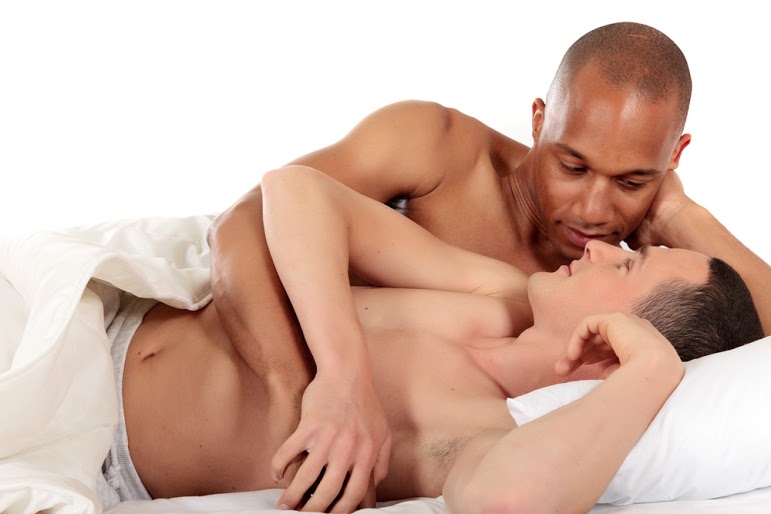
  • Lesson learnt from interracial same-sex relationship

    Lesson learnt from interracial same-sex relationship

    While we assume the world has become more open-minded toward interracial relationships, the racial tension in Ferguson seems to be reminding us that the issue of race is more complicated than we thought. Being in a same-sex relationship has not been easy in this hetero-dominant world, let alone complicate things further when looking at it from a racial perspective. As a gay man who is currently in a long-distance, interracial same-sex relationship, I have learned to sustain my relationship in a hard way. I’ve been glared at when I walked down Walnut Street in Center City Philadelphia with my African-American partner, and there were even incidents when a homeless lady cursed at our presence as we walked by. I have come to realize that learning how to handle disrespectful glares and curses is part of the lessons that come with an interracial same-sex relationship.

    Like most people, my interracial relationship kicks off with love at first sight when we met at a friend’s wedding. Then things developed so smoothly that I never thought about the sensitive fact of being in an interracial relationship. I only became conscious about it when my mom reacted dramatically after learning about my romance with an African-American partner. Her reaction simply reflects the prejudice and misunderstanding that has long been attached to racial issues, while representing the fundamental challenges interracial relationship often face. I began to notice the number of times when people showed signs of disagreement with regard to my interracial same-sex relationship. Their first reactions upon learning that I am dating an African-American man were shock, followed by moments of silence. Rarely have I received immediate positive responses from many of my friends.

    Soon after the honeymoon period, doubts started to creep into my head as I continued to feel judged by others. Thoughts of giving in to the social pressure was incubating and tensions between me and my boyfriend began to stem from our serious discussions about interracial relationships. While he made it clear that he would never give up what we’ve earned so easily, I showed signs of being skeptical about our “future.” As that sense of uncertainty grew stronger with my withering will to defend our relationship, I started to intentionally avoid direct contact with my boyfriend. For weeks, I denied all his attempts to get a hold on me, while struggling to determine whether an interracial relationship was right for me. I not only blamed myself for failing to uphold my personal goal of remaining racially neutral, but also had difficulty justifying the way I handled this extra-delicate situation.

    After being haunted by the confusion and growing sense of guilt toward my interracial relationship, I reached out to my boyfriend, hoping to work things out. To my surprise, he didn’t hesitate to welcome me back to his life with a big hug. While giving me time to explain what was previously going through my mind, he never failed to remind me of the amount of love, dedication and time that he is willing to devote to our interracial relationship. I finally understand that like other forms of relationships, interracial relationship is built upon mutual trust, love, and dedication. It only becomes more complicated when people choose to judge it from the racial perspective, which often times, can push things to the extreme. As one of the agents of this growing trend, I should never let racial issues get in the way of the pure creation of love and dedication between me and my boyfriend. It is only when I can comfortably recognize the fact that I am in a interracial relationship, should I regard myself as racially neutral. The element of race is a mere superficial difference in an interracial relationship and at the end of the day, the core of interracial relationship still belongs to the degree of mutual commitment from both parties.

    Have a story or opinion you wish to share on SimplySxy? Submit it here at http://simplysxy.com/submissions/


    Image courtesy of Shutterstock
    Join SimplySxy’s forum discussions now on Society
    Do not miss another article on SimplySxy!  Follow us on Facebook and Twitter for our latest updates!

  • How Gay are You? The question of finding your comfort zone as a gay man

    How Gay are You? The question of finding your comfort zone as a gay man

    For most gay men, the question of how gay they are may have never crossed their mind before. To them, the fact of being gay already makes them stand out among other groups in the society. They spend most of their time dealing with the incredible amount of attention around their sexuality and seldom have time to think through this simple but significant question to them. This question doesn’t just help identify different levels of gay, but more importantly, it pushes gay men to embrace their sexuality and identity as gays.

    The question of how gay you are often comes down to the degree of your acceptance toward your sexuality and identity. For those who are actively promoting equal rights for the LGBT community, it is no doubt that they belong to the level of “truly” gay. They are able to share their sexuality with the general public without fearing any backlash. They can confidently reveal their identity as gays in public and help unite others with their positive examples. Another group of gay men are less outspoken but still support LGBT rights in ways that help sustain the momentum. To me, they belong to the level of “supportive” gay. They may not be standing at the frontline of the parade, but their steady support represents their acceptance of who they really are and their commitment as members to defend the welfare of the LGBT community.

    There are also those who have the desire to be openly gay but are restrained by pressures from all aspects of their lives. They belong to the level of “vaguely” gay who are often forced to maintain a double identity in life. They will secretly seek any means to express their opinions, frustrations or feelings of being gay, but when they are openly confronted by questions regarding their sexuality, they will activate the self-defense system to avoid answering them. However, they are not the most unfortunate ones. There a group of gay men who are never able to accept the fact that they are gay, and forcing themselves into the heterosexual lifestyle which never fits with their true characters. They belong to the level of “confused” gay. In order to live a “normal” lifestyle, they will enter marriages and form families with women. But secretly, they still interact with gay men via all means of communication; dating websites, hookup apps or online chatrooms. This unhealthy lifestyle not only puts those who are with him at risk, but also sets up a vicious cycle of endless self-denial and struggle of finding a clear life-long path.

    Growing up as a gay man in Asia, I have lived through all stages of gay life, and have gone through confusion, self-denial, being outspoken and trying to find the balance in life. To me, there is no definite right or wrong of belonging to any of the four levels of gay, but ensuring that you can live the chosen lifestyle comfortably is important. While being gay is already not easy in this world, having to live a life that may never feel comfortable is an extra layer of torment. For any human, the last thing you want to do will be knowingly letting yourself suffer. It is the same for gay men. So friends, find your comfort zone and cheerfully live the life that you’ve chosen for yourself. Then being what level of gay will no longer matter much to you.


    Image courtesy of Shutterstock
    Join SimplySxy’s forum discussions now on Society
    Do not miss another article on SimplySxy!  Follow us on Facebook and Twitter for our latest updates!

  • Should I tell my date that I am Transgender?

    Should I tell my date that I am Transgender?

    When I first came out as transgender, it seemed really important to announce to everybody that I was male, not female. This was before I started my medical transition, so I was still being regarded as female even when I dressed in traditionally masculine clothing and sat the way most guys I knew sat rather than the way most women did. So there was no question in my mind that I was going to assert myself, because being invisible to the world just hurt too much.

    Now, though, most of the time I am automatically read as male. It still surprises me sometimes when people call me “Sir” because even after two years later, I am still not used to being seen as the gender I’ve identified with all my life. Since I’m living in a new city and starting to meet people, this brings up a lot of questions:

    Do they know I’m transgender?
    Do I tell them?
    Is it okay if I don’t tell them?

    This is something I see discussed a lot on transgender support forums online, often in the context of dating. More often than not, transgender men and women question if or when to tell someone they are dating that they are transgender. Similarly in the asexual community, people wonder if they really need to tell everyone they date—even the ones they never plan to see again—that they’re asexual. With online dating becoming more common, people also wonder whether they should mention their gender identity or sexual orientation in their online profiles.

    Before I had the luxury of being able to choose—that is, before people began seeing me the way I saw myself—I always assumed that I would tell anybody and everybody that I was transgender. I figured that I wouldn’t want to date someone who didn’t feel comfortable with people like me, so if I were rejected for it, it would be no big deal. I also mainly met people through online dating sites, thus I figured I could tell people from the safety of my own home and not have to worry about potential violence.

    It turns out that it’s not so easy in the real world. First of all, I find that my concerns about coming out aren’t limited to potential dating partners. Anybody I meet could potentially become a friend, close friend or more than friend, so I constantly have to decide when to disclose that I’m transgender. I do state on my social media profiles that I’m transgender, but not everyone reads that closely or notices it, so that’s not enough to ensure that people know.

    A couple of months ago, a new contact on Facebook started flirting with me and telling me he wanted to date me. I’m not one for jumping into the dating scene quickly, especially with people I don’t know in my day-to-day life, so I tried to let this person down gently by telling him that I’m asexual and don’t generally experience sexual attraction. A few days later, I got an email from him telling me I was a liar because I hadn’t told him I was transgender and accusing me of making up being asexual to avoid telling him the truth. I was honestly confused about this because it says on my Facebook profile that I’m transgender and includes a link to my Twitter handle, which identifies me as transgender. However, after I blocked this guy from contacting me again, I did some thinking.

    I think one of the reasons that there’s so much pressure and confusion about the issue of telling people about being transgender is that there’s this idea that if you don’t tell right away, you’re “lying.” You’re making people think you’re something you’re not. Specifically, you’re making people think you have sexual organs that you may not have.

    But here’s the thing. It’s not lying to say you’re male when you’re male or female when you’re female. It’s not lying to carry yourself in the world as the person you really are. Trans people aren’t trying to trick or deceive anyone; we’re not trying to make people who don’t want to have sex with someone whose sex organs match ours. We’re just trying to live in the world.

    I personally am proud of being transgender, and I don’t feel like I’m in any special danger of physical attack because of it. Some people don’t have that luxury, and so they have to be more careful who they tell. But for me, I decided that I don’t want to make such a big deal about this whole issue of telling. I feel like being transgender is just one part of who I am, and I want to treat it like any other fact about myself. As I get to know people, things about me come up naturally in conversation, and one of them is that I am transgender. I don’t want to force it or spend a lot of time thinking about how to tell. After all, I don’t spend a lot of time thinking about how to tell people any other fact about me or my life.

    So would I tell someone before I kiss them? Yes, if it hadn’t come up before. But chances are that it would have, since I personally only feel interested in being intimate with people whom I’ve created a strong emotional bond with.

    Relaxing about the whole disclosure thing is making it a lot easier for me to move through the world. Trying to figure out who knew and who didn’t and what to say was getting in the way of me socializing at all. For me, transitioning has been all about freeing myself from a self-imposed prison, so pressuring myself about whether or not to come out just puts me right back where I started. I’d rather be free to be myself and let my coming out, or not, happen naturally.


    Image courtesy of Shutterstock
    Join SimplySxy’s forum discussions now on Society
    Do not miss another article on SimplySxy!  Follow us on Facebook and Twitter for our latest updates!

  • Cisgenderfluid

    Cisgenderfluid

    “How do you identify?”

    That’s often a tough question for me to answer. As a general rule, I’ve shifted away from identifying as anything because I’ve found that when I do, it can be hard to let go of that self-identity when things change. In my experience, life brings lots of surprises that are difficult enough to navigate without adding the challenges of changing an identity. When I hear people say things like “I can’t be attracted to that person. I’m straight/gay/queer/lesbian/kinky/vanilla/etc.” I see how their identity crisis is complicating their situation and I try to avoid setting myself up like that.

    At the same time, there are words that I sometimes use to describe myself because they convey some useful information. Some of them are: queer, kinky, poly, able-bodied, white, Jewish, pagan, atheist, male, and cisgender. But many of these have been mutable over time.

    In the last couple of years, I’ve been playing more with gender. I’ve always run a lot of yin energy and I’ve had a lot of fun exploring how that plays out in my life. On an energetic level, I feel very balanced between male and female and I like how that works for me. At the same time, using words like “genderfluid” to describe myself hasn’t felt accurate. I’ve called myself cisgender because it seems to accurately describe my baseline. I’m very present in my masculine body and in being a man. I’m also very aware of how I move through the world and that I receive the privilege that cisgender folks accrue. I know that receiving cisgender privilege feels like a misgendering to some people, but it doesn’t feel like that to me (even while I resent living in a world that gives me that privilege while denying it to so many others). I don’t experience tension or conflict between how I feel physically and how I feel energetically and emotionally, and I don’t think that transgender fits how I feel. So how do I describe myself when I’m simultaneously a cisgender man and genderfluid?

    Obviously, by creating a new word: cisgenderfluid. It honors the cisgender aspects of my life while making room for the gender-creative parts of my psyche and my life. It acknowledges that I don’t face the same challenges that most trans and other gender-transgressive folks do, and recognizes that I don’t fit into the standard box of masculinity. It gives me the freedom to play with gender and to queer it, and it provides a foundation on which to stand. It makes room for the fact that my baseline is cisgender while creating space for me to step away from that when I feel like it. It expands the conversation about gender in some ways that I really enjoy and it recognizes that I often occupy the space of both.

    I’ve been talking with friends about this over the last few weeks and the more I have done so, the more this word feels like a good description for where I am at this moment in my life. I think there’s a lot of room here to play in and I’m going to check it out for a while. And if you’re curious about these terrains or if you think you might want to explore them, I invite you to come and join me.


    This article has been republished with permission from Charlie Glickman. Please visit Charlie Glickman’s website  to view original post and more of Charlie’s works.


    Image courtesy of Shutterstock
    Join SimplySxy’s forum discussions now on Society
    Do not miss another article on SimplySxy!  Follow us on Facebook and Twitter for our latest updates!

  • Do You Have HIV Stigmatic Parents? Tips to Deal with Them

    Do You Have HIV Stigmatic Parents? Tips to Deal with Them

    As a millennial gay man, I live in an era when HIV no longer seems to be as lethal as it first started plaguing this world. We learn about new ways to prevent the spread of the virus periodically, and we seem to be getting ever closer toward owning the cure that can perhaps eradicate the virus once and for all. However, absurd beliefs in protecting gay men from HIV still exist in many culture and some parts of the world. In some cases, including my own, they are suggestions from concerned parents who desperately want their kids to stay away from the virus. But their intense reaction often creates unnecessary misunderstandings and barriers between them and us.

    In a previous op-ed written for The Advocate, I detailed my coming out process and how that creates tension between me and my parents. From then on, topics about my sexuality became a taboo at our household, at least between me and my parents. We respected each other enough that we didn’t mention a word about it for months until this March. On the eve before I joined the military, my dad invited me to sit down for a serious conversation. While I was wondering what the conversation might be about, I could tell from his serious manner that it had something to do with my sexuality. He proceeded by asking how had I been dealing with my own sexuality “issues,” and then he told me how much they were still bothered by simply trying to talk about it among themselves. He went on to tell me the last thing he and my mom wanted to see was me being in a romantic relationship with a guy because they believed that increases my possibility of contracting HIV. While he kept explaining how hard they knew it was for me, I couldn’t stop wondering how much had they fallen victim to the stigmatic ideology surrounding both homosexuality and HIV from their era.

    To them, any romantic or sexual combination of two men will automatically increase the risk of them becoming HIV positive. Naturally, they believe that for me to remain single and to avoid being romantically engage with other gay men are the best protection against HIV. What they fail to do is trying to gain more direct understanding about the LGBT culture and the latest medical development about HIV. They choose to apply their decades-old understanding of the LGBT community and HIV to the current situation, which eventually becomes the barrier between them and me. As parents, their concerns are often stemmed from the nurturing nature, but that often prevents them from putting themselves in our shoes. Their concerns often limit their perspective to view things, and sometimes push them into an unbreakable deadlock.

    While I know it is important to defend my right to love and be loved, I never give up the hope of changing my parents’ views about HIV and homosexuality. But just like the fight to end HIV stigma, this should be handled slowly and with extra care. Change never comes without a fight, and to bring them from one end of the spectrum to another requires lots of patience and dedication.


    Image courtesy of Shutterstock
    Join SimplySxy’s forum discussions now on Society
    Do not miss another article on SimplySxy!  Follow us on Facebook and Twitter for our latest updates!

  • Being a Gay Franciscan

    Being a Gay Franciscan

    What do I mean by Gay Franciscan? Well I am a Franciscan Brother, who is and was born gay, or to quote Lady Gaga, ‘baby I was born that way!’ Yet I am not a Priest or Brother of the First order, or unless I have had a sex change become a member of the Second order, the Poor Clare’s or Poor Ladies.

    No I am a Secular Franciscan, a Tertiary, a member of the Third order of St Francis of Assisi who is our seraphic founding father, yet he himself was a deacon. Our patrons Saints, along with Francis and Clare are:

    GLORIOUS PAST

    Since Francis’ time the Order Franciscan Secular (OFS) has many members. Through nearly eight centuries it has continued to prosper, bringing untold blessings to the Church and society. It has been fruitful in much personal holiness, and many Secular Franciscans have been beatified and canonised in recognition of their outstanding holiness.

    They came from all walks of life: St Elizabeth [queen of Hungary] and St Louis [king of France] are patrons of the OFS; nine popes have been Secular Franciscans; household names like Columbus, Thomas More, Copernicus, Bernadette,, Dante, and the less well known like John Bradburne and Margaret of Cortona were all members.

    SECULAR FRANCISCAN ORDER (OFS)

    Saint Francis of Assisi left us “a Dream to dream and a Journey to challenge everyone”. All Franciscans are inspired by him to follow Christ. The Secular Franciscan Order belongs to this family. In their secular state, members permanently commit themselves to live the Gospel as Francis did, following his Rule approved by the Pope. The OFS is open to the laity and diocesan clergy.

    There are more than 850 Secular Franciscans in Great Britain. Gathering in fraternities, they strive to grow in the love of God and in peace with each other. In this way, they aspire to be faithful Disciples of Christ. (Taken from website www.ofsgb.org.uk/)

    Now ok, I hear you thinking what has any of this to do with us or our sexuality? Well the fact that I, Br Anthony James Francis Mantova S.F.O. is and always have been gay, and peace and the rainbow flag. St Francis wrote a beautiful prayer that is now also a much loved hymn entitled ‘(Lord) Make me an instrument/a channel of your peace!’

    Which is a fitting hymn for all of humanity, but St Francis is also the patron Saint of Humanity and humanitarian aid, efforts and conflicts, of nature, animals, life people and plants to name a few, St Clare Communications and Multimedia and Television.

    The rainbow flag or peace flag, as well as being associated with the LGBT community worldwide, it is also there for Greenpeace, NATO and the United Nations and anyone who wants world peace and in the past I have seen PEACE flags with the St Francis logo, so I believe this is why our community has adopted the flag as its own.

    Yet peace belongs to all of us, and so fitting that I am both gay and Franciscan, many in the church not just the Franciscan family are gay, yes priest, brothers, sisters, yet they have chosen to hide away and devote their love to god rather than each other.

    Now this by no great hardship and slowly the church is accepting that we are a part of humanity, the same humanity, Our Lord Jesus was born into. The feast of Saints Anne and Joachim, the parents of Our Blessed mother Mary is held each year on the 26th July, these are in fact his holy grandparents, and should be praised.

    When I was younger, back in Liver for almost 30 years I was in the parish of St Sebastian Fairfield, and attended the Roman Catholic Primary school, attached to it. During my time I met many Franciscans of the various orders, and today the Order of Friars Minor Conventual can be found running St Anthony of Padua’s RC Church in Queens Drive, and nearby at the OFM Cap in Pantasaph, where the famous singing fundraising priest Fr Francis Maple OFM Cap can be found.

    The Cap is short for Capuchin, and they are so called because of there long hoods, that reminds people of the Capuchin monkeys. It was on of these priests/Brothers who invented the frothy hooded coffee, that we enjoy today know simply as cappuccino. So why and how are the Franciscans important to any of us?

    Well if it wasn’t for St Francis we wouldn’t have the order, and without the order, we wouldn’t have some of the gadgets and gizmos we have today. It was St Anthony of Padua with St Bonaventura, who established THE FIRST University in Bologna, Italy in the 1300s.

    So I am proud to be a Franciscan, and yes also gay; neither affects the other negatively, in fact they are helpful to each other, in understanding who we are. While there are many things to do and consider before becoming a true Franciscan, but if you love people, life, nature, animals, devote a little time to Payer and want peace both here and now and in the future, then are you not already living a form of Franciscan life.

    Lord make me a channel of your peace in this world and in the next.

    Amen


    Image courtesy of Shutterstock
    Join SimplySxy’s forum discussions now on Society
    Do not miss another article on SimplySxy!  Follow us on Facebook and Twitter for our latest updates!

  • If you are Homophobe, can I call you Gay?

    If you are Homophobe, can I call you Gay?

    Let us imagine a person being born, ages and chooses to and die in, let’s say, Jakarta. For me, this automatically brings up the question of how the system of alternative moral is fabricated because it is in itself, a complicated process as there exists conflicting morals. That’s why an individual who deviates from a rule agreed on by a group is considered an outsider as stated by Howard Becker and when he/she violates the existing norms, he/she is considered a deviant and hence, regarded as a foreigner in the group.

    Being an outsider is a result of normalised norms. Let’s put the norm as a simple definition as a set of regulations established within the community. Hence, in every interaction, we are bound to find some indications of norms in it. But the norm is not “given”. In a world filled with social constructions, the norm then becomes a social construction that is produced from the interactions between human beings which eventually ends up as a moral as these are furthered reinforced. This is prevalent in the instance of LGBTs who are subjected to an established norm that essentially discriminates them as the outsider. For example, the norm of the accepted sexual relation is only between men and women; due to the ability of this union for procreation, while gays, lesbians and transgenders are considered unacceptable and deviant sexual relations because these only exist for the sake of recreation.

    “The sodomite had been a temporary aberration; the homosexual was now a species,” as famously said by the French philosopher, Michael Foucault. This means that the strong regulation about relations of this nature is constructed by the community and helped by the institution and religion. LGBTs in Indonesia are of course, living in a homophobic society.

    Homophobia is generally described as a hostile or feared outlook on one’s sexual orientation due to the other male or female being attracted to one of the same sex and the term attributed to such attitude has been re-coined on several instances: Homosexphobia in 1974, Homosexism in 1976, and Homonegativism in 1980 before the now commonly used Homophobia. In today’s context, homophobia is the fear of the feminine qualities in a man, hence it reinforces some stigmatizations of homosexuals in a heterosexual world. Why the immense negative stigma associated with the term homosexual?

    Historically, under the ancien regime, sodomy was prohibited for religious reasons. It’s called the “silent sin” or “abominable vice”. A sodomy referred to a series of sexual acts considered sins, which included masturbation, oral sex, anal sex, bestiality; in a word, all sexual practices that do not have the goal of procreation. Due to misinterpretation of sodomy being “against nature”, the word “homosexual” thus has a rather negative connotation; in both medical and pathology. Many of the LGBT groups are strongly rejecting the word “homosexual” although the Psychiatric Association of the United States has removed “homosexuality” from its list of mental illnesses in 1973. This was subsequently followed by the World Health Organisation in 1993 and also by the Japanese and Chinese Psychiatric Association in 1995 and 2001.

    If you are a homophobe, do you mind if I change the term to gay?

    The story began with the great gay liberation which took place beginning from the 60’s. The catalyst was a gay confrontation with the police in Christopher Street in Greenwich Village, New York, June 1969. Thereafter, the use of the term “gay” begun. The adoption of this term, served to at least remove the term “homosexuality” as a medical term, and at the same time indicate a more neutral tone and has a connotation of “pride”. But etymologically, what is “gay” exactly?

    “Gay” is a term that describes same-sex attractions felt by both men and women; however some women prefer the term lesbian. The word “gay” first crossed the gender/sex threshold in England during the 16th century, when it was applied to male actors who were cast into female character roles. During the 19th century, Europeans associated the term with heterosexual promiscuity; however it did not cross into sexually diverse communities until much later. As such, “gay” projected an impression of perversity. In the early 20th century, American men and women experiencing same-sex attractions became the first to identify themselves as “gay”, preferring it to the word “homosexual”, a term used primarily by mental health professionals.

    Thus being gay is a matter of being comfortable with oneself; emotionally and physically, as opposed to the term “homosexual” which was considered merely physical. In this case, the term “gay” and “homosexual” are differentiated between sexuality as a practice and as a way of life. Being “gay” is about having a commitment to one’s identity, as in “I’m gay”, “This is who I am” and “This is what I label myself”.

    In the academic world, at present, there appears the study of gay and lesbian, which is dedicated to a study of gay and lesbian, in particular to its history, its nature or sociological evolvement.

    In Indonesia, an attempt to neutralize this term has not yet been extended to the public. As it remains limited to academicians working in the field of LGBT, Sexuality and gender, and language specialist or linguist working in the areas of LGBT literature. Unfortunately, there are still many countries that question the term “gay” as it not only sounds pompous but also creates a certain minority group in society’s structure of hierarchy.

    Thus from the evolvement of the term “homosexual” to “gay” and eventually “queer”, what can we do to give the peoples of LGBT freedom of speech in all aspects? What should they do next?


    Image courtesy of Shutterstock
    Join SimplySxy’s forum discussions now on Society
    Do not miss another article on SimplySxy!  Follow us on Facebook and Twitter for our latest updates!


  • No Wedding For Me!!!!

    No Wedding For Me!!!!

    Decades ago, when it became clear I was more gay than not, there came a peculiar realization not long afterwards that I would never have a wedding. I would never have a bride in a white dress, never have a rowdy, disgusting bachelor party with all my best friends from high school and college, never make my mother Truly Happy; my sister would never have any nephews or nieces, (and neither would I, in fact, because my sister is a dyke and addressing most of the same issues as I was, at about the same time.) I would never have to worry about whether the ceremony should be in a church or a temple, never have to decide whether or not to simply elope and keep the money, never have to worry about the colors of the bridesmaids’ dresses. I wouldn’t have the biggest worry of all, which is if she will really want me AFTER the first night. Given all that, I pretty much just put it out of my mind.

    Every once in a while, when I was invited to a friend’s wedding, and when I had bought wedding gifts for almost everyone I had ever known, many of them for the second or the third time, there came a little pang of regret that THEY will never be buying a wedding gift for me. And then later on, when they had children, I bought silver spoons or baby clothes for them because it was obvious that I would never be buying them for my OWN children. And then, if you’re like me, you remember all those weddings you attended. The first ones, when you were small, and how bizarre they were, with everyone dressed up and stressed out, and how they made you wear a coat and tie, which made you feel very adult and capable of sampling everyone’s alcoholic drinks when they weren’t paying attention.

    When I was in grammar school, my mother used to rent out a spare room to “college girls” for extra income. I found it embarrassing but was unable to change the situation. These girls were attending Sacramento Junior College, to learn cosmetology or find a boyfriend, or, if they were extremely lucky, both. Many of them came from farms in the Central Valley, and they were called Vargas, or Diaz, or Ramos. A particularly lively girl, despite her triste-sounding name, Dolores Ramos, was one of my mother’s favorites, and after she graduated from the College and returned to the farmlands, she and my mother stayed in touch. When Dolores decided to marry, there was a major celebratory event and in addition to a large Catholic church wedding, an enormous Portuguese banquet took place in the local grange hall. An ethnic band played non-stop, there were endless tables of food, multiple bars, dancing and major consumption of alcohol long into the night. I drank too many leftover cocktails and found myself tipsy for the first time, which was extremely enjoyable.

    There followed Jewish weddings, Protestant weddings, even a couple of Baptist weddings, which were less amusing than the Portuguese weddings, even from my then child’s point of view at that time. Subsequently, I attended formal weddings, indoor weddings, hippie weddings in the California Redwood Groves, casual weddings, even a couple of last-minute, Nevada shotgun weddings. The thing about all these weddings was that there was always a bride and a groom, no matter what the composition of the families involved, and each and every time I got through a service and a party, I thought: “Damn, it’s too bad I’ll never have one of these.”

  • How might Truvada change gay men’s sex practices?

    How might Truvada change gay men’s sex practices?

    Ever since the FDA approved the preventative use of Truvada in 2012, HIV experts started worrying about the possible resurgence of an unpleasant trend among gay men in the United States: the abandonment of condom use and safe sex awareness.  For many gay men in the United States, Truvada is a panacea that gives them the green light to enjoy the long-lost intimacy and pleasure derived from unprotected sex. However, for HIV advocates and researchers, the emergence of Truvada is directly challenging the safe sex practice that they have established through decades of campaigning. The clash between Truvada and condom use is inevitable, but what they are really concern about, is the perpetual erosion of safe sex awareness among gay men.

    While Truvada claims a 96 to 99 percent’s HIV prevention rate for healthy individuals who take the antiretroviral drug regularly, many gay men often misuse it as a short-term prevention before embarking a sexual adventure. The growing prevalence of Truvada has divided society into two rivaling camps: pro-PrEP and anti-PrEP. Those supporting it emphasize its function as an extra layer of safety net that can either strengthen the effectiveness of condom use or simply have better effect than the “traditional” safe sex practice. As for those opposing it, the drug not only has harmful side effects even on healthy individuals, but is also often abused by many who thought they have become immune to the HIV virus after taking Truvada for only a few times. This pretty much explains why Truvada remains controversial even among health professionals.

    I have been confronted by questions asking me whether Truvada will change the landscape of sex practices among gay men and even until today, I still can’t come up with a convincing answer. Personally, I think the drug comes into the picture at a time when we are witnessing a shift in the public’s attitude and view toward HIV and AIDS. We are becoming more open-minded and less judgmental toward people living with the virus, thanks to advocates and experts who are determined to brush aside the phobia surrounding it previously. I do believe that Truvada, if used properly, can strengthen the ever-improving effort to combat HIV. But before that really happens, we need to first work on blending it into the existing “healthy” sex practices. Its emergence is never meant to destroy the well-established norm of condom use and safe sex awareness. However, many of our peers overlook Truvada’s preventative ability and abuse the “convenience” that is promised by the drug. What they don’t know is their negligence to the drugs correct usage does nothing to contain the virus. Instead, they might help to create a new type of “superbug” that can be resistant to Truvada.

    For now, all of us simply need to remember that Truvada is effective only for healthy individuals who take it regularly and even when you are a regular prescriber, it never means that unprotected sex with numerous strangers is acceptable. Condom use and safe sex awareness will remain the cornerstone of our combat against HIV. In addition, since Truvada remains pricey for the general public, the use of condom should continue to be the more affordable option for all of us. Ultimately, Truvada’s emergence should be the add-on benefit for our sex practices, not a threat of any kind.

    Image courtesy of Shutterstock
    Join SimplySxy’s forum discussions now on Society
    Do not miss another article on SimplySxy!  Follow us on Facebook and Twitter for our latest updates!