Author: William

  • Why The Worship Of Heterosexual Masculinity Is Endangering The Gay Community

    Why The Worship Of Heterosexual Masculinity Is Endangering The Gay Community

    In case you haven’t noticed, the gay community is currently facing a severe identity crisis that can forever change its face and value. The once highly celebrated diversity in the community is now replaced by the worship of heterosexual masculinity. More people, including some of my friends and myself, are feeling marginalized more than ever because they don’t fit into the criteria of heterosexual masculinity. Everywhere you check, be on the dating apps, streets, gay neighborhoods or bars, it’s not hard to see that the value and ideality of masculinity has become so entrenched within the gay community that we, gay people, are drifting further away from who we once were as a community.

    In a recent conversation with a friend, we shared our personal experiences of being labeled as “too feminine” or “not attractive” because of the things we do or even the food we choose. During his trip to Thailand, Danny was accused of being sissy and girly by a friend simply because he ordered the popular Unicorn Frappucino from Starbucks and posted a picture of him sipping the pink beverage on Instagram. When he offered to let the friend try the drink, the “straight-acting” friend rejected him by saying “I don’t drink sissy stuff like this.” While Danny isn’t traumatized by this particular incident, it does reflect a worrying phenomenon that’s taking over the gay community by storm: the worship of heterosexual masculinity and the rejection of respecting diversity.

    If you don’t find Danny’s incident convincing enough, try to open Grindr or Hornet on your phone and browse through a few profiles. What you can easily see are people openly saying they are “straight-acting” and prefer guys that are the same. Some go even further by outright stating their preferences, such as “masculine only” or “No fem.” If you happen to have a slimmer figure or more gender-neutral interests, chances are you most likely won’t get too much response on the apps. In real life, the popular trend of building up muscles and looking buff is adopted by many gay men, and considered by many as the way to maintain their attractiveness. The reason behind it can be multi-faceted, but one thing for sure is all these behaviors reflect the wish of being accepted or considered normal by the heterosexual community. However, my question is, why do gay men still want to work so hard to fit the heterosexual standard?

    In my opinion, these tendencies are not only selling ourselves very short, but also hurting our own kinds more than anything else. When we no longer celebrate diversity, which has long been the core value of our community, and try so hard to impose the heterosexual standards on fellow gay men, we are normalizing the discrimination that our community once felt. The worship of heterosexual masculinity is also helping to discredit the theme of diversity that we have been championing in LGBTQ movements worldwide. And if you really think about it, does the adoption of heterosexual masculinity help to stop those who used to discriminate us from shaming us? I don’t think so. Instead, it is weakening the community’s strength as a whole, and inflicting deep yet invisible wounds internally.

    So if you have rejected a fellow gay man because he likes pink drinks or enjoys sewing, please stop for a moment and try to imagine how you would feel if your heterosexual colleague discriminated you simply because you are gay. If you don’t want to go through that traumatic experience again, then try not to judge other gay men only because they are not masculine. And remember, diversity will always be in our gay DNA.


    William is a freelance writer and photographer based in Taiwan, with tremendous passion for human rights and storytelling. He holds a Master of Journalism degree from Temple University, and has extensive experiences interning at global NGOs such as Human Rights Watch and Mercy Corps. Contact William via email at wy30611@gmail.com


    Featured image courtesy of Shutterstock

    Like to be featured on SimplySxy? Drop us an email at editorial@SimplySxy.com!

  • Let’s Connect: TIQFF 2016 Aims To Establish Sustainable Connection Through Queer Films

    Let’s Connect: TIQFF 2016 Aims To Establish Sustainable Connection Through Queer Films

    October has always been a busy month for the LGBTQ community in Taiwan, and 2016 is no exception. With Taipei LGBTQ Pride Parade scheduled to take place on October 29, the island nation, dubbed one of the most LGBT friendly countries in Asia, is also expecting a series of LGBTQ events leading up to the final climax. Jay Lin is the man behind the series of exciting LGBTQ events that aim to bring the Taiwanese LGBTQ community closer and further connect it to the rest of the world.

    Into its 3rd year, the Taiwan International Queer Film Festival (TIQFF) is back with a whole new theme and vision: Let’s Connect. He wants to connect individuals in the LGBTQ community with each other, and it will be at a global scale.

    “The goal of TIQFF is to bring diverse and engaging stories of the queer experience to Taiwan, and to allow the audience to create authentic connections with the movies, and, even more so, with each other,” said Lin.

    14466421_10153704901045566_845829592_o

    He has also been endeavoring to build connections with numerous film festivals around the world. The formation of the Asia Pacific Queer Film Festival Alliance (APQFFA) in 2015 is one example. The alliance brings together existing queer film festivals in Asia and established formal ties between all of them. Additionally, Lin was invited to be a juror at the 30th Teddy Awards of the Berlinale earlier this year. The experience inspires him to connect the two film festivals by introducing several award winning films from the 30th Teddy at this year’s TIQFF.

    “We will continue to connect with festivals worldwide, as well as fortify the relationships within the Asia Pacific Queer Film Festival Alliance,” said Lin.

    The list of award winning films that will be screened at TIQFF 2016 include winner of the Best Feature Film, TOMCAT, winner of the Special Jury Award, You’ll Never Be Alone, winner of the Best Documentary/Essay Film, Kiki, winner of the Best Short Film, Moms on Fire, and winner of the Audience Award, Paris 05:59. Additionally, several of the nominated films and Berlinale shorts will also be screened at TIQFF 2016. Apart from film screening, TIQFF will also organize 3 international filmmakers’ panels for the public to attend and gain more insight about the current state of LGBTQ film production.

    After three years of organizing TIQFF, Lin realizes that he wants to expand the scope of the festival so more people can experience it. This leads to the establishment of the first LGBTQ awards ceremony in Taiwan: Queermosa, which “celebrates the LGBTQ progress taking place in Taiwan.” Lin hopes to continuously promote positive portrayal of the LGBTQ community in media while cultivating positive changes in society. He believes that this needs to be achieved by incorporating efforts from other communities.

    At the inaugural Queermosa, 10 awards will be presented to celebrities, businesses and artworks that have contributed to the advancement of LGBTQ rights in Taiwan. The ceremony will take place on October 28 at the W Hotel in Taipei. For more information, including purchasing tickets, please click here. If you want to learn more about TIQFF 2016, please click here.


    Featured image courtesy of TIQFF
    Have an amazing experience or tips you like to share on SimplySxy? Drop us an email at editorial@SimplySxy.com!

  • Behind The Scene: How Does Vlogging Help Gay Porn Stars To Truly Be Themselves

    Behind The Scene: How Does Vlogging Help Gay Porn Stars To Truly Be Themselves

    What might be your general reaction when someone tells you that they do porn for a living? Over half of the time, the reaction could be negative. After all, the porn industry has long been regarded as a source of negative social impact. Too much misunderstanding has been associated with its impact on the overall well-being of society, youth and the entire population that the general public can hardly gain any meaningful and objective insights of the industry itself. However, that might be about to change with some gay porn stars beginning to embrace vlogging as a way to introduce their true selves to the world.

    Unlike most professions, being a porn star is often a lonely choice because behind the glamorous on-screen performances, porn stars can hardly talk to people about their work lives. Most of the time, people frown upon the idea of doing porn for a living, so porn stars usually don’t even bother to share their professional lives with people, including those around them. However, vlogging opens a new channel for them to talk about their lives and feelings without having to face the awkward or disgusted reaction from people that disapprove their identities as porn stars. Vlogging allows porn stars to achieve something mutually beneficial to themselves and the general public: an outlet to share their feelings and a way to gradually help the outside world learn anything about them.

    In case you are looking for an example, you can check out the popular gay porn star, Rustin Low’s one year vlogging anniversary video. It can give you a pretty good idea about vlogging, the motivation behind it and how it really helps porn stars. And if you wonder why I spend time to write about this topic, I will tell you it is all about respect and compassion. As human beings, regardless of your sexuality, we have all benefited from the existence of porn in some ways. It satisfies certain aspects of our needs, and in some cases, it fulfills our fantasies about sex. However, we seldom pay respect to those who make porn possible, and what’s worse is we often judge them for performing in those videos that we watch to pleasure ourselves.

    To do these porn stars some justice, I hope to help open a window for the world to learn a bit more about them and their daily lives. After all, every group deserves some respect, love and appreciation for what they do and contribute to the world. If being a porn star is a crime, then those who have ever watched porn should be judged as much as the porn stars do. Rather than judging, we should appreciate their courage and show some respect and support that they deserve. Then hopefully one day, porn stars can openly discuss their jobs with people without having to worry about any backlash.


    Featured image courtesy of Shutterstock
    Have an amazing experience or tips you like to share on SimplySxy? Drop us an email at editorial@SimplySxy.com!

  • How two Chinese photographers shed lights on homosexuality in China through their lens?

    How two Chinese photographers shed lights on homosexuality in China through their lens?

    Homosexuality has been a social taboo in China for decades, and even as situations are improving elsewhere in the world, China’s homosexual community remains mostly hidden from mainstream society. However, two Chinese photographers, Masa and Mojo decide to end this decades-long silence and reveal the everyday lives of 48 gays, lesbians and their families through their lens. They spent six months and visited 11 Chinese cities to complete their documentary, “A Straight Journey: days and nights in their kingdom.” This is the first cinematic work of any kind that focuses on the lives of Chinese homosexuals.

    It all started with their initial idea of shooting portraits of homosexuals in China. Their routine chats with each subject before the shoot ignited their interest in documenting the meaningful exchanges. They realized that there is still a huge gap between heterosexual and homosexual communities. Homosexuals always hope to be understood and treated equal, but very few of them have the courage to reveal their homosexual identities. This often prevents others to understand their situation fully. On the other hand, heterosexuals always think they know their homosexual peers well, but in fact, mainstream society’s understanding of homosexuality is still stereotypical. Stereotypes like “homosexuals have good sense of fashion” or “homosexuality is a disease and it should remain discreet” are all false understandings acquired from distorted media reports or subjective reasoning.

    They think Chinese homosexuals have a better living environment comparing to peers in many other countries. In the United States, while public understanding and discussion about homosexuality is sufficient, there are still certain religions that are anti-homosexual and hate crimes are still quite common. However, the gap between the two sides in China remains due to the fact that most heterosexuals have never met homosexuals that are out in public. As a result, their project looked for homosexuals that were willing to be identified in front of the camera. In other words, they are using actual human faces to replace the homosexual tag that has long been used in China. Instead of forcefully educating others the right way to treat homosexuals, they simply want to present real homosexuals to the rest of society. They want to reduce the fear and refusal stemmed from the lack of understanding through the project.

    To them, the advancement of Internet technology has positioned Chinese homosexuals at the crossroad of “day” and “night.”

    “Situations have changed dramatically in the past five years,” said Masa and Mojo in an e-mail interview. “Some of them are still in the dark while others have chosen lives under the sun. It is a stage full of stories.”

    As photographers, they hope to generate more rational discussions and attract attention for homosexuality in China. Instead of reaching consensus, they rather help Chinese people to think about this question and realize that this is a significant question. It is a very basic but important step. They think that letting the homosexual community appear positively in media is also an important influence.

    However, things were not always smooth-sailing during the shooting process. They had a hard time finding suitable subjects, and they had no financial support during the six-month trip.

    “We often had to sleep on different sofas,” said Masa and Mojo. “We were unable to find the best balance and we struggled to deliver the best quality shots throughout the process.”

    But the result redeems all their sacrifices. The film’s achievement is beyond their imagination. They successfully shared the stories of 48 homosexuals with millions of Chinese people, but they believe the topic of homosexuality remains complicated that it will be hard to initiate deeper discussion on a larger scale.

    When asked about their thoughts on gay rights movement and marriage equality in China, they expressed optimism. They think since the homosexual culture has become more vibrant and open, the younger generation can soon make history in China. Additionally, the global wave of marriage equality is also gradually influencing China’s tradition. In a way, China is adapting to a more openminded era and they believe that positive changes will occur soon.

    The duo didn’t dwell on their historic achievement for too long as they have began shooting and editing their next documentary, which features one of the characters in “A Straight Journey.”

    (To have a peek into Masa and Mojo’s 2015 ShanghaiPRIDE winning film, please refer to it here.)


    Image courtesy of actipedia.org
    Have an amazing experience or tips you like to share on SimplySxy?  Drop us an email at editorial@SimplySxy.com!

  • US Supreme Court Legalize Same-Sex Marriage for all 50 States. What does it mean to Asians?

    US Supreme Court Legalize Same-Sex Marriage for all 50 States. What does it mean to Asians?

    June 26, 2015 will forever be a memorable day in history for millions of LGBT individuals in the U.S., as its Supreme Court announced the decision to legalize same-sex marriage nationwide. The news comes as a huge victory for the decades long gay rights movement, and it also marks the beginning of a more equal American society. However, many of you might wonder what does it mean to be a non-American like me.

    First and foremost, it is simply exciting to see the seed of marriage equality blossoms anywhere in the world, since this growing trend will help diminish opposing forces in the rest of the world. And for gay men like me who spent an extensive period of adulthood in the states, we know how far their gay rights activists have gone to finally claim this historical victory. The United States is never the iconic LGBT friendly country in the world, as it possesses a sizable amount of anti-gay population. Plus their LGBT individuals are also no strangers to hate crimes or discrimination that comes in all kinds of forms. As a result, today’s announcement not only guarantees American same-sex couples a better future, it also helps to level the playing field for LGBT individuals. They can enjoy a more equal status in front of law, and they can ensure their partnership is recognized in public.

    This gives us, non-Americans, hope to aspire for a similar future in our own Asian countries. Their experiences can let us know which is the right path to take, and also help us avoid getting into similar troubles. More importantly, it ensures our activists that the eventual success comes after countless attempts and decades of endeavor. If marriage equality can be achieved without struggles, then it may never last long. The process is for us to settle our differences and crystalize the central value of marriage equality. The American experience tells us that even in an almost evenly divided court room, the voice of justice always sounds louder to those who may be swinging between two sides. As long as we put in the work and remain patient, then one day, it can be our turn to celebrate.

    So to all gay and lesbian friends back in the states, thank you for showing me your courage and determination. It is the belief in marriage that helps to legalize marriage equality in the United States. As for my fellow non-American gay rights activists, their success is paving the way for our success, as we continue to prepare for the right moment to shine. Only if we believe we deserve it, then we will be granted the equality that we are all yearning for.


    Image courtesy of Shutterstock
    Have an amazing experience or tips you like to share on SimplySxy?  Drop us an email at editorial@SimplySxy.com!

  • ShanghaiPRIDE 2015 promotes LGBTQ movement through its inaugural Film Festival

    ShanghaiPRIDE 2015 promotes LGBTQ movement through its inaugural Film Festival

    This weekend, ShanghaiPRIDE will present their inaugural ShanghaiPRIDE Film Festival to celebrate the 7th year of its event. While supporting cultural events has always been the trademark of ShanghaiPRIDE, this year’s festival will be the first full-fledged film festival for ShanghaiPRIDE. According to Matthew Baren, the festival coordinator of ShanghaiPRIDE, film is significant to the LGBTQ movement globally, and Chinese queer film makers has often been the leaders in advancing equality and visibility. This belief pushes ShanghaiPRIDE to become part of this growing force.

    manda (800x533)

    The inaugural festival includes a features program themed around the idea of “Queer Family”. Films in this category explore how LGBTQ people reinterpret the traditional idea of family, find love, raise children and form community through the process. The festival also includes a short films’ program that raises the profile of Chinese queer experience. They hope to help assist Chinese queer experience through cinema and raise the visibility of emerging Chinese filmmakers.

    Among all the featured films, a documentary called “Lesbians Marry Gay Men” that talks about contract marriages for lesbians in northern China is highlighted by the organizers. The director adopts an honest and humorous way to showcase a hidden but fairly common lifestyle among Chinese queer women in rural areas. Women receive lots of representation at this year’s film festival, but the festival maintains its versatility by showcasing stories of all ages, background, genders and sexualities across the Chinese world. Additionally, there are films from Europe, Pacific Islands, and North America that will be showcased throughout the festival.

    As a fully volunteer-based event, it has not been an easy path for staff of ShanghaiPRIDE to organize this year’s events. However, the domestic and international joint efforts from different NGOs and filmmakers have helped to fulfill this year’s ShanghaiPRIDE. They have been hosting a monthly queer cinematic event called CINEMQ since January 2015. It helps the team to secure a sizable local and international fan base. As the first queer cinematic event in Shanghai, the staff expresses optimism about the upcoming film festival.

    “There isn’t really anything like this in Shanghai at the moment, and people seem to want it,” said Matthew Baren.

    smaller (800x533)

    Aside from film screening, the film festival also offers workshops, talks, Q&A sessions and parties for participants. Those who are interested can start downloading a full digital program from www.shpride.com/film and on social media starting June 7. This year’s keynote talk “Queer Cinema and China” invites several key figures to offer their insights into the queer film scene, the culture, the market, debates about the past and future, and advice for aspiring and emerging filmmakers.

    With the slogan championing “Love Is Our Future,” ShanghaiPRIDE hopes to convey the idea that love means many things, and they hope to strengthen the idea through the film festival.

    *For the full list of ShanghaiPRIDE event, please visit www.shpride.com


    Image courtesy of ShanghaiPRIDE
    Have an amazing experience or tips you like to share on SimplySxy?  Drop us an email at editorial@SimplySxy.com!

  • How to ask about HIV status properly?

    How to ask about HIV status properly?

    As a young gay man growing up in the wake of AIDS-related terrors, I was educated on the importance of practicing safe sex and knowing your status early on in my life. While the world has focused relentlessly on promoting sexual education, not much efforts has been put into teaching people how to ask about their partners’ HIV status properly. In some parts of the world, talking about HIV status is even considered a taboo. The question of how to strike the balance between protecting yourself and avoiding to offend others remains in many people’s minds.

    I have had the luxury of dealing with this question in two completely different cultural settings. Growing up in Taiwan, I never had the opportunity and access to learn about HIV until I became sexually active. After a few disastrous sexual experiences, I finally forced myself to actively search relevant information online. I can still recall the amount of pressure and fear in my mind during the process of learning all about HIV. It was especially tormenting when I waited for my HIV results, because I knew how society would judge me if the results turned out positive. After I slowly got used to dealing with the pressure, I became more aware of how the fear of being denied by society prevents many sexually active people from learning about their status. This negative effect also contributes to the general reluctance of asking about their partners’ status.

    Additionally, the cultural practice of not asking about people’s private matters further increases the awkwardness surrounding HIV testing. For most Taiwanese, unless you are forced to get tested and absorb more knowledge about sexual practices, the question of their partners’ status may never come to their mind. This not only increases their risk of exposing themselves to HIV unknowingly, but also strengthens the long-existing stigma surrounding HIV. In most cases, Taiwanese people feel offended when asked by others about their HIV status. The unhealthy mentality of HIV status inquiry equals to suspecting their sexual cleanliness remains common among Taiwanese people.

    My eye-opening moment came during my days in the United States. Although it wasn’t a surprise that Americans possess a much healthier attitude toward asking about each other’s status, my experiences there do help me a lot in clarifying some questions. Not only was HIV testing widely available, but the relax atmosphere I felt while getting tested also helped me to be more comfortable with it. The open-minded attitude surrounding HIV helps Americans to feel comfortable sharing their status with those who ask about it. Throughout my dating experiences, there was never that awkward moment when we asked each other about our status. Unlike feeling confronted by suspicion in Taiwan, we consider it as a responsibility to both parties’ welfare. The reassurance that comes after learning about your partners’ status helps to ease my way into the romantic part of dating.

    So it all comes down to attitude, mindset and social atmosphere when you ask others about their HIV status. An open-minded social atmosphere will help encourage the general public to adopt a healthier attitude to deal with HIV related issues. People are able to maintain a comfortable mindset while dealing with HIV inquiries if the atmosphere around them is encouraging and positive. All in all, it depends on how you choose to deal with HIV related issues, and also, how much you care about maintaining a risk-free sexual life.


    Image courtesy of Shutterstock
    Have an amazing experience or tips you like to share on SimplySxy?  Drop us an email at editorial@SimplySxy.com!
  • Has Emma Watson been Naughty or Nice for Christmas?

    Has Emma Watson been Naughty or Nice for Christmas?

    On September 20, Emma Watson, best known as Hermione Granger to all Harry Potter fans, delivered a powerful speech on feminism and how to make men active participants in stopping violence against women at the United Nations. While the speech is aimed to raise awareness of gender equality, it does send some useful messages that can be applied to other contexts, including the LGBT rights movement and sexual equality.


    According to Watson, in order to effectively stop all kinds of violence against women, men need to start becoming active participants in the process of solving gender inequality. Additionally, in the past, feminism is often considered as men-hating, and solutions to violence against women have long been victim-oriented. The advices are mostly asking women to be aware of their own dress-code, behavior, and personal safety. Rarely do we see men being mentioned as part of the solution, and this creates a very unbalanced situation where women, often the victims, are required to solve their own problems, while men, often the perpetrators, can sit by the side, waiting for the situation to improve.


    For LGBT rights activists, Watson’s advice sheds new light on how to engage the general public in a more effective and meaningful way. Throughout its history, LGBT rights movement has mostly been an one-way traffic, where activists championed pro-LGBT slogans to attract the general public’s attention. This strategy has been working fine until now, but if we place it next to the feminist movement, it is not hard to see the similar patterns between the two, a victim-oriented perspective. While LGBT rights movement may not seem to be straight-hating, some extreme slogans might sound a bit aggressive at making the heterosexual camp recognize us and our rights. That may explain why some hardcore anti-LGBT individuals insist on upholding their principles even until now. Instead of continuing to push them to accept sexual equality, trying to make them part of the efforts to end sexual inequality may work better. In other words, strengthening interaction and mutual understanding can clear the barriers between both camps. It no longer feels like forcing things onto an unwilling customer, rather, we will be offering them insights into our lifestyle and culture, and let them take time to compromise the difference between these new understanding and their old beliefs.


    That being said, there is still much work to do in terms of establishing a systematic approach to bridge the gap between both camps. Clearing sexual stereotypes should be one important step to take because it has been one of the fundamental principles that divide all of us into different groups. Sexual stereotypes enforce rigid image and definition to different groups, and members of those groups oftentimes will think and behave along the same sexual ideology. The clash between different sexual ideologies is inevitable and that often leads to the misunderstanding between each other. To get rid of sexual stereotypes is to free all groups from the rigid rules imposed on them and reconstruct the meaning of sexuality. The rigid image and definition matching with different groups should come to an end, because after all, sexuality should be fluid but not rigid. Freeing different groups from having to follow certain ideologies is to help encourage mutual understanding among different groups.


    Watson’s speech may be paving the way for the breakthrough of LGBT rights movement, with us inviting the rest of society to join the force to end sexual inequality and discrimination. Although the idea of heterosexual and LGBT communities coexist harmoniously in the world may seem too ideal for now, the idea of shifting the responsibility of ensuring sexual equality to the long-time foes of that idea is one groundbreaking but adoptable solution. While the process may still take decades to reach that harmonious state, it will be a good direction for the LGBT rights movement to go forward.

  • 12th Taiwan Gay Pride: An act of public obscenity or self-expression?

    12th Taiwan Gay Pride: An act of public obscenity or self-expression?

    What comes to your mind when you think of gay pride parades? Topless guys with six pack abs and guys in speedo with strong torsos waving at you with a perfect smile. Over the years, public body exposure seems to have become a trademark in every gay pride parade. From promotional posters to official websites, images of guys confidently showcasing their body occupy most of the spaces. While it may not be a big deal in western countries, it has stirred some fierce debates in more conservative societies like Taiwan.

    Although Taiwan Gay Pride has entered its 12th year, the general public still seems to have trouble getting used to having a massive crowd of topless guys in colorful Speedos marching through the streets. Many of them choose to bear with it because it is the once a year’s carnival occasion to them. However, every society has a group of moral defenders whose mission is to safeguard the traditional social values from the challenges posed by new cultural practices. Taiwan is no exception from that. Its group of moral fighters have been working hard to prevent Taiwanese society from falling to the invasion of foreign cultural practices.

    It all started with the proposal of Taiwan’s civil partnership bill, which is aiming to grant marriage rights to LGBT couples. While this idea immediately received popular supports from Taiwan’s younger generation, a group called Taiwan Family Preservation Union decided to take up the task of preserving traditional marriages in Taiwan. They started to publicized biased beliefs about the LGBT community and Taiwan Gay Pride became one of their prime targets. The Pride’s scantily clad participants became their scapegoat. Accusing the Pride for attempting to loosen sexual morality in Taiwan by encouraging participants to publicly expose their bodies. To them, these acts of mass body exposure have reached a level of obscenity. However, the organizers of the Taiwan Gay Pride emphasize that the parade’s goal is to encourage self-expression through the showcasing personal body image. The Pride organizers that suggest conservatives rationalize the situation based on facts. A simple act of self-expression should have never been distorted into an act of intentional obscenity.

    In the end, it all comes down to personal interpretation of public body exposure. For the younger generation including myself, it is the occasion that defines the act. In the case of gay pride parades, marchers expose their body parts in public to proudly celebrate LGBT culture and their queer identity. To them, it is a rare occasion where they can completely speak up about themselves without worrying about malice backlash from society rather than intentionally provoking the society at large. These LGBT individuals merely hope to attract the general public’s attention and share their ideas, culture and lifestyles with them. While conservatives may keep emphasizing the negative influence stemming from public body exposure, the LGBT community should not compromise this tradition so easily. After all, it is one of the more effective ways to get people’s attention and let them hear what we have to say. As long as the act does not go overboard, it should continue to be the widely practiced tradition in gay pride parades.

  • 12th Taiwan Gay Pride: Redefining the LGBT culture

    12th Taiwan Gay Pride: Redefining the LGBT culture

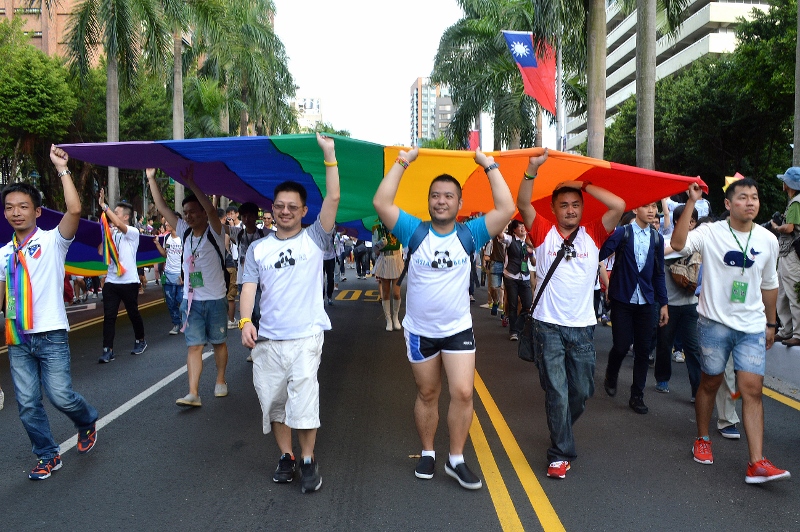
    This past weekend saw the rainbow flags back in town when Taiwan held its 12th Gay Pride Parade in Taipei. With efforts from previous years, Taiwan Gay Pride has become an iconic LGBT event in Asia that attracted around 80,000 across the country and the world to participate in the parade this year. This year’s parade focuses on encouraging members of the LGBT community to learn about each other’s differences through embracing sexuality with a more open-minded attitude. In addition to the continuous effort to educate the general public about LGBT culture, the parade organizers think that different factions within the LGBT community also need to strengthen their mutual understanding. In other words, the dialogue about LGBT culture and sexuality needs to be redefined.

    10255 (800x532)

    Taiwan’s LGBT rights movement was initiated from conservative social and cultural environment where the idea of homosexuality was rarely at the center of discussion. In its early years, it had to bridge existing barriers and introduce the unfamiliar idea of homosexuality to the Taiwanese society. Their mission is about establishing a fair and comprehensive understanding and meaning of sexuality in the Taiwanese social context. Their achievements became obvious when Taiwan was gradually recognized as the very few countries with an open-minded attitude toward LGBT culture. However, this does not help to completely clear up stereotypes associated with the LGBT community. HIV and STD continue to be regarded as gay men’s disease while LGBT individuals still face different kinds of discrimination. This may make us doubt on whether efforts from previous years will all end up in vain. It seems obvious that the LGBT rights movement fails to produce a public image that can represent all members of the community, and that further contributes to the fragmented understanding that the general public holds. The LGBT rights movement needs an internal remodeling in order to overcome existing stereotypes.

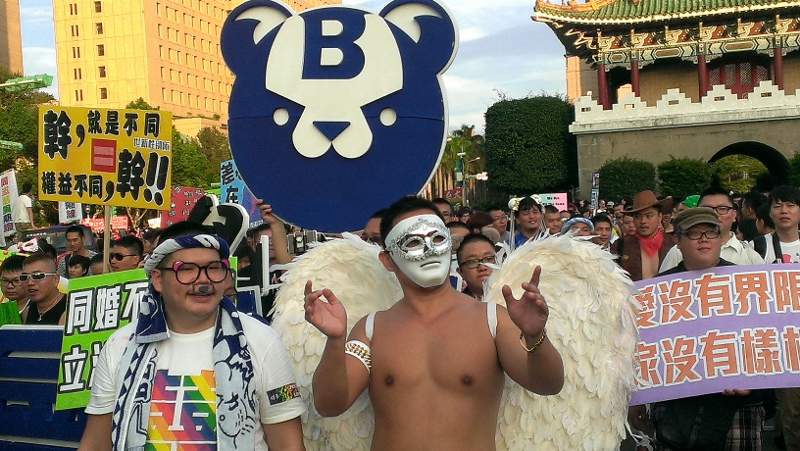
    Thanks to a group of dedicated lawmakers who recognize the LGBT community’s need for a common ground, a proposal for a same-sex marriage bill is presented to the public. This quickly sparked strong opinion from both ends of the spectrum. The bill offers the LGBT rights movement a common ground to present a public image that encompasses the shared wish of the LGBT community. The community is now united under one simple wish, the right to get married legally. Banners bearing slogans calling for civil partnership can be seen throughout the procession of the 12th Taiwan Gay Pride. The civil partnership bill also simplifies issues surrounding the LGBT community for the general public. While defenders of traditional marriage continue to publicize false beliefs about LGBT culture and how it could endanger the traditional marriage values, for the first time, the LGBT community is given a channel to share its thoughts and ideas to the general public directly. Their arguments became simpler and more concentrated. Most importantly, it reflects the simple desire of the LGBT community to acquire rights that are enjoyed by the rest of society.

    102520 (800x618)

    The new focus on equal rights and fair treatment helps to redirect the discussion about LGBT culture toward a less complicated path. The general public should realize that LGBT individuals in Taiwan are not asking for more than what the rest of them have been enjoying. The dialogue initiated by the LGBT community is aiming to create an equal social environment where LGBT individuals can coexist with the rest of society without suffering from any discriminatory treatment. It is about harmonious coexistence, and not fierce confrontation.102518 (800x451)


    __________________________________________________________________________________________

    Join SimplySxy’s forum discussions now on Society
    Do not miss another article on SimplySxy!  Follow us on Facebook and Twitter for our latest updates!