Tag: LGBTQ

  • Being a Gay Franciscan

    Being a Gay Franciscan

    What do I mean by Gay Franciscan? Well I am a Franciscan Brother, who is and was born gay, or to quote Lady Gaga, ‘baby I was born that way!’ Yet I am not a Priest or Brother of the First order, or unless I have had a sex change become a member of the Second order, the Poor Clare’s or Poor Ladies.

    No I am a Secular Franciscan, a Tertiary, a member of the Third order of St Francis of Assisi who is our seraphic founding father, yet he himself was a deacon. Our patrons Saints, along with Francis and Clare are:

    GLORIOUS PAST

    Since Francis’ time the Order Franciscan Secular (OFS) has many members. Through nearly eight centuries it has continued to prosper, bringing untold blessings to the Church and society. It has been fruitful in much personal holiness, and many Secular Franciscans have been beatified and canonised in recognition of their outstanding holiness.

    They came from all walks of life: St Elizabeth [queen of Hungary] and St Louis [king of France] are patrons of the OFS; nine popes have been Secular Franciscans; household names like Columbus, Thomas More, Copernicus, Bernadette,, Dante, and the less well known like John Bradburne and Margaret of Cortona were all members.

    SECULAR FRANCISCAN ORDER (OFS)

    Saint Francis of Assisi left us “a Dream to dream and a Journey to challenge everyone”. All Franciscans are inspired by him to follow Christ. The Secular Franciscan Order belongs to this family. In their secular state, members permanently commit themselves to live the Gospel as Francis did, following his Rule approved by the Pope. The OFS is open to the laity and diocesan clergy.

    There are more than 850 Secular Franciscans in Great Britain. Gathering in fraternities, they strive to grow in the love of God and in peace with each other. In this way, they aspire to be faithful Disciples of Christ. (Taken from website www.ofsgb.org.uk/)

    Now ok, I hear you thinking what has any of this to do with us or our sexuality? Well the fact that I, Br Anthony James Francis Mantova S.F.O. is and always have been gay, and peace and the rainbow flag. St Francis wrote a beautiful prayer that is now also a much loved hymn entitled ‘(Lord) Make me an instrument/a channel of your peace!’

    Which is a fitting hymn for all of humanity, but St Francis is also the patron Saint of Humanity and humanitarian aid, efforts and conflicts, of nature, animals, life people and plants to name a few, St Clare Communications and Multimedia and Television.

    The rainbow flag or peace flag, as well as being associated with the LGBT community worldwide, it is also there for Greenpeace, NATO and the United Nations and anyone who wants world peace and in the past I have seen PEACE flags with the St Francis logo, so I believe this is why our community has adopted the flag as its own.

    Yet peace belongs to all of us, and so fitting that I am both gay and Franciscan, many in the church not just the Franciscan family are gay, yes priest, brothers, sisters, yet they have chosen to hide away and devote their love to god rather than each other.

    Now this by no great hardship and slowly the church is accepting that we are a part of humanity, the same humanity, Our Lord Jesus was born into. The feast of Saints Anne and Joachim, the parents of Our Blessed mother Mary is held each year on the 26th July, these are in fact his holy grandparents, and should be praised.

    When I was younger, back in Liver for almost 30 years I was in the parish of St Sebastian Fairfield, and attended the Roman Catholic Primary school, attached to it. During my time I met many Franciscans of the various orders, and today the Order of Friars Minor Conventual can be found running St Anthony of Padua’s RC Church in Queens Drive, and nearby at the OFM Cap in Pantasaph, where the famous singing fundraising priest Fr Francis Maple OFM Cap can be found.

    The Cap is short for Capuchin, and they are so called because of there long hoods, that reminds people of the Capuchin monkeys. It was on of these priests/Brothers who invented the frothy hooded coffee, that we enjoy today know simply as cappuccino. So why and how are the Franciscans important to any of us?

    Well if it wasn’t for St Francis we wouldn’t have the order, and without the order, we wouldn’t have some of the gadgets and gizmos we have today. It was St Anthony of Padua with St Bonaventura, who established THE FIRST University in Bologna, Italy in the 1300s.

    So I am proud to be a Franciscan, and yes also gay; neither affects the other negatively, in fact they are helpful to each other, in understanding who we are. While there are many things to do and consider before becoming a true Franciscan, but if you love people, life, nature, animals, devote a little time to Payer and want peace both here and now and in the future, then are you not already living a form of Franciscan life.

    Lord make me a channel of your peace in this world and in the next.

    Amen


    Image courtesy of Shutterstock
    Join SimplySxy’s forum discussions now on Society
    Do not miss another article on SimplySxy!  Follow us on Facebook and Twitter for our latest updates!

  • If you are Homophobe, can I call you Gay?

    If you are Homophobe, can I call you Gay?

    Let us imagine a person being born, ages and chooses to and die in, let’s say, Jakarta. For me, this automatically brings up the question of how the system of alternative moral is fabricated because it is in itself, a complicated process as there exists conflicting morals. That’s why an individual who deviates from a rule agreed on by a group is considered an outsider as stated by Howard Becker and when he/she violates the existing norms, he/she is considered a deviant and hence, regarded as a foreigner in the group.

    Being an outsider is a result of normalised norms. Let’s put the norm as a simple definition as a set of regulations established within the community. Hence, in every interaction, we are bound to find some indications of norms in it. But the norm is not “given”. In a world filled with social constructions, the norm then becomes a social construction that is produced from the interactions between human beings which eventually ends up as a moral as these are furthered reinforced. This is prevalent in the instance of LGBTs who are subjected to an established norm that essentially discriminates them as the outsider. For example, the norm of the accepted sexual relation is only between men and women; due to the ability of this union for procreation, while gays, lesbians and transgenders are considered unacceptable and deviant sexual relations because these only exist for the sake of recreation.

    “The sodomite had been a temporary aberration; the homosexual was now a species,” as famously said by the French philosopher, Michael Foucault. This means that the strong regulation about relations of this nature is constructed by the community and helped by the institution and religion. LGBTs in Indonesia are of course, living in a homophobic society.

    Homophobia is generally described as a hostile or feared outlook on one’s sexual orientation due to the other male or female being attracted to one of the same sex and the term attributed to such attitude has been re-coined on several instances: Homosexphobia in 1974, Homosexism in 1976, and Homonegativism in 1980 before the now commonly used Homophobia. In today’s context, homophobia is the fear of the feminine qualities in a man, hence it reinforces some stigmatizations of homosexuals in a heterosexual world. Why the immense negative stigma associated with the term homosexual?

    Historically, under the ancien regime, sodomy was prohibited for religious reasons. It’s called the “silent sin” or “abominable vice”. A sodomy referred to a series of sexual acts considered sins, which included masturbation, oral sex, anal sex, bestiality; in a word, all sexual practices that do not have the goal of procreation. Due to misinterpretation of sodomy being “against nature”, the word “homosexual” thus has a rather negative connotation; in both medical and pathology. Many of the LGBT groups are strongly rejecting the word “homosexual” although the Psychiatric Association of the United States has removed “homosexuality” from its list of mental illnesses in 1973. This was subsequently followed by the World Health Organisation in 1993 and also by the Japanese and Chinese Psychiatric Association in 1995 and 2001.

    If you are a homophobe, do you mind if I change the term to gay?

    The story began with the great gay liberation which took place beginning from the 60’s. The catalyst was a gay confrontation with the police in Christopher Street in Greenwich Village, New York, June 1969. Thereafter, the use of the term “gay” begun. The adoption of this term, served to at least remove the term “homosexuality” as a medical term, and at the same time indicate a more neutral tone and has a connotation of “pride”. But etymologically, what is “gay” exactly?

    “Gay” is a term that describes same-sex attractions felt by both men and women; however some women prefer the term lesbian. The word “gay” first crossed the gender/sex threshold in England during the 16th century, when it was applied to male actors who were cast into female character roles. During the 19th century, Europeans associated the term with heterosexual promiscuity; however it did not cross into sexually diverse communities until much later. As such, “gay” projected an impression of perversity. In the early 20th century, American men and women experiencing same-sex attractions became the first to identify themselves as “gay”, preferring it to the word “homosexual”, a term used primarily by mental health professionals.

    Thus being gay is a matter of being comfortable with oneself; emotionally and physically, as opposed to the term “homosexual” which was considered merely physical. In this case, the term “gay” and “homosexual” are differentiated between sexuality as a practice and as a way of life. Being “gay” is about having a commitment to one’s identity, as in “I’m gay”, “This is who I am” and “This is what I label myself”.

    In the academic world, at present, there appears the study of gay and lesbian, which is dedicated to a study of gay and lesbian, in particular to its history, its nature or sociological evolvement.

    In Indonesia, an attempt to neutralize this term has not yet been extended to the public. As it remains limited to academicians working in the field of LGBT, Sexuality and gender, and language specialist or linguist working in the areas of LGBT literature. Unfortunately, there are still many countries that question the term “gay” as it not only sounds pompous but also creates a certain minority group in society’s structure of hierarchy.

    Thus from the evolvement of the term “homosexual” to “gay” and eventually “queer”, what can we do to give the peoples of LGBT freedom of speech in all aspects? What should they do next?


    Image courtesy of Shutterstock
    Join SimplySxy’s forum discussions now on Society
    Do not miss another article on SimplySxy!  Follow us on Facebook and Twitter for our latest updates!
     

  • No Wedding For Me!!!!

    No Wedding For Me!!!!

    Decades ago, when it became clear I was more gay than not, there came a peculiar realization not long afterwards that I would never have a wedding. I would never have a bride in a white dress, never have a rowdy, disgusting bachelor party with all my best friends from high school and college, never make my mother Truly Happy; my sister would never have any nephews or nieces, (and neither would I, in fact, because my sister is a dyke and addressing most of the same issues as I was, at about the same time.) I would never have to worry about whether the ceremony should be in a church or a temple, never have to decide whether or not to simply elope and keep the money, never have to worry about the colors of the bridesmaids’ dresses. I wouldn’t have the biggest worry of all, which is if she will really want me AFTER the first night. Given all that, I pretty much just put it out of my mind.

    Every once in a while, when I was invited to a friend’s wedding, and when I had bought wedding gifts for almost everyone I had ever known, many of them for the second or the third time, there came a little pang of regret that THEY will never be buying a wedding gift for me. And then later on, when they had children, I bought silver spoons or baby clothes for them because it was obvious that I would never be buying them for my OWN children. And then, if you’re like me, you remember all those weddings you attended. The first ones, when you were small, and how bizarre they were, with everyone dressed up and stressed out, and how they made you wear a coat and tie, which made you feel very adult and capable of sampling everyone’s alcoholic drinks when they weren’t paying attention.

    When I was in grammar school, my mother used to rent out a spare room to “college girls” for extra income. I found it embarrassing but was unable to change the situation. These girls were attending Sacramento Junior College, to learn cosmetology or find a boyfriend, or, if they were extremely lucky, both. Many of them came from farms in the Central Valley, and they were called Vargas, or Diaz, or Ramos. A particularly lively girl, despite her triste-sounding name, Dolores Ramos, was one of my mother’s favorites, and after she graduated from the College and returned to the farmlands, she and my mother stayed in touch. When Dolores decided to marry, there was a major celebratory event and in addition to a large Catholic church wedding, an enormous Portuguese banquet took place in the local grange hall. An ethnic band played non-stop, there were endless tables of food, multiple bars, dancing and major consumption of alcohol long into the night. I drank too many leftover cocktails and found myself tipsy for the first time, which was extremely enjoyable.

    There followed Jewish weddings, Protestant weddings, even a couple of Baptist weddings, which were less amusing than the Portuguese weddings, even from my then child’s point of view at that time. Subsequently, I attended formal weddings, indoor weddings, hippie weddings in the California Redwood Groves, casual weddings, even a couple of last-minute, Nevada shotgun weddings. The thing about all these weddings was that there was always a bride and a groom, no matter what the composition of the families involved, and each and every time I got through a service and a party, I thought: “Damn, it’s too bad I’ll never have one of these.”

  • How might Truvada change gay men’s sex practices?

    How might Truvada change gay men’s sex practices?

    Ever since the FDA approved the preventative use of Truvada in 2012, HIV experts started worrying about the possible resurgence of an unpleasant trend among gay men in the United States: the abandonment of condom use and safe sex awareness.  For many gay men in the United States, Truvada is a panacea that gives them the green light to enjoy the long-lost intimacy and pleasure derived from unprotected sex. However, for HIV advocates and researchers, the emergence of Truvada is directly challenging the safe sex practice that they have established through decades of campaigning. The clash between Truvada and condom use is inevitable, but what they are really concern about, is the perpetual erosion of safe sex awareness among gay men.

    While Truvada claims a 96 to 99 percent’s HIV prevention rate for healthy individuals who take the antiretroviral drug regularly, many gay men often misuse it as a short-term prevention before embarking a sexual adventure. The growing prevalence of Truvada has divided society into two rivaling camps: pro-PrEP and anti-PrEP. Those supporting it emphasize its function as an extra layer of safety net that can either strengthen the effectiveness of condom use or simply have better effect than the “traditional” safe sex practice. As for those opposing it, the drug not only has harmful side effects even on healthy individuals, but is also often abused by many who thought they have become immune to the HIV virus after taking Truvada for only a few times. This pretty much explains why Truvada remains controversial even among health professionals.

    I have been confronted by questions asking me whether Truvada will change the landscape of sex practices among gay men and even until today, I still can’t come up with a convincing answer. Personally, I think the drug comes into the picture at a time when we are witnessing a shift in the public’s attitude and view toward HIV and AIDS. We are becoming more open-minded and less judgmental toward people living with the virus, thanks to advocates and experts who are determined to brush aside the phobia surrounding it previously. I do believe that Truvada, if used properly, can strengthen the ever-improving effort to combat HIV. But before that really happens, we need to first work on blending it into the existing “healthy” sex practices. Its emergence is never meant to destroy the well-established norm of condom use and safe sex awareness. However, many of our peers overlook Truvada’s preventative ability and abuse the “convenience” that is promised by the drug. What they don’t know is their negligence to the drugs correct usage does nothing to contain the virus. Instead, they might help to create a new type of “superbug” that can be resistant to Truvada.

    For now, all of us simply need to remember that Truvada is effective only for healthy individuals who take it regularly and even when you are a regular prescriber, it never means that unprotected sex with numerous strangers is acceptable. Condom use and safe sex awareness will remain the cornerstone of our combat against HIV. In addition, since Truvada remains pricey for the general public, the use of condom should continue to be the more affordable option for all of us. Ultimately, Truvada’s emergence should be the add-on benefit for our sex practices, not a threat of any kind.

    Image courtesy of Shutterstock
    Join SimplySxy’s forum discussions now on Society
    Do not miss another article on SimplySxy!  Follow us on Facebook and Twitter for our latest updates!

  • A Sex Positive Asexual

    A Sex Positive Asexual

    Before I started watching the BBC cult hit Torchwood, well-meaning friends and acquaintances told me I wouldn’t like it because there’s a lot of flirting, innuendo and sexual activity. You see, I am asexual, so my friends assumed that meant I was uncomfortable with the idea of characters who were comfortable with themselves as sexual beings.

    My friends were wrong on both counts. Torchwood not only became one of my favorite shows, but was also instrumental in helping me figure out my gender identity. I was never uncomfortable or upset with the sex in the show. If anything, I was a little jealous because even though I believe sexuality is a beautiful part of humanity, I don’t experience sexual attraction the same way most people do.

    From a young age, I felt something was different about me. In first grade, the other children were discussing who they had crushes on. I didn’t have a crush on anyone and didn’t know what a crush felt like. So I looked around the room at all the boys (this was before I realized anything about who I was and assumed I was supposed to be a girl and supposed to have crushes on boys), chose one I had things in common with and decided I had a crush on him. While the girls around me were giggling about how cute their crushes were, I was whispering the boy’s name and reminding myself that I was supposed to have a crush on him. I felt nothing different for him than for anyone else in my class.

    As I got older and people began dating, my feelings didn’t change all that much. The only difference between me as an adult and me as a six-year-old was that sometimes I would think a guy was cute or a girl was gorgeous, but those feelings felt like they were floating in a vacuum. I noticed other people’s attractiveness the same way I noticed what color shirt they were wearing; it didn’t inspire any particular feeling in me.

    What did inspire feelings in me were people’s personalities. Sometimes I would meet someone and I would feel like I HAD to get to know them better. I thought I was just pathologically shy because every time I felt this way, it was hard for me to carry on a conversation with the person. I’d be afraid they wouldn’t like me or not want to get to know me and more often than not, I wouldn’t talk to them at all and never had the opportunity to find out if we could be friends. Today, I know that that’s what my crushes feel like: a deep desire to be best friends with someone, to share everything about me, to learn everything about him or her, to spend time together.

    That isn’t a judgment about sex. It isn’t a belief that sex is somehow dirty or wrong. It isn’t a belief that there’s something wrong with people who have high sex drives or talk about sex or engage in sex regularly. It’s just the way it is for me.

    I don’t know why people think that being asexual means thinking sex is bad. After all, people don’t think that gay people are saying that sex with members of the opposite sex is bad simply because they don’t have any desire to engage in it. Similarly, I generally don’t experience sexual attraction to anyone.

    I think asexuality has a strong place in the sex positivity movement. Sex positivity is about celebrating sexual diversity, supporting each other’s sexuality, accepting others’ rights to their own sexual desires even if they aren’t the same as ours. So surely there’s a place for people who don’t experience sexual attraction at all.

    I used to feel like something was missing because I will never look at another human being and know what it feels like to be sexually attracted to her. But now I’m proud of my own, unique sexual make up, and I’m glad to be me while being super-interested in learning about other people’s sexuality and supporting their expression of it.

    Image courtesy of Shutterstock
    Join SimplySxy’s forum discussions now on Society
    Do not miss another article on SimplySxy!  Follow us on Facebook and Twitter for our latest updates!
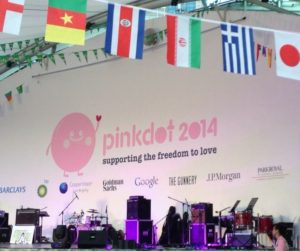
  • Viet Pride 2014, Starting 18th July!

    Viet Pride 2014, Starting 18th July!

    Starting from the end of 2013 until now, we have witnessed positive movements in the gay, bisexual, and transgender community in Vietnam (hereinafter referred to as the ‘LGBT’ community). One typical example is the ‘I DO’ campaign that exploded on the Internet, which called on people to support marriage equality for same-sex couples. After which, the campaign gained enormous response from people of all social backgrounds. At the same time, there were new ideas for the Amended Constitution of Vietnam, in regards to the citizens’ rights to marriage, according to which, “men and women have the right to marry”. It has opened new doors for marriage equality.

    In June 2014, the Marriage and Family Law of 2000 (amended) was passed. Unlike what the LGBT community had hoped for, all that has changed was the replacement of the word “prohibited” with “not recognize”, in regards to same-sex marriage. Although for many people, this mostly means that the Law in Vietnam is not making any progress. However, it is what actually motivates the LGBT community and those who support non-discrimination in marriage, to have even more purpose in advocating for change, and removing prejudices in society.

    Therefore, the theme for VietPride 2014—the pride event of the LGBT community in Vietnam this year, was decided to be “Blossom Your Life!”. As a message, which emphasizes on a positive outlook for the future, it urges for everyone in the community to be strong and live true to themselves. It also calls on friends and allies to take the initiative to stand up, and protect what is right and necessary in society.

    VietPride 2014 will be held in 17 provinces and cities of Vietnam, such as Hanoi, Ho Chi Minh City, Nha Trang, Da Nang, Can Tho, Hai Phong, Hue, Dong Nai, Thanh Hoa, Dalat … At each location, the LGBT community and supporters are all going to have quite attractive activities, such as seminars, exhibitions, film screenings, sharing and exchanges, cycling, parade, flashmob dance, and also entertainment programs which are contributed by the community themselves. In the overall spirit of the worldwide Pride event (1), VietPride brings with it, not only the pride of the LGBT community members, but also an opportunity to exchange between parents, friends, as well as those who simply want to give support for justice, for the diversity of life, for love and marriage equality.

    In Ho Chi Minh City, the VietPride 2014 event will take place over 4 days, from July 18th to July 21st, 2014. There will be alternating activities, such as seminars, 45-minute workshop sessions, community celebration night, film screenings, exhibitions, and especially the outdoor event with pink dress code titled “Blossom Your Life!”, which promises to bring an atmosphere filled with spreading love.

    In the aspiration for a just and civilized society, we hope that your contributing efforts, as reporters and editors, will be a powerful catalyst in providing all citizens with more information on diversity, in order to remove prejudices, and to build an increasingly brighter future.

    Best regards,

    The Organizer of VietPride 2014


    Web page for information updates: click here
    Images of Viet Pride 2013 in HCMC: click here 
    Clip of Viet Pride 2013 in HCMC: click here

    For information on VietPride 2014, please contact:
    Mr. Huynh Minh Thao | Organizer Representative
    Email: thao.huynh@ics.org.vn

    (1)The origin of the LGBT Pride Month: Each year, the month of June has become the Pride month of the LGBT community all over the world since 1969, to commemorate the Stonewall event in Manhattan – the tipping point for a series of movements, fighting for equality rights of gay, bisexual and transgender people in America. At present, Pride month is different for different places, but usually varies between the three months of June, July and August of each year.


    Images courtesy of VietPride
    Join SimplySxy’s forum discussions now on Society
    Do not miss another article on SimplySxy!  Follow us on Facebook and Twitter for our latest updates!

  • The HIV Stigma

    The HIV Stigma

    The HIV Stigma: How do millennial gay men deal with HIV and the persistent social stigma

    It has been more than three decades since HIV was first discovered and became a life-threatening epidemic of our generation. The fear and terror that was shared by many gay men in the 80s still have the warning effect on them even until today. They are the generation that either witness or was directly influenced by HIV’s horrific effect on the gay community, with hundreds of thousands of their peers died young after contracting the deadly virus. Condom and safe sex become the norm for them to avoid becoming HIV positive. Their fear for the virus never diminished even as new medications and advanced biomedical skills are introduced and proved effective in the following years.

    With the continuous biomedical breakthroughs in the last few years, HIV has now been classified by the Center for Disease Control as a chronic illness. New medications have proved effective to reduce the viral load of HIV positive individuals to the detectable level. Lifespan of HIV positive individuals can be almost the same as they did before contracting the virus. “A person who is 20-years-old and diagnosed today can expect to live into their 70s, roughly the same lifespan they would expect prior to being diagnosed,” said Dr. Gary Blick, Founder of World Health Clinicians, in an interview with the Huffington Post.

    The improved life expectancy has helped to eliminate the terror and fear that all gay men felt three decades ago. For the millennials, what worries them isn’t the threat from HIV transmission, but the HIV-related stigma that continues to force them to live a life of secrecy. I have personally experienced the fear and worry while contemplating about whether getting tested for HIV is the right thing. I remember my first time waiting to get tested at a local health center in Philadelphia. The thoughts that went through my mind were concerns about being labeled if I turned out to be HIV positive, but not where I should look for help. I had heard too many incidents where HIV positive individuals were discriminated at different occasions. The idea of losing your job, being rejected by your family and friends and above all, being alone for the rest of your life just freaked me out. I almost drew back and left the health center without knowing my HIV status. The amount of pressure and fear was just overwhelmingly high that not knowing my HIV status suddenly seemed to be the best option.

    Fortunately, the nurse called me in the moment I decided to leave, so I never had the chance to retract my original plan. However, the pressure and fear kept coming back during my later HIV testing appointments. I still struggled to get rid of the pressure stemming from HIV-related stigma. The stigma has created a mindset among millennials that HIV is no longer their problem because advanced biomedical techniques have lower the chances of HIV transmission substantially. According to Peter Staley’s interview with Slate, he believes that only those who have the habit of sleeping around run the risk of becoming HIV positive. But the truth is that most millennial gays are avoiding thinking about HIV mentally. Rather than considering new medication like Truvada as their prevention mechanism, they simply choose not to be reminded of HIV at all. There remains the unwillingness to think deeply about HIV and the generational denial that HIV is their problem. This explains why HIV-related stigma remains persistent and how it affects millennials’ view about HIV related issues.

    So even when our fight against HIV seems to move in the right direction, the decades-old stigma stops us from considering the prevention techniques by imposing fear in us. The stigma gets worse as more gay men lose the courage to discuss the issue in public. It forces any public discussion to go underground and often falsely denies the scientifically proved effect of new medication. Before gay men decide to reengage with HIV related issues, they have to tackle the issue of stigma, which remains strong in affecting the millennials’ attitude toward HIV.

    Image courtesy of Shutterstock

    Join SimplySxy’s forum discussions now on Society
    Do not miss another article on SimplySxy!  Follow us on Facebook and Twitter for our latest updates!
  • The invisible LGBT people in ASEAN: Part 3

    The invisible LGBT people in ASEAN: Part 3

    Discrimination of sexual minorities in ASEAN akin to a dog chasing its own tail.

    We can weigh the positives and negatives for LGBT rights in Southeast Asia, but one thing is for sure: there are small victories on all fronts of the national struggles in each country. “The growing human rights work has directly increased tolerance and acceptance in terms of promoting LGBT people, but there is still much work to be done,” says Ging Cristobal from IGLHRC. Despite being a native from the Philippines, Ging doesn’t stop short of criticizing ASEAN, where the progress of including LGBT(IQ) people in human rights policies has been zero. “ASEAN has done poorly, as evidenced in its Human Rights Declaration without the inclusion of sexual orientation, gender identity and expression (SOGIE). This is because countries like Malaysia, Singapore and Brunei continue to oppose this as part of human rights regional mechanisms.”ASEAN SOGIE Caucus is a network of human rights activists from eight member countries campaigning to push the issues of SOGIE to regional platforms in Southeast Asia that are repeatedly being rejected by ASEAN. This contradicts the obligations of member states, and also ASEAN as a regional body, such as the ratified United Nations Human Rights Declaration and other UN mechanisms including Committee on the Elimination of Discrimination against Women (CEDAW). Moreover, ASEAN’s Intergovernmental Commission on Human Rights (AICHR) effectively uses the “regional particularities” argument to hinder the progress of inclusion of LGBTIQ people.

    The LGBT issue has become another card in the ‘non-interference in domestic matters’ politics play in ASEAN and the rule of ‘all ten members consent’ is unlikely to bring success to the sexual minorities’ campaign for rights and protection. “It’s heartbreaking. They can’t even agree that LGBTIQ citizens have to be protected from violence. This is our lives,” laments Ng Yi-Sheng from the Singaporean Committee of ASEAN SOGIE Caucus. And while the LGBT network is not very connected across ASEAN as people speak different languages and also domestic issues vary from country to country, one thing brings all together—“the need for common human rights charter to protect everyone,” Ng adds. Ging Cristobal from IGLHRC points out that no one is asking for special treatment. On the contrary, it is basic protection for marginalized groups that LGBT activists in ASEAN seek. “We have multiple identities and with each identity we are at risk of facing multiple forms of discrimination and abuse. There are indigenous or ethnic gay persons, lesbians with disabilities, transgender youth, migrant gay men, lesbian children. We see our issues as equal as that of other identities and sectors. In seeking inclusion, we have to be conscious not to exclude others as well.”

    As ASEAN readies to become an economic community in 2015 (AEC), economic growth is on everyone’s mind, as it is also the least politically touchy one. As long as the member countries are trading and making money, the national and regional leaderships are happy. But what about LGBTIQ people, aren’t they part of the workforce, don’t they contribute to the economy? “The impact of lives lost and economic deprivation, all have direct effect on economic productivity of a country. LGBT skilled workers leave for security reasons and live in progressive countries, where they are not deprived of work and access to social services,” warns Cristobal. A recent study by University of Massachusetts concluded that “economic cost of homophobia ranges from 0.1 to 1.7 percent of gross domestic product, though the authors admit that the invisibility of LGBT people makes it harder to achieve reliable data. In the on-going research, India was a case study and some interesting facts were revealed. For example, homophobia brings an enormous financial burden to health care. HIV disparity, depression, and suicide cost India between 712 million and 23 billion US dollars in 2012, and all three health issues are particularly high among LGBT people in the country. In economic terms, this is a ‘recession’, researchers concluded.

    Ng Yi-Sheng from ASEAN SOGIE Caucus in Singapore believes it is in ASEAN’s interest to push for the recognition of LGBTIQ rights. “Cities that are more accepting of LGBTIQ people have been shown to be more creative and open to development. Homophobic and transphobic cultures also trap heterosexual men and women in gender roles, which they are not always happy with. More openness would create more development and more happiness for people in general.” Unfortunately, not everyone feels the same. As SOGIE activists and their cause prove to be too controversial, other human rights campaigners within ASEAN’s civil society network are often closing the door to include LGBTIQ rights in their agenda. Simply put, they are too afraid that their own battle will be lost. After all, ASEAN is an inter-governmental organization, which all ten member states joined to fulfill their national self-interest, and is by no means to be subjected to the transnational power of human rights documents.

    Part 1 can be read here http://simplysxy.com/articles/2014/07/05/the-invisible-lgbt-people-in-asean/

    Part 2 can be read here http://simplysxy.com/articles/2014/07/05/the-invisible-lgbt-people-in-asean-part-2/

    Image courtesy of Shutterstock

    Join SimplySxy’s forum discussions now on Society
    Do not miss another article on SimplySxy!  Follow us on Facebook and Twitter for our latest updates!

  • Pink Dot SG : A Celebration of Diversity

    Pink Dot SG : A Celebration of Diversity

    Pink balloons gather and aflutter; nothing short of spectacular.

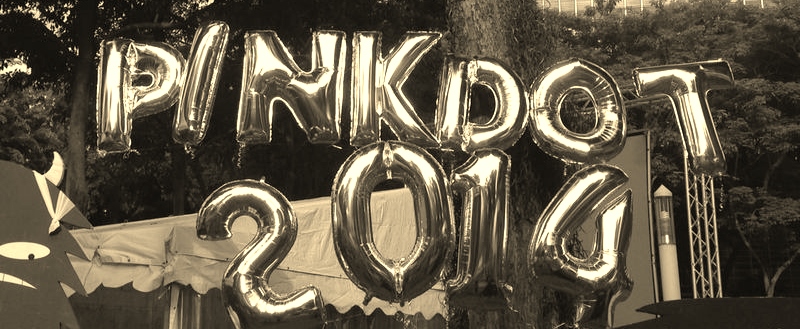
    The sixth annual Pink Dot SG was held on 28 June 2014 with a turnout of 26,000 participants. It is most encouraging and heartening that while this year’s Pink Dot SG took place amidst the controversial Wear White Movement, it continued to garner the support of the public and even set to achieve yet another groundbreaking turnout. While most, if not all of the participants are familiar with Pink Dot’s advocates, little are aware that this sixth year running event is also one of Singapore’s homegrown pride and joy. Pink Dot SG is a social movement that was started by a group of individuals—straight and LGBTQ—who care very much about the place of LGBTQ individuals in Singapore. It is an initiative that seeks to build a truly inclusive home that celebrates diversity and inclusiveness, and has since grown into an annual highly anticipated event and even inspired numerous overseas counterparts such as Pink Dot Okinawa, Pink Dot London, Pink Dot Anchorage, among others.

    IMG-20140703-WA0008The path towards true freedom to love is never easy, much less for LGBTQ individuals—as seen in the history of LGBTQ in Singapore. In December 2000, Asia’s pioneer gay personals website Fridae.com was formed and it’s first large-scale outdoor dance party held on 8 August 2001; one day shy of the country’s national day. This proved to be a test of the social boundaries in a society that upholds traditional Asian attitudes. Subsequently, such events were banned and this called a temporary hiatus to all other public dance parties of such nature. The arts scene in Singapore itself was slow to warm up to the idea of movies and plays showcasing elements of alternative sexuality and it was not until January 2008, that Golden Village—a cinema operator based in Singapore—organized the very first “The Love and Pride Film Festival” dedicated to LGBT films. On May 16, 2009, the first Pink Dot SG was held in the city-state and while it was attended by a mere 2,500 people, the event received international media attention and coverage and it has never looked back since.

    IMG-20140703-WA0010With a strong team of dedicated organizers and three very talented celebrity ambassadors—Sebastian Tan, Janice Koh and Brendon Fernandez—backed by the sponsorship and support of major multinational companies such as Goldman Sachs, Barclays, JP Morgan and Google, this year’s Pink Dot SG only goes to show the scale that this event has taken on. While it is easy to immerse oneself in the fun-filled activities, entertaining performances and the annual Pink Dot light up, the underlying importance of this event cannot be taken for granted. Apart from being a “feel good, positive event”, there is a constant need to address the issue of diversity within society and to be conscious of the fact that Pink Dot SG is not a “be all and end all” for LGBTQ. This serves as an opportunity for us to reconsider today’s definition of acceptable social norms for as Janice Koh has so very aptly said, “There was a time when left-handed people were persecuted. Pink Dot starts from the ground; touching the hearts of the community. The LGBTQ group is only deemed to be truly accepted when the Pink Dot movement ceases to exist.”

    Image courtesy of Kathy W at Pink Dot SG 2014

    Join SimplySxy’s forum discussions now on Society
    Do not miss another article on SimplySxy!  Follow us on Facebook and Twitter for our latest updates!
  • The invisible LGBT people in ASEAN: Part 2

    The invisible LGBT people in ASEAN: Part 2

    2.  The least developed: Cambodia, Laos and Myanmar

    Known as CLM, the trio is far from safe and comfortable environment for LGBT people. The process of legal policies for protection and rights of sexual minorities is rather slow, but a promising civil society has been springing up, especially in Cambodia. “There is a strong emergent activist scene there,” says Ng Yi-Sheng from ASEAN SOGIE Caucus in Singapore. The Pride Week event in mid-May ran for a whole week in the capital city of Phnom Penh, as a lead-up to the International Day against Homophobia and Transphobia. The six-day festival featured workshops on family acceptance and LGBT issues, film screenings, Buddhist blessing ceremonies at Wat Samrong, fashion shows, concerts, and the pride parade. In Buddhist Cambodia, religion does not necessarily teach that homosexuality is wrong. However, traditionalism in Cambodian families makes it hard for one to be accepted by his closest ones. It is of a major help that many of the high ranking representatives in the country had been speaking out for acceptance of LGBT people in recent years, such as PM Hun Sen and the late King Norodom Sihanouk. Although Cambodia’s constitution prohibits same-sex marriage, accounts of support and even legalization of lesbian unions, have been reported on a local level in Cambodia. In several provinces, local community chiefs have often granted ‘family documents’ to lesbian couples.

    Many would agree that in Laos, civil society is almost absent as years of communist government have silenced free media and activism. While a few have been trying to bring about positive change on a community level through education and sustainability, the case of disappearance of prominent activist Sombath Somphone speaks for itself. Nevertheless, LGBT people in Laos have been quite active in organizing events to raise awareness in the mostly rural and conservative society. In 2012, the first gay pride “Proud to be Us!” took place in the capital Vientiane. Around 100 lesbian, gay, bisexual and transgender people had gathered on a US embassy sports field to watch performances pointing to the marginalization of LGBT people in Laos. The event was organized by the US embassy and local activists, and a senior government official attended the event as well. “The aim was to show that we can live and work together in harmony and that LGBT people can contribute enormously to the country given the opportunity. We have never had an event like this. I feel empowered that this is the first step that can take us forward,” event organizer, Anan Bouapha, told Agence France-Presse (AFP). Although homosexuality is legal in Laos and there are rarely victims of violence, the LGBT community faces discrimination, especially when seeking employment in government or other higher status professions. Many are therefore left with poorly paid jobs or end up working in the sex industry.

    Myanmar, or Burma if you like, is one of the ex-colonies of Great Britain, that still keeps in place the infamous sodomy law, prohibiting sexual intercourse between adult males. While the penal code is not strictly enforced by authorities, activists note that harassment and discrimination of sexual minorities are rampant. Trans-women have been reported to be regularly harassed by police and authorities. After the end of military regime and civilian government installed after the first elections in 20 years in November 2010, taboos concerning homosexuality began to relax. Myanmar held its first gay pride event in 2012 and this year in March, the first ever public gay wedding took place. Although the couple wasn’t granted legal status, it is at least a small step towards acceptance of different sexual orientation and same-sex relations in Burma.

    3.  LGBT and Islam: Indonesia vs. Malaysia and far away Brunei

    A typical stereotype of Islamic countries’ hostility towards sexual minorities is short of the variety of cultures in Southeast Asia. Indonesia is a good example. Although the country has the largest Muslim population in the world, tolerance “highly varies within the country. While the level of queer acceptance is high in some areas, danger of religiously motivated attacks persists elsewhere,” says Ng Yi-Sheng from Singapore’s Committee of ASEAN SOGIE Caucus. Indonesia has secularist constitution and homosexuality is legal, but a recent poll shows 93 percent of Indonesians feel homosexual couples should not be accepted. While most Indonesians practice moderate Islam, hardline Islamic groups are on the rise, constantly pushing the officially secular government. In 2002, Aceh province was granted the right to use Sharia law, which criminalizes homosexuality. A year later, proposal to criminalize same-sex relations in Indonesia failed. That was more than ten years ago. While legally, the country is obviously not keen on cracking down on sexual minorities, the perception of them is another issue. Just last year Banda Aceh Deputy Mayor Illiza Sa’aduddin Djamal talked of homosexuality as “a social disease that should be eradicated” and a punishment of 100 public lashes for offenders.

    On the other hand, Malaysia has a much clearer stand with a Muslim majority and Islamic constitution; homosexuality remains illegal by the colonial-era sodomy law, criminalizing homosexual intercourse. Intolerance is rather increasing with the institutional islamization of Malaysia. The International Gay and Lesbian Human Rights Commission (IGLHRC)’s report on LGBT rights in Malaysia concluded that these people face rising hostility, discrimination and abuses. There is no protection for them in the political system. Increasingly present is the state-administered Sharia law, which criminalizes lesbian sexual intercourse (musahaqah), sex between men (sodomy), sex “against the order of nature” (liwat), and also “impersonating” opposite sex, such as cross-dressing. The government is keen on developing a particular “Malaysian vision” and the LGBT people are clearly not part of it. Sexual orientation and gender identity issues are rejected by Malaysia at all human rights platforms: national, regional (ASEAN) and international (UN).

    At the end of ASEAN’S LGBT tail is Brunei, recently slammed across the world for passing a new penal code that calls for death by stoning for same-sex relations. Those have long been illegal in Brunei, though the maximum punishment was ten years of jail. The only solace for LGBT community there is that Brunei has been holding an effective moratorium on death sentences since 1957. Many are hopeful this custom will continue. Others point to the obvious fact that criminalization and death penalty for same-sex relations between adults violate rights to privacy, equality, freedom from arbitrary arrest and detention.

    Part 1 can be read here http://simplysxy.com/articles/2014/07/05/the-invisible-lgbt-people-in-asean/

    Part 3 to follow can be read here at http://simplysxy.com/articles/2014/07/06/the-invisible-lgbt-people-in-asean-part-3/

    Image courtesy of Shutterstock

    Join SimplySxy’s forum discussions now on Society
    Do not miss another article on SimplySxy!  Follow us on Facebook and Twitter for our latest updates!