Tag: LGBTQ

  • Convicted Love

    Convicted Love

    Twice in 2012 and once in 2013 I was falsely arrested, questioned, sent court and ended up in Altcourse Prison in Liverpool. The charges were stalking and harassment. So hello, how could I be talking about convicted love?

    Now, I am given a restraining order saying that, I cannot mention the so called victim, her boyfriend or their families or else I could be arrested and sent to prison. This restraining order extends to my family, my friends and any third person acting for or against me. And yet her friend in the Daily Post North Wales got the story published in every tabloid rag in the UK. Sometimes twice or more times. And even on BBC Wales.

    This might sound bit strong and some will say far-fetched, but seeing as the victim has friends in North Wales Police Force, it was not surprising that many I have met said they were victims of North Wales Farce. Ooops. Force. Actually prison was not too bad. The judges, magistrates, police and prison officers and politicians pays for the food, water work, education and health care. In fact each service pays for itself; from tax of cause.

    However, what I really mean by not too bad is, I met several gorgeous young men, aged between 18 and 30, all who seemed found me attractive. I think they need glasses, or was it a put up. An attempt to get me in trouble or to get my hopes up just to have them dashed.

    One chap was with his mates in the showers after football practice. As I walked past, he dropped the soap. So I said “Ooops, don’t drop the soap in the showers, Matty”. At which he smiled ran out of the showers, bent over and stretched his cheeks to show his sweet ass hole. And in front of everyone he said “I’m yours. Fill me.” Basically declaring his feelings. If we hadn’t of been in prison with everyone watching, I might have.

    When I was leaving the prison at the end of my first sentence, an 18 year old cute guy said to me, “If you come back, I’ll get you in bed!” That was a definite sexual threat/promise. Another time, a lad wanted to see what films were on that night but had no TV guided. So I told him could look at mine. As he pushed my wheelchair back to the pad, that’s the name many give their cell, he said “And what else will we do to each other whilst we are there?” He was 19 and hot as hell but again I had to hold back.

    In fact, there has always been a dispute over the right age of consent. Once I was told the age of consent is 16 but then again I told that by a 16 year old. Anyways by law, anyone 18 and above is an adult. And technically, an adult should be with other adults. Not 16 and 17 year olds. Oddly by the same law, anyone in prison aged from 18 to 21 is called a young offender. Which is the term used to describe someone below 18 outside of prison. So are they adults or not?

    So how can I call it love when nothing happened? Well, for many, it was not for lack of trying. Though I could have said yes, to any and all offers. Was a quick fling worth the hassle? I was in prison only for about two months at any one time.

    And yet if I had been able to meet any or all, under different circumstances, it very well could have led to love. Yes, I am still single. And there have been the odd times, when I have given and received the odd suck. Maybe, it seems I am neither fuck-able or worth a fuck. Maybe, I can only get love if it is convicted love?

    __________________________________________________________________________________________

    Image courtesy of Shutterstock
    Join SimplySxy’s forum discussions now on Society
    Do not miss another article on SimplySxy!  Follow us on Facebook and Twitter for our latest updates!

  • “Fucking With God”

    “Fucking With God”

    I spent the better part of six years researching the idea that as humans, we are innately sexual beings, beings that can transcend ourselves and our bodies to commune with God, Spirit, a Higher Power, an immutable source of mysticism, wholeness, and transpersonal realities. While most people understand accessing these otherworldly realms of consciousness through prayer, meditation, or drug use, it was my priority to examine the concept that we can achieve the same sense of Oneness through fucking. I’m not talking about tantric sex either but rather spontaneous occurrences of transpersonal phenomena through sex without these prolonged, intentional practices.

    Now, what in God’s name do I mean by transpersonal? The term transpersonal refers to experiences of consciousness that extend beyond the confines of identity, beyond the realms of the personal. The transpersonal involves the spiritual, involves altered states of consciousness, points to the understanding of transformative human experiences, and ultimately, that we can access wholeness through integrating experiences of mind, body, and spirit.

    While I was not the first to study the phenomenon of transpersonal/mystical/spiritual sex, I was the first to investigate these occurrences amongst a solely queer-identified population; I carefully distinguished queer in two ways: sexual orientation and gender identity. My population included those who identified with terms such as lesbian, gay, bisexual, or pansexual, to name a few. As well as those who identified with words like gender-queer, transgender, androgynous, third gender, gender fluid, and other gendered. Basically, I wanted to investigate the gayest of the gay, the queerest of the queer.

    My study wished to determine how queer individuals experienced transpersonal sex. Do those who live and love and fuck outside the confines of sexual norms experience sexuality in a more extreme, transpersonal, spiritual way? Can we access Spirit/God/Higher Power more easily due to the exceptional nature of our identities, the nebulous and culturally questioned qualities of our sexual practices? As those who can live in the gray, who straddle the conservatively structured fences enforced between society and sexuality, who encompass myriads of identities within one body, are we any closer to transcendence? Do aspects of our identities, of our personalities, of our character, of our pasts determine how readily or how extreme these experiences occur? Does any part of our environment contribute to our ability to obtain these spiritual experiences? In other words, how and where do these extraordinary sexual experiences happen? And what is it about queer-identified people that may correlate to these occurrences?

    A preeminent transpersonal scholar, Dr. Charles Tart (1983), suggested that once an individual achieved an altered state of consciousness, the induction of another might be more easily achieved in the future. In other words, once someone changed their conscious awareness through the use of drugs, prayer, meditation, or sex, the altering of their consciousness came more readily. My study illustrated just that point. I discovered that transpersonal experiences, or altered states of consciousness, were precursors to the extraordinary sexual experiences that my participants described. Each of the study’s participants described experiencing previous transpersonal phenomena or altered states prior to their first transpersonal sexual experience. Furthermore, every one of my participants experienced more than one occurrence of transpersonal sex, meaning that one extraordinarily spiritual sexual encounter lead to another…and another. So, what kinds of people have these experiences over and over again? There were several personality components of the participants that came to light during the course of the study.

    Being Queer. Most obviously was sexual orientation and gender identity. Every person identified as queer both on the continuums of sexual orientation and gender identity. Basically, the queerer, the better.

    Artistry and Aestheticism. All of the participants identified themselves as being highly creative people. They each described having some form of artistic or musical expression throughout the course of their lives. Whether these outlets be drawing, painting, playing an instrument, creative problem-solving or interior design, everyone felt strongly about their creative qualities. Not only did all of the participants identify as being highly creative or artistic, the majority described themselves as being extraordinarily imaginative and fanciful as children. The capacity for fantasy, the ability to develop alternative realms and universes were found to be possible contributors for the induction of altered states. Fantasy is a crucial component of sexuality and in some cases, participants’ fantasies were directly related to the transpersonal sexual experience that occurred. These two co-occurring personality components may point to an overarching theme of aestheticism and artistry belonging to those who experience spiritual sex.

    Balance. While most of the study’s participants described themselves as creative and aesthetically-minded, the majority also described balancing this type approach with reason and rational thinking. Not only are their cognitive influences balanced but their behaviors are the same. One might assume those who have experienced spiritual sex were purely hedonistic, pleasure-seeking people; however, it turns out their pleasure-seeking behavior is well-balanced with more practical, rational endeavors. These tendencies towards balance suggest people whose personalities manifest in well-rounded, equitable and adaptable ways.

    Rebellion. Despite the obvious diversity of this sample, all of the study’s participants described their need for rebellion as directly related to more conservative upbringings. Sexual repression resulted from the cultural, religious and/or politically conservative households in which these participants grew up. Their sexual expression was described as a means of rebellion against this repression. Perhaps this was a means of obtaining a more authentic self, a means of healing old wounds perpetrated by dominant culture, a desire to simply be revolutionary.

    The higher the education, the lower the income. The majority of the study’s participants were highly educated, holding Master’s degrees or Doctoral degrees in various fields of study. Obtaining a graduate education often necessitates a person who is achievement-oriented and driven by the desire to possess mastery over certain subjects. Despite this level of education, all of the study’s participants reported below average income levels. It’s possible this disparity was self-determined, meaning these people purposefully chose professions, such as those within the creative or artistic fields, that pay significantly less than others.

    Interestingly, these intentional choices coupled with the economic downturn of 2008 may also have contributed to participants’ sexual expression. Several popular articles have been written about the relationship between economic recessions and sex. One article (Clark-Flory, 2011) suggested that during times of economic struggle, there is an increase in the purchase of sex toys, condoms, pornography and increased frequency of promiscuity. This additional attention paid to our sexualities during times of financial hardship might point towards the plethora of opportunities the study’s participants had to experience transpersonal sex.

    Medical conditions. In addition to the already unique profile of this population, participants also reported interesting personal medical histories. Over half of the study’s participants described living with some form of medical condition, ailments ranging from HIV to chronic pain to diabetes. Interestingly, nearly 70% described having experienced a head injury or loss of consciousness over the course of their lives, and 25% reported having neurological abnormalities, including synesthesia, seizure disorders, severe migraines and vertigo. While my study was limited in determining the exact correlation between these findings and participant experiences of transpersonal sex, the data points to some relationship between physical ailments and the induction of altered states of consciousness. It is possible, as some researchers have found, that these medical conditions left participations more physically—if not psychologically and emotionally—more vulnerable to the external stimuli that may have helped to trigger extraordinary sexual experiences.

    Lack of death anxiety. With a wide array of physical vulnerabilities, the majority of this population described a sense of readiness, lack of trepidation and fear around facing their own mortalities. In fact, they even spoke of a sense of internal preparedness for the imminent occurrences of their deaths. The term death anxiety alludes to fear or denial of death but also related to endings or limitations of personal experience, limits requiring categorization and isolation. The prevalence of the use of the term queer by the study’s participants proved interesting in this regard as queer is an attempt to avoid categorization and is relatively limitless in its attempt at inclusivity while it encompasses an array of identifications. It seems as though identifying with every color of the proverbial rainbow allowed these individuals freedom from categorization and isolation and suggests something of a correlation between the openness of identity, lack of death anxiety, and transpersonal sexual experiences.

    Spirituality. In a pattern similar to their identifications, these individuals also identified in myriad ways regarding their spiritual orientations and religious affiliations. While their levels of devotion and intentional practice varied greatly, the vast majority described themselves as being spiritual, religious, or both. This overwhelming statistical slant suggests a relationship between occurrences of transpersonal sex with the susceptibility to and desire for spiritual or religious connection. The spiritual or religious connections they experienced during these phenomenal sexual occurrences could be merely one of many forms of union experienced over the course of their spiritual lives. The association with spirituality or religion may well be a precursor to experiencing transpersonal sex, as we’ve seen in many other cultures and centuries. For example, ritualistic sex was used as a means of deity worship in ancient Greece, and sex has been known to be used as spiritual practice for some in Hinduism. For those people who identify with the gay spectrum and may have felt distanced by religion, there exist realms of gay spirituality that including movements towards non-duality, sex-positivity, and progressive, revolutionary methods of worship. In this regard, the study’s participants may, consciously or unconsciously, utilize their identities as queer individuals in conjunction with their spiritual or religious affiliations to develop various expressions of worship, including… well, fucking.

    Toby Johnson, a scholar who has written quite extensively on the subject of gay spirituality, suggests that being queer provides an individual with an inherent ability to attain enlightenment. Furthermore, he attests that embracing the true nature of one’s identity, of one’s queerness, is symbolic of “the evolution of consciousness” (Johnson, 2008, p. 18). It is beyond obvious why these statements, why the implications of my study, fly in the face of current yet outdated opinions on the subjects of spirituality, identity, and sexuality.

    Yet, here we are. The queer community is growing more expansive, civilly liberated, and included in the public, popular, and societal eyes. And queer individuals are developing more authentically through private eyes, an evolution that undeniably includes connection with God or Spirit, an until-recently-unspoken relationship with this mystical source. A bond that may be perhaps sexually indulgent and unarguably profound.

    Perhaps it is through clearing the lenses of preconceived, conservative notions of sex and the colorfully queer that we can expand awareness, develop the collective consciousness further, and therefore, become liberated from these restricting confines. Perhaps it is here that we can use sex, this foundational principle of human life, to contemplate and understand ourselves, to examine our distinctive identities, to put words to our often unarticulated connection to the spiritual world, and to savor the delectable idea—and the seductive reality—of fucking with God.

    Have a story you wish to share on SimplySxy? Submit it here http://simplysxy.com/submissions/


    Image courtesy of Shutterstock
    Join SimplySxy’s forum discussions now on Society
    Do not miss another article on SimplySxy!  Follow us on Facebook and Twitter for our latest updates!

  • Sex is Supposed to be Fun; Isn’t It?

    Sex is Supposed to be Fun; Isn’t It?

    I am stating the obvious when I say that sex is all about having a giggle and enjoying each other. Aint’t I? Apparently not.

    I was chatting to a guy on GROWLr (GRINDr for Bears—a sub-culture within gay culture— or what I prefer to call ‘GRINDr for nice people’. I find GRINDr and most of the other gay sites/apps cruel and excluding but that is a whole other article … ) and we got onto the subject of sex, of course and I flew into a friendly rant on sexual energy and what exactly happens to that heat you feel in the base of your spine and perineum (between your genitals and ass/arse) when you have sex. The guy who I was chatting to told me that he often gets the giggles ‘post-orgasm’ and I explained that this was the sexual energy shooting up from the root chakra (that heat spot I mentioned. Can you feel it now? I thought you might) and out through his heart in the middle of his chest—the heart chakra—and this quite simply makes us giggle and/or cry. It is more common for women to burst into tears during or post-climax for this reason and yes, not that I wish to stereotype but it is often the case that women are more in touch with their emotions and thus cry more easily and that sexual energy (which is associated with our emotions) has more of a free rein causing all sorts of pleasant and sometimes unpleasant responses and reactions.

    So… the guy who I was chatting to then told me that he felt ‘less silly’ because I had explained it and also confessed to thinking that sex should be ‘a giggle’ and ‘about having fun’. Don’t we all think this? Don’t you realise that you really aren’t supposed to be taking this too seriously and did you know that even if you and/or your Mrs/Mr burst into tears during sex you can still enjoy it?

    Allow me to give you an example … you knew this was cumming, didn’t you? And you also knew that I was going to deliberately misspell coming because, well, I just cannot resist the naughtiness …

    Once upon a kink session with an ex boyfriend of mine, I was kneeling upon the four poster bed in a classy Gay Bed and Breakfast in Blackpool. My hands were tied behind my back and I was pleasuring my beloved by tonguing his balls and doing whatever he demanded of me (within the boundaries we had previously negotiated—this is how to do kink safely and with complete trust. We also used the ‘Traffic Light’ code but we’ll go into that another time…) when I suddenly became very still because ‘something’ happened. I cannot describe fully the ‘something’ other than invert the words because it was, well, almost mystical. I went from ‘Yes Sir, thank you Sir’ mode to being completely silent and from licking his manhood to absolute stillness.

    He sensed something.
    We both felt ‘something’.
    Everything stopped.

    I’ll call my ex Richard, Richard ceased his orders of ‘Do you know how honoured you are to worship me boy?’ and other such ‘insults’ to being as silent as me. He gently untied my hands and just lay there and I maintained my position, on my knees, curled up with my face in his crotch just allowing this ‘something’ to do its thing.

    Then I burst into tears.
    I sobbed from an old place and felt like a child again.
    It was delightful.

    I clambered from my place between his legs and rested upon his chest. He held me, stroked me and kissed my forehead.

    “Feel better?” Richard asked, as my tears fell away and I became giggly.

    “Much. Thank you. You’re amazing” I beamed with love into his moist eyes, we de-kinked (removed my leather straps, collar, jock and boots) and spooned for the remainder of the evening.

    We did not discuss the tears. We didn’t need to. We giggled, tickled, nestled and warmed ourselves in the knowledge that the sex session had been fun, emotional and what it needed to be.

    Here’s to your intimate adventures … you never know what might happen.


    Image courtesy of Shutterstock
    Join SimplySxy’s forum discussions now on Society
    Do not miss another article on SimplySxy!  Follow us on Facebook and Twitter for our latest updates!

  • 21 Things That I Hate About Gay Culture

    21 Things That I Hate About Gay Culture

    I have always viewed the world with rosy colored glasses and when I removed them, I realized that we live in a cynical world. A world that ostensibly seems to be inviting and accepting but in reality is judging and unforgiving. The ones who survive in this harsh world have survival tools that include: thick skin, fake laughter, fake smiles, fake tans, are masters at pretending to be someone different and of course like to label everyone they meet.

    I belong to the Gay minority. Gays represent around 8% of the total world population. While I am proud of being Gay, that is not the end of my story. There are so many things in the gay world that I hate.

    1. Maintenance and upkeep  Spending a substantial portion of your earning on gym, spa, waxing, skin care products and clothes seems like a norm. Trust me, gay men like to judge others based on appearance which is totally superficial.

    2. Dating is equivalent to sex  When you agree to go for a cuppa coffee or lunch with someone, it means “Hallelujah! I am gonna get lucky tonight!” to most gay men. Most gay men behave like dogs in heat and are sex starved. I have dated men who just wanted a good f*ck, they did not even pretend to get to know me or have a polite conversation.

    3. It’s a small world  This truly holds true for  the gay world.  New York City has been my home base for over a decade, even though I travel all over US for work. I have dated several men in NY and on several occasions, the men I met were the ex’s of my own ex’s. Imagine my horror and shock!

    4. Casual sex  We all go through “Whore Phase” but dropping your pants at any possible prospect is definitely not my cuppa tea. Let’s not forget that gays love to live on the edge and like barebacking. Me and Barebacking? HELL NO!

    5. Mirror, Mirror on the wall  Gay men never leave an opportunity to check their reflection, be it in their spoons, the sunshades, mirrors in their bags or any other place where they can check their reflection. Seriously, vanity is thy name, GAY!

    6. Apps Galore  Technology has made our life simpler, but I beg to differ. Gaydar, Grindr and similar apps, take away your privacy. I have been out on a first date with a few men whose phones kept vibrating and I realized that their Grindr apps were active and so were these men!

    7. Websites  What is wrong with most Gay men? Match.com has become the new craigslist and Linkedin has become the new match.com. People send me invites on professional network, Linkedin, so that they can exchange phone numbers, pictures and finally hook-up. WT* is wrong with gay world? I have been asked out on Linkedin, GROSS! I have pointed out to several men that dude, this is not manhunt account.

    8. Subgenres in Gay world  I am getting tired of labels and let me tell you that different subgenres of LGBT hate each other. The straight acting gays don’t get along with fem gays and queens. Muscle queens hate drag queens, etc. I am sure you get the picture.

    9. Fashion and fads  You would think that coming out of closet was an end to oppression, you ain’t got any idea about life after coming out of closet. There is a whole new level of oppression after coming out. Maintaining a toned body (I gained 10 lbs and am hence deemed a misfit in the gay world), going for BOTOX treatment in 20’s, keeping up with the trends, reading fashion magazines, bar hopping and knowing your drinks ( I have never done any of these things and I am considered a freak in the gay world), keeping up with new music and driving an expensive car, whether one can afford or not.

    10. Promiscuity  Whatever happened to fidelity, monogamy and loyalty in a relationship. You will catch your boyfriend cheating on you within 3 months of being together.

    11. Monogamy  The moment you tell your date that you are looking for a monogamous relationship and are willing to settle down with the right guy, he is terrorised. He runs away from you as fast as he can. Most guys don’t like being in monogamous relationships as they never stop believing that there is someone better than their current boyfriend.

    12. Exaggeration When a gay guy works at cash register at Target, he would say I work in retail. You refer to your last trick or last sexual escapade as “my ex.” Dick size of 5.5′ naturally becomes 7′.

    13. Older gay men  Older gay gentleman don’t acknowledge their age, in fact, all gay men lie about their age. Older gays still think that they can hook up or find a younger gay man for relationship. They think of themselves as mentors but end up becoming sugar daddies.

    14. Haters  Being gay is all about being thick skinned as there are haters outside and within the gay community. It’s hard to deal with homophobes and some homosexuals have internalized homophobia, that is really hard to deal with.

    15. Gaycation and cruises  Some gay men continue to party well beyond their 40’s and 50’s. They never grow up. Okay, I have been asked out by a 72 year old man who wanted to take me on a cruise (I was 29 at that time), while I just met him at a friend’s party. I didn’t know how to react as I was shocked and amused. I politely refused his offer and I still laugh at this incident.

    16. Rude gay men  Most gay men whom I have met are plain rude. They seem to lack courtesy and have a very standoffish attitude. Its hard to have gay friends as all of them seem to be competing with one another.

    17. Cute guys are in demand  The average gay guy is normal looking but crazy for cute and hot gay guys. Gays don’t react and respond to average looking gay men. Looks and appearance are on the top of priority list. It seems so shallow.

    18. Lies  Being versatile essentially means that you can bottom in 10 different positions.

    19. Not many tops  Biggest challenge in gay world is scarcity of tops.

    20. Alcohol, smoking and substance abuse  It seems so common in the gay world that I can’t stand it. I am a non-smoker and don’t drink and have never done drugs.

    21. Drama  Gay life is full of drama, heartaches, ex issues, sexual abuse, substance abuse and cheating and seriously, I am just not comfortable with so much sh*t.

    I am tired of being judged and being physically, emotionally, mentally and spiritually healthy is important but I don’t want to look like a disaster of plastic surgery and feel like Sh*t. HELL NO!

    Is there anything you hate about gay world, comment below and don’t forget to subscribe and share this article.

    This article has been republished with permission from Deepak Sood. Please visit Deepak Sood’s website to view original post and more of Deepak’s works.


    Have a story you wish to share on SimplySxy? Submit it here http://simplysxy.com/submissions/


    Image courtesy of Shutterstock
    Join SimplySxy’s forum discussions now on Society
    Do not miss another article on SimplySxy!  Follow us on Facebook and Twitter for our latest updates!

  • Gay ‘cure’ victim in China petitions World Health Organization for help and sues clinic

    Gay ‘cure’ victim in China petitions World Health Organization for help and sues clinic

    90,000+ All Out members join call to WHO Director-General:

    “Being gay is not a mental disease”

    Paris/Beijing | August 29, 2014

    In 72 hours, more than 90,000 All Out members will have signed the petition of a Chinese gay ‘cure’ survivor. The petition urges the World Health Organization’s (WHO) Executive Director to re-affirm the organisation’s stated position that being gay is not a mental disease and to unequivocally condemn gay ‘cures’ for the first time.

    Chinese petition starter Xiao Zhen*, 30, is the first person to sue an anti-gay clinic in China, after it used electroshock therapy to try to “shock the gayness” out of him. Xiao Zhen* is leading a global outcry to push WHO to speak out and help convince Chinese officials to ban sham gay ‘cures’ that are spreading throughout the country.

    “I’ve been through electro shocks at a gay ‘cure’ clinic in China. Now I’m fighting back to tell everyone in China and beyond that being gay is Okay and to make sure that gay ‘cures’ are banned,” said Xiao Zhen*. “Together with 90,000 All Out members, I’m calling on WHO to back me up and send a simple message to Chinese authorities and the Chinese medical community: Being gay is okay! It’s not a disease. No one should have to endure the trauma that I have, ever again.”

    Last July, after enduring the sham ‘treatment’, Xiao Zhen* filed the first lawsuit against a gay ‘cure’ clinic in China. The ruling of this landmark legal battle is expected in September and could mean that gay ‘cures’, or so-called ‘conversion therapy’, could be banned nationwide.

    “The global mobilisation and the trial could be a game changer for lesbian, gay, and bisexual people in China and the rest of the world. The World Health Organization has the authority to persuade the political and medical authorities to ban gay ‘cures’, said Andre Banks, All Out’s Co-founder and Executive Director. “WHO Executive Director, Dr Margaret Chan can use her powerful voice to help ban gay ‘cures’ for good.”

    China stopped viewing homosexuality as a mental disease in 2001. Despite this official recognition, thousands of clinics in the country continue to offer sham gay ‘cures’.

    “In China, being gay is still seen as something that can be cured, and thousands of scam clinics prey on that myth. Despite official recognition by the government that being gay is not a mental disease, parents and doctors are pressuring gay people to undergo phoney treatments.” said Xiao Tie, Executive Director of the Beijing LGBT Centre who is backing the legal action and joining All Out’s global mobilisation.

    “These sham gay ‘cures’ kill. Their persistence perpetuates discrimination and can have disastrous, or even fatal consequences for the gay or lesbian person subjected to the painful and humiliating treatments.” said Tingting Wei, Executive Director of the Chinese gay rights organization Queer Comrades, who has staged protests in support of the lawsuit and is also supporting All Out’s global mobilisation.

    For an up-to-date petition signature count click here:

    www.allout.org/end-gay-cures-china

    * This is a pseudonym


    About All Out

    In 77 countries, it is a crime to be gay; in 10 it can cost you your life. All Out is mobilizing millions of people and their social networks to build a powerful global movement for love and equality. Our mission is to build a world where no person will have to sacrifice their family or freedom, safety or dignity, because of who they are or who they love.

    The Beijing LGBT Center and Queer Comrades are Chinese gay rights organisations.  


    Image courtesy of Shutterstock
    Join SimplySxy’s forum discussions now on Society
    Do not miss another article on SimplySxy!  Follow us on Facebook and Twitter for our latest updates

  • Lesson learnt from interracial same-sex relationship

    Lesson learnt from interracial same-sex relationship

    While we assume the world has become more open-minded toward interracial relationships, the racial tension in Ferguson seems to be reminding us that the issue of race is more complicated than we thought. Being in a same-sex relationship has not been easy in this hetero-dominant world, let alone complicate things further when looking at it from a racial perspective. As a gay man who is currently in a long-distance, interracial same-sex relationship, I have learned to sustain my relationship in a hard way. I’ve been glared at when I walked down Walnut Street in Center City Philadelphia with my African-American partner, and there were even incidents when a homeless lady cursed at our presence as we walked by. I have come to realize that learning how to handle disrespectful glares and curses is part of the lessons that come with an interracial same-sex relationship.

    Like most people, my interracial relationship kicks off with love at first sight when we met at a friend’s wedding. Then things developed so smoothly that I never thought about the sensitive fact of being in an interracial relationship. I only became conscious about it when my mom reacted dramatically after learning about my romance with an African-American partner. Her reaction simply reflects the prejudice and misunderstanding that has long been attached to racial issues, while representing the fundamental challenges interracial relationship often face. I began to notice the number of times when people showed signs of disagreement with regard to my interracial same-sex relationship. Their first reactions upon learning that I am dating an African-American man were shock, followed by moments of silence. Rarely have I received immediate positive responses from many of my friends.

    Soon after the honeymoon period, doubts started to creep into my head as I continued to feel judged by others. Thoughts of giving in to the social pressure was incubating and tensions between me and my boyfriend began to stem from our serious discussions about interracial relationships. While he made it clear that he would never give up what we’ve earned so easily, I showed signs of being skeptical about our “future.” As that sense of uncertainty grew stronger with my withering will to defend our relationship, I started to intentionally avoid direct contact with my boyfriend. For weeks, I denied all his attempts to get a hold on me, while struggling to determine whether an interracial relationship was right for me. I not only blamed myself for failing to uphold my personal goal of remaining racially neutral, but also had difficulty justifying the way I handled this extra-delicate situation.

    After being haunted by the confusion and growing sense of guilt toward my interracial relationship, I reached out to my boyfriend, hoping to work things out. To my surprise, he didn’t hesitate to welcome me back to his life with a big hug. While giving me time to explain what was previously going through my mind, he never failed to remind me of the amount of love, dedication and time that he is willing to devote to our interracial relationship. I finally understand that like other forms of relationships, interracial relationship is built upon mutual trust, love, and dedication. It only becomes more complicated when people choose to judge it from the racial perspective, which often times, can push things to the extreme. As one of the agents of this growing trend, I should never let racial issues get in the way of the pure creation of love and dedication between me and my boyfriend. It is only when I can comfortably recognize the fact that I am in a interracial relationship, should I regard myself as racially neutral. The element of race is a mere superficial difference in an interracial relationship and at the end of the day, the core of interracial relationship still belongs to the degree of mutual commitment from both parties.

    Have a story or opinion you wish to share on SimplySxy? Submit it here at http://simplysxy.com/submissions/


    Image courtesy of Shutterstock
    Join SimplySxy’s forum discussions now on Society
    Do not miss another article on SimplySxy!  Follow us on Facebook and Twitter for our latest updates!
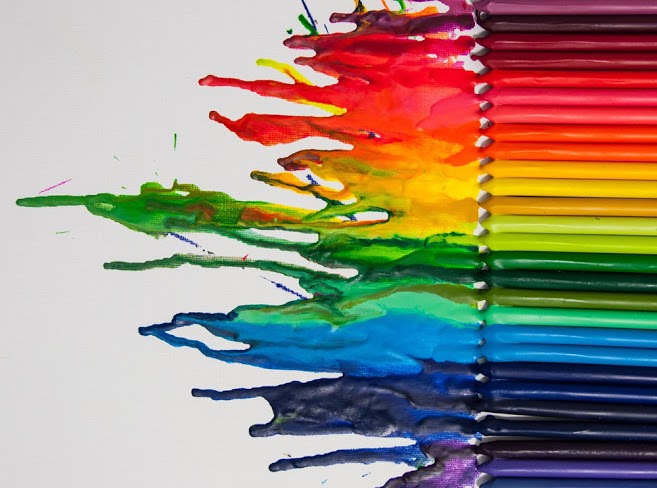
  • How Gay are You? The question of finding your comfort zone as a gay man

    How Gay are You? The question of finding your comfort zone as a gay man

    For most gay men, the question of how gay they are may have never crossed their mind before. To them, the fact of being gay already makes them stand out among other groups in the society. They spend most of their time dealing with the incredible amount of attention around their sexuality and seldom have time to think through this simple but significant question to them. This question doesn’t just help identify different levels of gay, but more importantly, it pushes gay men to embrace their sexuality and identity as gays.

    The question of how gay you are often comes down to the degree of your acceptance toward your sexuality and identity. For those who are actively promoting equal rights for the LGBT community, it is no doubt that they belong to the level of “truly” gay. They are able to share their sexuality with the general public without fearing any backlash. They can confidently reveal their identity as gays in public and help unite others with their positive examples. Another group of gay men are less outspoken but still support LGBT rights in ways that help sustain the momentum. To me, they belong to the level of “supportive” gay. They may not be standing at the frontline of the parade, but their steady support represents their acceptance of who they really are and their commitment as members to defend the welfare of the LGBT community.

    There are also those who have the desire to be openly gay but are restrained by pressures from all aspects of their lives. They belong to the level of “vaguely” gay who are often forced to maintain a double identity in life. They will secretly seek any means to express their opinions, frustrations or feelings of being gay, but when they are openly confronted by questions regarding their sexuality, they will activate the self-defense system to avoid answering them. However, they are not the most unfortunate ones. There a group of gay men who are never able to accept the fact that they are gay, and forcing themselves into the heterosexual lifestyle which never fits with their true characters. They belong to the level of “confused” gay. In order to live a “normal” lifestyle, they will enter marriages and form families with women. But secretly, they still interact with gay men via all means of communication; dating websites, hookup apps or online chatrooms. This unhealthy lifestyle not only puts those who are with him at risk, but also sets up a vicious cycle of endless self-denial and struggle of finding a clear life-long path.

    Growing up as a gay man in Asia, I have lived through all stages of gay life, and have gone through confusion, self-denial, being outspoken and trying to find the balance in life. To me, there is no definite right or wrong of belonging to any of the four levels of gay, but ensuring that you can live the chosen lifestyle comfortably is important. While being gay is already not easy in this world, having to live a life that may never feel comfortable is an extra layer of torment. For any human, the last thing you want to do will be knowingly letting yourself suffer. It is the same for gay men. So friends, find your comfort zone and cheerfully live the life that you’ve chosen for yourself. Then being what level of gay will no longer matter much to you.


    Image courtesy of Shutterstock
    Join SimplySxy’s forum discussions now on Society
    Do not miss another article on SimplySxy!  Follow us on Facebook and Twitter for our latest updates!

  • Should I tell my date that I am Transgender?

    Should I tell my date that I am Transgender?

    When I first came out as transgender, it seemed really important to announce to everybody that I was male, not female. This was before I started my medical transition, so I was still being regarded as female even when I dressed in traditionally masculine clothing and sat the way most guys I knew sat rather than the way most women did. So there was no question in my mind that I was going to assert myself, because being invisible to the world just hurt too much.

    Now, though, most of the time I am automatically read as male. It still surprises me sometimes when people call me “Sir” because even after two years later, I am still not used to being seen as the gender I’ve identified with all my life. Since I’m living in a new city and starting to meet people, this brings up a lot of questions:

    Do they know I’m transgender?
    Do I tell them?
    Is it okay if I don’t tell them?

    This is something I see discussed a lot on transgender support forums online, often in the context of dating. More often than not, transgender men and women question if or when to tell someone they are dating that they are transgender. Similarly in the asexual community, people wonder if they really need to tell everyone they date—even the ones they never plan to see again—that they’re asexual. With online dating becoming more common, people also wonder whether they should mention their gender identity or sexual orientation in their online profiles.

    Before I had the luxury of being able to choose—that is, before people began seeing me the way I saw myself—I always assumed that I would tell anybody and everybody that I was transgender. I figured that I wouldn’t want to date someone who didn’t feel comfortable with people like me, so if I were rejected for it, it would be no big deal. I also mainly met people through online dating sites, thus I figured I could tell people from the safety of my own home and not have to worry about potential violence.

    It turns out that it’s not so easy in the real world. First of all, I find that my concerns about coming out aren’t limited to potential dating partners. Anybody I meet could potentially become a friend, close friend or more than friend, so I constantly have to decide when to disclose that I’m transgender. I do state on my social media profiles that I’m transgender, but not everyone reads that closely or notices it, so that’s not enough to ensure that people know.

    A couple of months ago, a new contact on Facebook started flirting with me and telling me he wanted to date me. I’m not one for jumping into the dating scene quickly, especially with people I don’t know in my day-to-day life, so I tried to let this person down gently by telling him that I’m asexual and don’t generally experience sexual attraction. A few days later, I got an email from him telling me I was a liar because I hadn’t told him I was transgender and accusing me of making up being asexual to avoid telling him the truth. I was honestly confused about this because it says on my Facebook profile that I’m transgender and includes a link to my Twitter handle, which identifies me as transgender. However, after I blocked this guy from contacting me again, I did some thinking.

    I think one of the reasons that there’s so much pressure and confusion about the issue of telling people about being transgender is that there’s this idea that if you don’t tell right away, you’re “lying.” You’re making people think you’re something you’re not. Specifically, you’re making people think you have sexual organs that you may not have.

    But here’s the thing. It’s not lying to say you’re male when you’re male or female when you’re female. It’s not lying to carry yourself in the world as the person you really are. Trans people aren’t trying to trick or deceive anyone; we’re not trying to make people who don’t want to have sex with someone whose sex organs match ours. We’re just trying to live in the world.

    I personally am proud of being transgender, and I don’t feel like I’m in any special danger of physical attack because of it. Some people don’t have that luxury, and so they have to be more careful who they tell. But for me, I decided that I don’t want to make such a big deal about this whole issue of telling. I feel like being transgender is just one part of who I am, and I want to treat it like any other fact about myself. As I get to know people, things about me come up naturally in conversation, and one of them is that I am transgender. I don’t want to force it or spend a lot of time thinking about how to tell. After all, I don’t spend a lot of time thinking about how to tell people any other fact about me or my life.

    So would I tell someone before I kiss them? Yes, if it hadn’t come up before. But chances are that it would have, since I personally only feel interested in being intimate with people whom I’ve created a strong emotional bond with.

    Relaxing about the whole disclosure thing is making it a lot easier for me to move through the world. Trying to figure out who knew and who didn’t and what to say was getting in the way of me socializing at all. For me, transitioning has been all about freeing myself from a self-imposed prison, so pressuring myself about whether or not to come out just puts me right back where I started. I’d rather be free to be myself and let my coming out, or not, happen naturally.


    Image courtesy of Shutterstock
    Join SimplySxy’s forum discussions now on Society
    Do not miss another article on SimplySxy!  Follow us on Facebook and Twitter for our latest updates!

  • Cisgenderfluid

    Cisgenderfluid

    “How do you identify?”

    That’s often a tough question for me to answer. As a general rule, I’ve shifted away from identifying as anything because I’ve found that when I do, it can be hard to let go of that self-identity when things change. In my experience, life brings lots of surprises that are difficult enough to navigate without adding the challenges of changing an identity. When I hear people say things like “I can’t be attracted to that person. I’m straight/gay/queer/lesbian/kinky/vanilla/etc.” I see how their identity crisis is complicating their situation and I try to avoid setting myself up like that.

    At the same time, there are words that I sometimes use to describe myself because they convey some useful information. Some of them are: queer, kinky, poly, able-bodied, white, Jewish, pagan, atheist, male, and cisgender. But many of these have been mutable over time.

    In the last couple of years, I’ve been playing more with gender. I’ve always run a lot of yin energy and I’ve had a lot of fun exploring how that plays out in my life. On an energetic level, I feel very balanced between male and female and I like how that works for me. At the same time, using words like “genderfluid” to describe myself hasn’t felt accurate. I’ve called myself cisgender because it seems to accurately describe my baseline. I’m very present in my masculine body and in being a man. I’m also very aware of how I move through the world and that I receive the privilege that cisgender folks accrue. I know that receiving cisgender privilege feels like a misgendering to some people, but it doesn’t feel like that to me (even while I resent living in a world that gives me that privilege while denying it to so many others). I don’t experience tension or conflict between how I feel physically and how I feel energetically and emotionally, and I don’t think that transgender fits how I feel. So how do I describe myself when I’m simultaneously a cisgender man and genderfluid?

    Obviously, by creating a new word: cisgenderfluid. It honors the cisgender aspects of my life while making room for the gender-creative parts of my psyche and my life. It acknowledges that I don’t face the same challenges that most trans and other gender-transgressive folks do, and recognizes that I don’t fit into the standard box of masculinity. It gives me the freedom to play with gender and to queer it, and it provides a foundation on which to stand. It makes room for the fact that my baseline is cisgender while creating space for me to step away from that when I feel like it. It expands the conversation about gender in some ways that I really enjoy and it recognizes that I often occupy the space of both.

    I’ve been talking with friends about this over the last few weeks and the more I have done so, the more this word feels like a good description for where I am at this moment in my life. I think there’s a lot of room here to play in and I’m going to check it out for a while. And if you’re curious about these terrains or if you think you might want to explore them, I invite you to come and join me.


    This article has been republished with permission from Charlie Glickman. Please visit Charlie Glickman’s website  to view original post and more of Charlie’s works.


    Image courtesy of Shutterstock
    Join SimplySxy’s forum discussions now on Society
    Do not miss another article on SimplySxy!  Follow us on Facebook and Twitter for our latest updates!

  • Do You Have HIV Stigmatic Parents? Tips to Deal with Them

    Do You Have HIV Stigmatic Parents? Tips to Deal with Them

    As a millennial gay man, I live in an era when HIV no longer seems to be as lethal as it first started plaguing this world. We learn about new ways to prevent the spread of the virus periodically, and we seem to be getting ever closer toward owning the cure that can perhaps eradicate the virus once and for all. However, absurd beliefs in protecting gay men from HIV still exist in many culture and some parts of the world. In some cases, including my own, they are suggestions from concerned parents who desperately want their kids to stay away from the virus. But their intense reaction often creates unnecessary misunderstandings and barriers between them and us.

    In a previous op-ed written for The Advocate, I detailed my coming out process and how that creates tension between me and my parents. From then on, topics about my sexuality became a taboo at our household, at least between me and my parents. We respected each other enough that we didn’t mention a word about it for months until this March. On the eve before I joined the military, my dad invited me to sit down for a serious conversation. While I was wondering what the conversation might be about, I could tell from his serious manner that it had something to do with my sexuality. He proceeded by asking how had I been dealing with my own sexuality “issues,” and then he told me how much they were still bothered by simply trying to talk about it among themselves. He went on to tell me the last thing he and my mom wanted to see was me being in a romantic relationship with a guy because they believed that increases my possibility of contracting HIV. While he kept explaining how hard they knew it was for me, I couldn’t stop wondering how much had they fallen victim to the stigmatic ideology surrounding both homosexuality and HIV from their era.

    To them, any romantic or sexual combination of two men will automatically increase the risk of them becoming HIV positive. Naturally, they believe that for me to remain single and to avoid being romantically engage with other gay men are the best protection against HIV. What they fail to do is trying to gain more direct understanding about the LGBT culture and the latest medical development about HIV. They choose to apply their decades-old understanding of the LGBT community and HIV to the current situation, which eventually becomes the barrier between them and me. As parents, their concerns are often stemmed from the nurturing nature, but that often prevents them from putting themselves in our shoes. Their concerns often limit their perspective to view things, and sometimes push them into an unbreakable deadlock.

    While I know it is important to defend my right to love and be loved, I never give up the hope of changing my parents’ views about HIV and homosexuality. But just like the fight to end HIV stigma, this should be handled slowly and with extra care. Change never comes without a fight, and to bring them from one end of the spectrum to another requires lots of patience and dedication.


    Image courtesy of Shutterstock
    Join SimplySxy’s forum discussions now on Society
    Do not miss another article on SimplySxy!  Follow us on Facebook and Twitter for our latest updates!