Category: Lifestyle

  • Mistress

    Mistress

    So, you want to be a mistress? Or maybe you already are.

    Life as a mistress has its ups and downs like everything else in life. The ups are that if your man is wealthy, he will buy you gifts, set you up in an apartment and even buy you a car. The down side is that you never know when you will see him, and those lonely days and nights lying in your bed wondering what he is doing might drive you crazy. Then there is the wife. Has he told you he will leave her for you, or are you just a little toy he keeps on the side for eternity or until he gets bored. Does he have a string of mistresses around? How would you know?

    There are certain ground rules to become a mistress. First, you have to be willing to share him with his wife and maybe another mistress. Two, always be happy. A man who wants a mistress has issues at home. Maybe the wife is nagging at him; maybe she is not as good looking as she used to be. There are many reasons, but they all have something in common, they make him not want to be at home. When you see each other, you always have to be smiling and have a positive attitude. That might be hard if your day is going bad, but it’s what he expects from you. Three, you can never become possessive with him; never ask where he is going, or where he has been. After all, YOU are the secret. You can never call him to his house or his cell phone; he might be with his family or another woman. Even if he has a special phone just for you, you still have to be careful. The wife won’t know about it and if he by accident, forgot it in his pants and his pants are hanging in the closet, and you call. Guess what, busted! The wife will hear it if she is at home.

    I have been a mistress a couple of times. Not because I wanted to, but because the man I met didn’t tell me he was married or engaged, or had a girlfriend. He kind of “forgot” to tell me that part.

    What to do if this happens to you? Go home, sleep on it and the next day, decide if you want to get into the situation, or if you prefer a simple life, without the stress.

    “But, he loves me,” you say. Sure, he does, at least that’s what he tells you. If you think about it, he is cheating on his wife or girlfriend, what says he won’t do the same to you when you are officially together?

    If you want to know how to make him happy, ask him what he doesn’t like about his wife or girlfriend. Let’s say he hates the way she cooks, make sure you can cook at least a few good meals. If he doesn’t like the way she gives him a blow job, make sure you know exactly how he wants it.

    I have learned that most men cheat, not because they don’t love their wife, but because they want something she doesn’t have or can’t provide. Be it better and wilder sex, or just conversation, but it is always something you can put your finger on.

    If any men are reading this, be straight with your mistress. If you just want to have fun and hanky panky, tell her. Don’t leave her hanging and wondering if you will get that divorce or not.

    Image courtesy of Shutterstock

    Join SimplySxy’s forum discussions now on Society
    Do not miss another article on SimplySxy!  Follow us on Facebook and Twitter for our latest updates!

  • The invisible LGBT people in ASEAN: Part 3

    The invisible LGBT people in ASEAN: Part 3

    Discrimination of sexual minorities in ASEAN akin to a dog chasing its own tail.

    We can weigh the positives and negatives for LGBT rights in Southeast Asia, but one thing is for sure: there are small victories on all fronts of the national struggles in each country. “The growing human rights work has directly increased tolerance and acceptance in terms of promoting LGBT people, but there is still much work to be done,” says Ging Cristobal from IGLHRC. Despite being a native from the Philippines, Ging doesn’t stop short of criticizing ASEAN, where the progress of including LGBT(IQ) people in human rights policies has been zero. “ASEAN has done poorly, as evidenced in its Human Rights Declaration without the inclusion of sexual orientation, gender identity and expression (SOGIE). This is because countries like Malaysia, Singapore and Brunei continue to oppose this as part of human rights regional mechanisms.”ASEAN SOGIE Caucus is a network of human rights activists from eight member countries campaigning to push the issues of SOGIE to regional platforms in Southeast Asia that are repeatedly being rejected by ASEAN. This contradicts the obligations of member states, and also ASEAN as a regional body, such as the ratified United Nations Human Rights Declaration and other UN mechanisms including Committee on the Elimination of Discrimination against Women (CEDAW). Moreover, ASEAN’s Intergovernmental Commission on Human Rights (AICHR) effectively uses the “regional particularities” argument to hinder the progress of inclusion of LGBTIQ people.

    The LGBT issue has become another card in the ‘non-interference in domestic matters’ politics play in ASEAN and the rule of ‘all ten members consent’ is unlikely to bring success to the sexual minorities’ campaign for rights and protection. “It’s heartbreaking. They can’t even agree that LGBTIQ citizens have to be protected from violence. This is our lives,” laments Ng Yi-Sheng from the Singaporean Committee of ASEAN SOGIE Caucus. And while the LGBT network is not very connected across ASEAN as people speak different languages and also domestic issues vary from country to country, one thing brings all together—“the need for common human rights charter to protect everyone,” Ng adds. Ging Cristobal from IGLHRC points out that no one is asking for special treatment. On the contrary, it is basic protection for marginalized groups that LGBT activists in ASEAN seek. “We have multiple identities and with each identity we are at risk of facing multiple forms of discrimination and abuse. There are indigenous or ethnic gay persons, lesbians with disabilities, transgender youth, migrant gay men, lesbian children. We see our issues as equal as that of other identities and sectors. In seeking inclusion, we have to be conscious not to exclude others as well.”

    As ASEAN readies to become an economic community in 2015 (AEC), economic growth is on everyone’s mind, as it is also the least politically touchy one. As long as the member countries are trading and making money, the national and regional leaderships are happy. But what about LGBTIQ people, aren’t they part of the workforce, don’t they contribute to the economy? “The impact of lives lost and economic deprivation, all have direct effect on economic productivity of a country. LGBT skilled workers leave for security reasons and live in progressive countries, where they are not deprived of work and access to social services,” warns Cristobal. A recent study by University of Massachusetts concluded that “economic cost of homophobia ranges from 0.1 to 1.7 percent of gross domestic product, though the authors admit that the invisibility of LGBT people makes it harder to achieve reliable data. In the on-going research, India was a case study and some interesting facts were revealed. For example, homophobia brings an enormous financial burden to health care. HIV disparity, depression, and suicide cost India between 712 million and 23 billion US dollars in 2012, and all three health issues are particularly high among LGBT people in the country. In economic terms, this is a ‘recession’, researchers concluded.

    Ng Yi-Sheng from ASEAN SOGIE Caucus in Singapore believes it is in ASEAN’s interest to push for the recognition of LGBTIQ rights. “Cities that are more accepting of LGBTIQ people have been shown to be more creative and open to development. Homophobic and transphobic cultures also trap heterosexual men and women in gender roles, which they are not always happy with. More openness would create more development and more happiness for people in general.” Unfortunately, not everyone feels the same. As SOGIE activists and their cause prove to be too controversial, other human rights campaigners within ASEAN’s civil society network are often closing the door to include LGBTIQ rights in their agenda. Simply put, they are too afraid that their own battle will be lost. After all, ASEAN is an inter-governmental organization, which all ten member states joined to fulfill their national self-interest, and is by no means to be subjected to the transnational power of human rights documents.

    Part 1 can be read here http://simplysxy.com/articles/2014/07/05/the-invisible-lgbt-people-in-asean/

    Part 2 can be read here http://simplysxy.com/articles/2014/07/05/the-invisible-lgbt-people-in-asean-part-2/

    Image courtesy of Shutterstock

    Join SimplySxy’s forum discussions now on Society
    Do not miss another article on SimplySxy!  Follow us on Facebook and Twitter for our latest updates!

  • Pink Dot SG : A Celebration of Diversity

    Pink Dot SG : A Celebration of Diversity

    Pink balloons gather and aflutter; nothing short of spectacular.

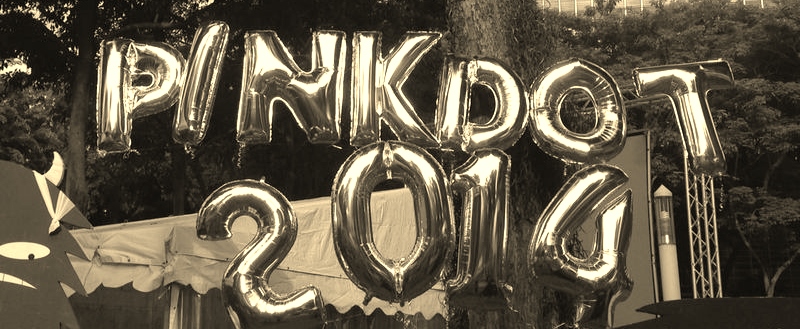
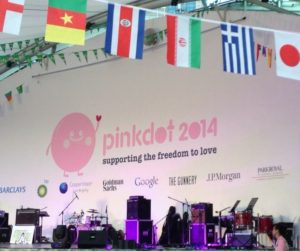
    The sixth annual Pink Dot SG was held on 28 June 2014 with a turnout of 26,000 participants. It is most encouraging and heartening that while this year’s Pink Dot SG took place amidst the controversial Wear White Movement, it continued to garner the support of the public and even set to achieve yet another groundbreaking turnout. While most, if not all of the participants are familiar with Pink Dot’s advocates, little are aware that this sixth year running event is also one of Singapore’s homegrown pride and joy. Pink Dot SG is a social movement that was started by a group of individuals—straight and LGBTQ—who care very much about the place of LGBTQ individuals in Singapore. It is an initiative that seeks to build a truly inclusive home that celebrates diversity and inclusiveness, and has since grown into an annual highly anticipated event and even inspired numerous overseas counterparts such as Pink Dot Okinawa, Pink Dot London, Pink Dot Anchorage, among others.

    IMG-20140703-WA0008The path towards true freedom to love is never easy, much less for LGBTQ individuals—as seen in the history of LGBTQ in Singapore. In December 2000, Asia’s pioneer gay personals website Fridae.com was formed and it’s first large-scale outdoor dance party held on 8 August 2001; one day shy of the country’s national day. This proved to be a test of the social boundaries in a society that upholds traditional Asian attitudes. Subsequently, such events were banned and this called a temporary hiatus to all other public dance parties of such nature. The arts scene in Singapore itself was slow to warm up to the idea of movies and plays showcasing elements of alternative sexuality and it was not until January 2008, that Golden Village—a cinema operator based in Singapore—organized the very first “The Love and Pride Film Festival” dedicated to LGBT films. On May 16, 2009, the first Pink Dot SG was held in the city-state and while it was attended by a mere 2,500 people, the event received international media attention and coverage and it has never looked back since.

    IMG-20140703-WA0010With a strong team of dedicated organizers and three very talented celebrity ambassadors—Sebastian Tan, Janice Koh and Brendon Fernandez—backed by the sponsorship and support of major multinational companies such as Goldman Sachs, Barclays, JP Morgan and Google, this year’s Pink Dot SG only goes to show the scale that this event has taken on. While it is easy to immerse oneself in the fun-filled activities, entertaining performances and the annual Pink Dot light up, the underlying importance of this event cannot be taken for granted. Apart from being a “feel good, positive event”, there is a constant need to address the issue of diversity within society and to be conscious of the fact that Pink Dot SG is not a “be all and end all” for LGBTQ. This serves as an opportunity for us to reconsider today’s definition of acceptable social norms for as Janice Koh has so very aptly said, “There was a time when left-handed people were persecuted. Pink Dot starts from the ground; touching the hearts of the community. The LGBTQ group is only deemed to be truly accepted when the Pink Dot movement ceases to exist.”

    Image courtesy of Kathy W at Pink Dot SG 2014

    Join SimplySxy’s forum discussions now on Society
    Do not miss another article on SimplySxy!  Follow us on Facebook and Twitter for our latest updates!
  • The invisible LGBT people in ASEAN: Part 2

    The invisible LGBT people in ASEAN: Part 2

    2.  The least developed: Cambodia, Laos and Myanmar

    Known as CLM, the trio is far from safe and comfortable environment for LGBT people. The process of legal policies for protection and rights of sexual minorities is rather slow, but a promising civil society has been springing up, especially in Cambodia. “There is a strong emergent activist scene there,” says Ng Yi-Sheng from ASEAN SOGIE Caucus in Singapore. The Pride Week event in mid-May ran for a whole week in the capital city of Phnom Penh, as a lead-up to the International Day against Homophobia and Transphobia. The six-day festival featured workshops on family acceptance and LGBT issues, film screenings, Buddhist blessing ceremonies at Wat Samrong, fashion shows, concerts, and the pride parade. In Buddhist Cambodia, religion does not necessarily teach that homosexuality is wrong. However, traditionalism in Cambodian families makes it hard for one to be accepted by his closest ones. It is of a major help that many of the high ranking representatives in the country had been speaking out for acceptance of LGBT people in recent years, such as PM Hun Sen and the late King Norodom Sihanouk. Although Cambodia’s constitution prohibits same-sex marriage, accounts of support and even legalization of lesbian unions, have been reported on a local level in Cambodia. In several provinces, local community chiefs have often granted ‘family documents’ to lesbian couples.

    Many would agree that in Laos, civil society is almost absent as years of communist government have silenced free media and activism. While a few have been trying to bring about positive change on a community level through education and sustainability, the case of disappearance of prominent activist Sombath Somphone speaks for itself. Nevertheless, LGBT people in Laos have been quite active in organizing events to raise awareness in the mostly rural and conservative society. In 2012, the first gay pride “Proud to be Us!” took place in the capital Vientiane. Around 100 lesbian, gay, bisexual and transgender people had gathered on a US embassy sports field to watch performances pointing to the marginalization of LGBT people in Laos. The event was organized by the US embassy and local activists, and a senior government official attended the event as well. “The aim was to show that we can live and work together in harmony and that LGBT people can contribute enormously to the country given the opportunity. We have never had an event like this. I feel empowered that this is the first step that can take us forward,” event organizer, Anan Bouapha, told Agence France-Presse (AFP). Although homosexuality is legal in Laos and there are rarely victims of violence, the LGBT community faces discrimination, especially when seeking employment in government or other higher status professions. Many are therefore left with poorly paid jobs or end up working in the sex industry.

    Myanmar, or Burma if you like, is one of the ex-colonies of Great Britain, that still keeps in place the infamous sodomy law, prohibiting sexual intercourse between adult males. While the penal code is not strictly enforced by authorities, activists note that harassment and discrimination of sexual minorities are rampant. Trans-women have been reported to be regularly harassed by police and authorities. After the end of military regime and civilian government installed after the first elections in 20 years in November 2010, taboos concerning homosexuality began to relax. Myanmar held its first gay pride event in 2012 and this year in March, the first ever public gay wedding took place. Although the couple wasn’t granted legal status, it is at least a small step towards acceptance of different sexual orientation and same-sex relations in Burma.

    3.  LGBT and Islam: Indonesia vs. Malaysia and far away Brunei

    A typical stereotype of Islamic countries’ hostility towards sexual minorities is short of the variety of cultures in Southeast Asia. Indonesia is a good example. Although the country has the largest Muslim population in the world, tolerance “highly varies within the country. While the level of queer acceptance is high in some areas, danger of religiously motivated attacks persists elsewhere,” says Ng Yi-Sheng from Singapore’s Committee of ASEAN SOGIE Caucus. Indonesia has secularist constitution and homosexuality is legal, but a recent poll shows 93 percent of Indonesians feel homosexual couples should not be accepted. While most Indonesians practice moderate Islam, hardline Islamic groups are on the rise, constantly pushing the officially secular government. In 2002, Aceh province was granted the right to use Sharia law, which criminalizes homosexuality. A year later, proposal to criminalize same-sex relations in Indonesia failed. That was more than ten years ago. While legally, the country is obviously not keen on cracking down on sexual minorities, the perception of them is another issue. Just last year Banda Aceh Deputy Mayor Illiza Sa’aduddin Djamal talked of homosexuality as “a social disease that should be eradicated” and a punishment of 100 public lashes for offenders.

    On the other hand, Malaysia has a much clearer stand with a Muslim majority and Islamic constitution; homosexuality remains illegal by the colonial-era sodomy law, criminalizing homosexual intercourse. Intolerance is rather increasing with the institutional islamization of Malaysia. The International Gay and Lesbian Human Rights Commission (IGLHRC)’s report on LGBT rights in Malaysia concluded that these people face rising hostility, discrimination and abuses. There is no protection for them in the political system. Increasingly present is the state-administered Sharia law, which criminalizes lesbian sexual intercourse (musahaqah), sex between men (sodomy), sex “against the order of nature” (liwat), and also “impersonating” opposite sex, such as cross-dressing. The government is keen on developing a particular “Malaysian vision” and the LGBT people are clearly not part of it. Sexual orientation and gender identity issues are rejected by Malaysia at all human rights platforms: national, regional (ASEAN) and international (UN).

    At the end of ASEAN’S LGBT tail is Brunei, recently slammed across the world for passing a new penal code that calls for death by stoning for same-sex relations. Those have long been illegal in Brunei, though the maximum punishment was ten years of jail. The only solace for LGBT community there is that Brunei has been holding an effective moratorium on death sentences since 1957. Many are hopeful this custom will continue. Others point to the obvious fact that criminalization and death penalty for same-sex relations between adults violate rights to privacy, equality, freedom from arbitrary arrest and detention.

    Part 1 can be read here http://simplysxy.com/articles/2014/07/05/the-invisible-lgbt-people-in-asean/

    Part 3 to follow can be read here at http://simplysxy.com/articles/2014/07/06/the-invisible-lgbt-people-in-asean-part-3/

    Image courtesy of Shutterstock

    Join SimplySxy’s forum discussions now on Society
    Do not miss another article on SimplySxy!  Follow us on Facebook and Twitter for our latest updates!

  • The invisible LGBT people in ASEAN: “This is our lives we are talking about!”

    The invisible LGBT people in ASEAN: “This is our lives we are talking about!”

    A transgender girl baring her breasts against the military coup in Thailand, marked with pro-democratic slogans and spreading her legs, Aum Neko has once again caused a social media fury for her civil disobedience methods. Along massive positive support, the transgender student was subject to attacks on her sexual orientation and identity. “Damn ladyboy” was just one of the softer comments on social networks. Around the same time, in neighboring Malaysia, 16 transgender women were sentenced to seven days in prison and a fine for “cross-dressing”. Human Rights Watch called it a “violation of their rights to freedom of expression and privacy”. This past June’s Pink Dot, LGBT rights rally, in Singapore saw a white opposition from Muslim and Christian religious groups, calling on people to wear white in protest. On a more positive note—the first public same sex wedding was held in Myanmar this spring and surprisingly, Vietnam’s communist government doesn’t seem as hostile to LGBT people than to other civil and human rights movement.

    “It’s a mixed bag (in ASEAN)”, says Ng Yi-Sheng from the Singaporean Committee of ASEAN SOGIE Caucus, campaigning to include LGBT (IQ-intersex,questioning) rights in ASEAN’s human rights documents. “On one hand, we have countries where civil unions will probably soon be legal, such as Thailand. On the other hand, we have countries where (same sex relations) are punishable with death by stoning, such as Brunei. And then we have countries in between, like Singapore, where there is a moderate level of acceptance but still a law against gay male sex.” There is one thing though, that all ASEAN members have in common, and it illustrates the long way LGBT groups have in Southeast Asia to achieve basic human rights, regardless of sexual orientation and identity. “We don’t have national anti-discrimination or anti-hate crime legislation with only some city-level ones in the Philippines. This is what worries most of us, much more than marriage and adoption rights,”Ng Yi-Sheng points out. So how visible are LGBT people in Southeast Asia, and are ASEAN and its member countries members rather, turning a blind eye to their existence in the first place? Here is our evaluation based on NGO reports, ASEAN SOGIE Caucus and International Gay and Lesbian Human Rights Commission (IGLHRC) analysis.

     1.  The safe havens: Thailand and Philippines

    Thailand has been often called the number one ASEAN country for sexual minorities’ rights and acceptance, decriminalizing homosexuality as early as 1956. LGBT people from neighboring Laos, Cambodia or Burma would agree, often migrating to the “Land of Smiles” for a more positive life, free of fear and discrimination. Relatively tolerant to gays and lesbians, Thais are close to becoming the first in ASEAN to abolish ban on same-sex marriages. A sex change is possible here for a few thousand dollars and “kathoeys”— also known as transgender women—have become a popular part of entertainment industry as well as the vibrant sex trade. Nevertheless, Thailand remains more than stereotyped against transgender people. They are generally associated precisely with these ‘entertaining’ professions, extending only to beauty and fashion. Other sectors remain conservatively closed to “kathoeys”. Moreover, a study by UNESCO and Mahidol University from November 2013 found that a third of 2,000 LGBT students had been physically harassed and only a minority had shared their bullying experience with anyone, often resulting in depression and suicide attempts (7%). Analysts also point out that Thai government and authorities often play down hate crime against LGBT people as ‘love affair crime’. While in practice it means little, Thailand is the only ASEAN country supporting the UN declaration oF LGBT rights.

    This two-faceness is present in the Philippines as well. Somewhat advertised around the world as one of the most ‘gay friendly’ countries, this is apparently a ‘sad misinformation’, says Professor Neil Garcia in IGLHRC’s research paper on the Philippines. The study concludes that hate crime, discrimination and violence against LGBT people are widely reported, but the lower end of justice system is cutting sexual minorities short of effective protection, especially because of lack of understanding by local authorities. Consensual homosexual relations, homosexuality and transgenderism are not illegal in the Philippines, but LGBTpeople are rather invisible to the legal system. Nationwide surveys have shown that only less than 14 percent of Filipinos approve of homosexual acts, but more than half of the respondents respect the right of person to be homosexual. Officially a secular state, mostly Roman-Catholic, Philippines therefore adopts the Vatican’s stance on LGBT people, but they are a bit more tolerant than that. “A strong activist scene is present there and general acceptance is more widespread,” concludes Ng Yi-Sheng from Singaporean Committee of ASEAN SOGIE Caucus.

     2.  Rising star and the hybrid: Vietnam and Singapore

    Vietnam has jumped out of its label of the ‘least developed’ countries of ASEAN recently and rather quickly with enormous economic growth. While this is less true for human development or democratization, the LGBT movement has been one of the most effective amongst the increasing call for civil rights and internet freedom,. The communist government had been considering to abolish the ban on same-sex marriages since 2012, and has since then decriminalized same-sex weddings and allowed same-sex couples to live together. However, while the communist government is somewhat relaxed towards sexual minorities, the society remains conservative, says Ng Yi-Sheng from the Singaporean Committee of ASEAN SOGIE Caucus. “The route to civil unions is suggested, but general awareness remains low.” The biggest opposition against LGBT rights comes from Vietnamese Women’s Union, which sees same-sex marriage as a threat to traditional family values. And the challenge goes on, as homosexuality is still a taboo topic in the largely Confucian Vietnam.

    The most developed country of ASEAN, Singapore, has been moving in-between the traditional tight legal grasp on society and aspirations of new civil freedoms. On 28 June 2014, Singapore held the sixth year of “Freedom to Love” LGBT rights rally. Last year’s ‘Pink Dot’, in honor of ‘little red dot’ a.k.a. Singapore, has been the largest gathering of civil society ever with more than 21, 000 people attending. The general tolerance against LGBT people is on the rise especially among young generation of Singaporeans. “The acceptance is growing, but laws are bad,” says Ng Yi-Sheng. As a former British colony, Singapore inherited the ‘sodomy law’, outlawing sex between men. Two gay men challenged the penal code as unconstitutional in 2007, but after years of heated debate, it was upheld in the High Court last year. While the calls to abolish the sodomy law are increasingly more frequent, so is the push against them, coming mainly from growing evangelical congregations: a big lobby group that has a direct effect on opinion-making in Singapore. The ‘Pink Dot’ celebration this week is expecting a protest by white-wearing conservative religious groups—Christian and Muslim alike.

    Part 2 can be read here http://simplysxy.com/articles/2014/07/05/the-invisible-lgbt-people-in-asean-part-2/

    Part 3 can be read here http://simplysxy.com/articles/2014/07/06/the-invisible-lgbt-people-in-asean-part-3/

    Image courtesy of Shutterstock

    Join SimplySxy’s forum discussions now on Society
    Do not miss another article on SimplySxy!  Follow us on Facebook and Twitter for our latest updates!
  • Are Men Really From Mars?

    Are Men Really From Mars?

    It has been ingrained in us since birth that men look for sex and find love and women look for love and find sex. For example, take every romantic comedy/romance novel ever written, women are often portrayed as the romantic saps whereas men are testosterone-filled and often sexually motivated. Research on attitudes toward sexuality and relationships supports this idea. For example, studies suggest that men report a stronger desire for casual sex, more permissive attitudes toward sexuality, and more sexually-oriented expectations for relationships as compared to women (Clark & Hatfield, 1989; Petersen & Hyde, 2010; Schmitt, Couden, & Baker, 2001).

    Despite these well-supported gender differences, most of the research has relied on self-reports, which measure explicit attitudes/preferences. These explicit measures are not very reliable because people can easily fake or enhance their responses to make themselves look better.One way to get around some of these concerns associated with self-reports is to assess implicit attitudes. Implicit attitudes are attitudes that exist just below awareness. They are the attitudes that people hold that they are not necessarily aware of. Thus, because these attitudes are subconscious, people are unable to fake or distort their responses.

    The most common way to capture these implicit attitudes is to use a computer test called the Implicit Association Test (IAT). In a recent study of mine conducted at the University of New Brunswick (UNB), myself and a colleague did just that. In particular, we were able to use the IAT to assess people implicit attitudes toward sex and romance (Thompson & O’Sullivan, 2012). By showing 182 UNB students, 68 men and 114 women, images of couples engaged in various sexual activities as well as images associated with romance, the IAT revealed that BOTH men and women displayed an implicit preference for romance as compared to sex. Meaning that men AND women preferred images portraying romance over those portraying sex.

    Although these results may come as quite a shock, it is not completely unheard of in academia. In fact, some studies have indicated that men may be just as romantic as women if not more. Specifically, the latest findings by psychologist Marissa Harrison (2011), from Pennsylvania State University in the US, determined that men fall in love quicker and take longer to fall out of love when compared to women. In fact, it was found that men were three times more likely to declare their love before women when involved in a heterosexual relationship.

    Image courtesy of Shutterstock

    Join SimplySxy’s forum discussions now on Society
    Do not miss another article on SimplySxy!  Follow us on Facebook and Twitter for our latest updates!

  • Are Bert and Ernie Gay? :)

    Are Bert and Ernie Gay? 🙂

    Bert and Ernie. Gay? Why is this important?

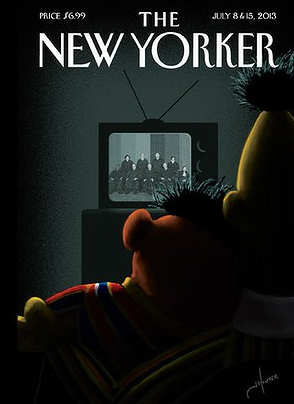
    I was horrified to read years ago that Noddy and Big Ears were forced to deny ‘improper relationship’ in Toy Town. Not to be outdone, it appears that Bert and Ernie, the iconic residents (and roommates) of the long-running children’s TV series Sesame Street, have been ‘outed’ over their (assumed) sexual identity by no less than the New Yorker magazine in the wake of the US Supreme Court’s landmark ruling to overturn the Defence of Marriage Act.

    newyorkerIn the cover image featured on the left, the couple are sitting on a couch with Bert’s arm wrapped around Ernie and Ernie’s head nestled against Bert’s shoulder. They are watching the Supreme Court decision granting same-sex couples the “equal liberty” guaranteed by the US constitution’s Fifth Amendment.

    As the US grapples with serious economic and social challenges, the release of the cover image has provoked fierce debate, about the sexual orientation of this couple and the potential for litigation by Sesame Workshop—which owns the characters—against the magazine.

    I loved the denial by Sesame Workshop back in 2007 opining: “[Bert and Ernie] are not gay, they are not straight, they are puppets. They do not exist below the waist.”

    The characters Noddy and Big Ears and Bert and Ernie demonstrate friendship and conflict resolution in a manner that children can positively relate to. Is it really important that these characters have a label for their sexual orientation? Is the fact that these characters are friends not enough? Are these characters less educational, less relevant and potentially despicable if they exist below the waist?

    What then is the optimum age to start to discuss the issue of sexual orientation with our kids?

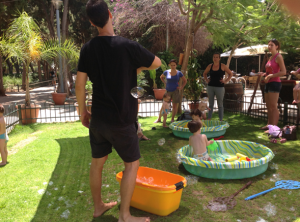
    I had an unexpected answer tcentero this question during a recent visit to Israel; I was privileged to view a kindergarten session in a unique programme designed in collaboration with the national education system and the kindergarten departments in several city municipalities. In the gay centre in Tel Aviv, I was drawn to the delightful sound of children’s laughter as their male kindergarten teacher was blowing giant bubbles for the children to play with in the shade of the Meir Gardens next to the centre.
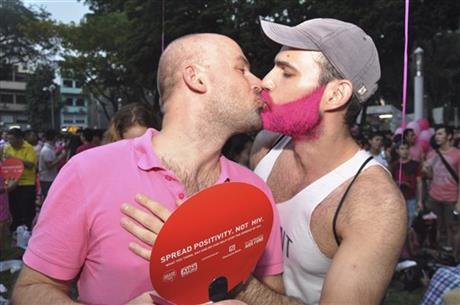
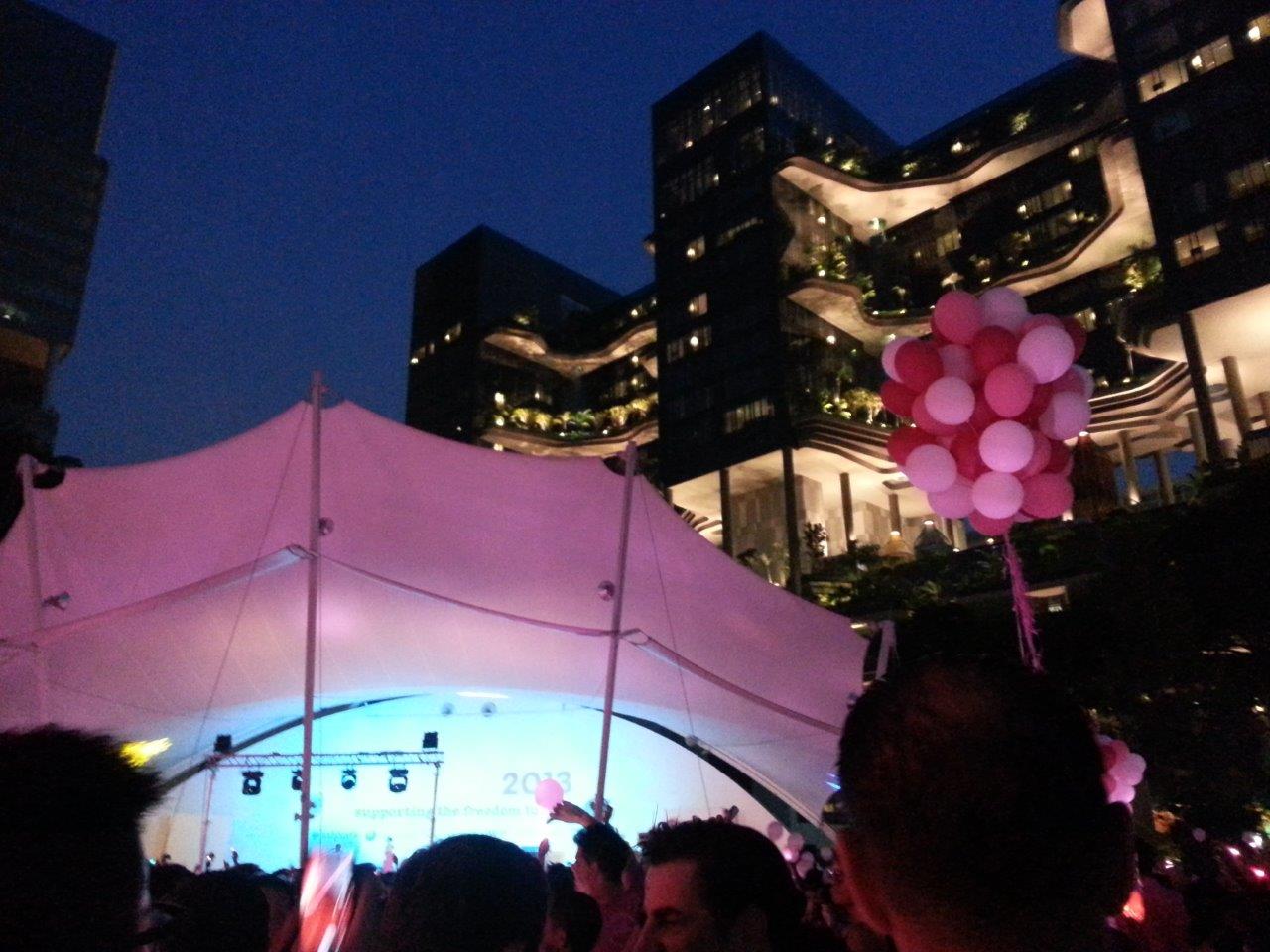
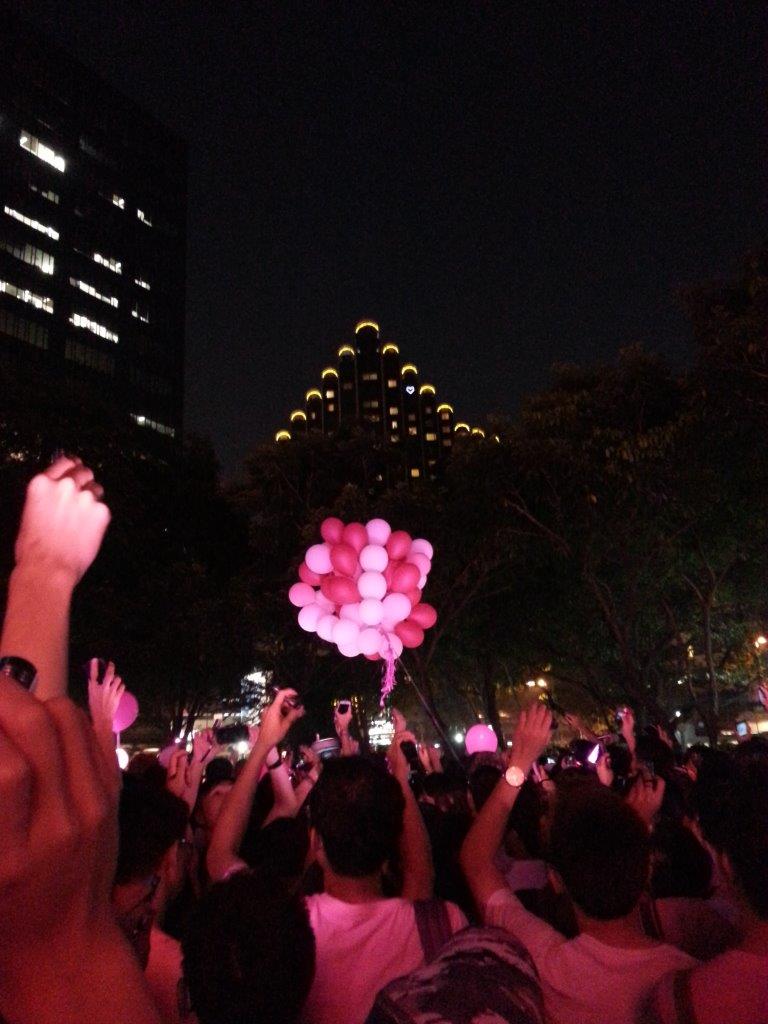
    The notion that education begins in the kindergarten years takes on a real currency here as a team of psychologists, education counsellors, teachers and representatives of the education system have been developing a unique program, which would help kindergarten teachers’ deal with children who are raised in LGBT(lesbian, gay, bisexual, and transgender) families and acknowledge their special needs.

    With LGBT parenthood on the rise, there is a need to introduce these new and non-traditional families to our community. Any child who is connected to general community media can see or hear discussion about gay marriage. Do we leave them to form their own opinions or do we step up to have conversations with our kids about respect for differences across the board? Do we introduce our kids to the possibility that they can like/dislike or agree/disagree with others while still enjoying mutual respect?

    I believe that in a healthy society, it’s important to acknowledge that some children are part of a non-traditional family or are friends with other children from non-traditional families and to respect diversity while enjoying our individual sexual values.

    As a psychosexual educator, parents often ask me how they can start conversations about sexual diversity with young children. I recommend, as a general rule, to trust kids to ask what they specifically want to know and to respond only to the questions they ask in basic terms. Once your child has processed that answer, and they have felt safe and respected to ask any questions, they will seek more information

    Parents can use specific observations to help children understand differences such as comparison of different toes. Regardless of differences in sizes, shapes and colours of everyone’s toes, most people young and old, can still walk and play. Some people choose to decorate their toes and put them on display and others don’t. Grandma’s toes may hurt her at times but that doesn’t stop her from being loved and valued. Continue to build on that foundation to create discussions when opportune to raise differences in religious beliefs and traditions and the way different people express their love depending on their sexual identity or personality profiles.

    When parents role model their own respect for differences and respond thoughtfully to occasional confusion over something new and different, they will allow their child to feel safe to explore their growing world and engage in further talks about sexuality.

    I realized there was a need for a 21st century tool to help parents and teachers manage the new challenges in communicating sexual respect and diversity. I wrote the sex education app for iPad ‘Parents, Tweens and Sex’ and designed it in collaboration with Swinburne University Design to support parents to have these confronting sexual conversations with their ‘tweens’ (10–13 year olds). I was motivated by my experience as a counselling psychologist and clinical sexologist and also as a parent to support other parents to be comfortable to have these conversations to enable them to share their personal values and ethics with their tweens.

    One conversation starter in the ‘Parents, Tweens and Sex’ app examines the notion of ‘same, same but different’. In addition, it guides parents in discussions around choosing to celebrate people’s sexual differences while delighting in sameness. Go Bert and Ernie!

    Images courtesy of Sarah Calleja, Kathy W

    Join SimplySxy’s forum discussions now on Society
    Do not miss another article on SimplySxy!  Follow us on Facebook and Twitter for our latest updates!

  • Pink Pride

    Pink Pride

    It is time to hit the gym and start eating healthy so as to look good for the different LGBT events that is happening in June 2014. This month’s calendar has suddenly become jam-packed with Shanghai Pride moving back to June and President Obama declaring June as LGBT Pride Month in the US. In anticipation for these events, let us review the top five moments for two major LGBT events that took place last year: Pink Dot and Taiwan Pride.

    Pink Dot started around 5 p.m. and during this time you could find many laying down picnic mats, snacking on food and chatting with friends while basking in the evening sun. Just off the car park, there were booths of the different LGBT NGOs and event sponsors. If you took a walk around the park, you would be sure to stumble upon old friends. There were performances from various groups to entertain us and once the sky turned dark, everyone gathered towards the center of the park with their pink cellophane filters on their phones light for Pink Dot’s classic lit-up with an aerial photo shoot. There were about 21,000 attendees last year which was a record high for the Singapore LGBT event. Every year, the event gets bigger and this year will be no exception.

    20130629_19370420130629_194818

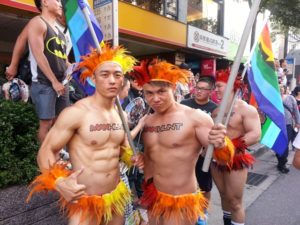
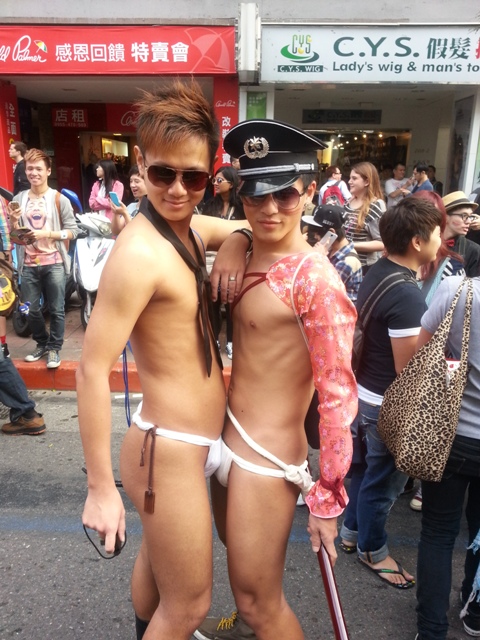
    Taiwan Pride on the other hand began about 2 p.m. but the cool autumn breeze made the 4 km walk a joy. The parade route started and ended in front of Taipei City Hall. Passing by Sun Yat-sen Memorial and then going up Dunhua South before looping back to City Hall via Zhongxiao East. We saw many people dressed in sexy costumes, parade floats catering to different fetishes and people from varied walks of life striding side by side. When you have 60,000 people walking with you, the atmosphere is nothing short of electric.

    20131026_14552120131026_152753

    Now for my personal top five moments of these two events.

    20131026_154207Number five: There were a lot of hot and cute guys. I was surprised I did not get diabetes from all the eye candy. One advice for anyone attending these events for the first time is not to be shy. Please go up to anyone you like and say hello, take a picture, or get a number.

    Number four: The Singapore flag flying pass during Pink Dot. Coincidentally on the very same day, the flight path of the Chinook carrying a giant Singapore flag for the National Day Parade rehearsal was over Hong Lim Park. The flag was accompanied by two Apaches which made it a truly marvelous sight to see.

    Number three: Singing “Home” by Dick Lee after the Pink Dot light-up. Usually after the Pink Dot light-up, the event organizer will play the theme song for that year’s event. The song “Home” was last year’s song and it is a very emotional national song for many Singaporeans.

    Number two: Taiwan Pride was just plain awesome. I could easily ramble on a list; walking with 60,000 people in the parade, the wonderful weather, having Taipei 101 in the backdrop, the people and the culture. You just have to be there in person to experience how magical Taiwan Pride can be.

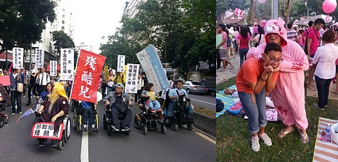
    pride_1Number one: Seeing the different minorities of the Taiwan LGBT community. Taiwan is much bigger in population then Singapore, which makes their LGBT minorities hard to remain unnoticed. During the parade, I had a chance to walk along many disabled LGBTs; some in wheelchairs and others born with birth defects. It really had me thinking about how difficult their life could be. It is not always fun and games in the LGBT community as there is a lot of discrimination within this unified rainbow. I empathized with them and realized how blessed my gay life has been.

    Images courtesy of Pink Dot SG rally organizers © 2013 and Sahib Torun

    Join SimplySxy’s forum discussions now on Society
    Do not miss another article on SimplySxy!  Follow us on Facebook and Twitter for our latest updates!

  • Neo-Burlesque, Variety or Striptease if You Please …

    Neo-Burlesque, Variety or Striptease if You Please …

    Watching a documentary on BBC Three about nurses being taught how to perform burlesque, I sat and thought maybe this is something I should try, so, I began my research into the unknown world of burlesque. I had just given birth to my beautiful son Leone, who is now nine years old, I knew I had to lose weight and regain my self confidence. I wanted to do this for myself and not anyone else.

    I booked for a four week beginners class with http://www.burlesquebaby.com/ in London which was two hours per week for four weeks. The excitement and nerves running through my body was already taking a positive effect on me. I went to my very first burlesque class in 3 inched heels, leggings and a loose T-shirt. I wanted to feel relaxed and comfortable as my weight was 22 stone; I didn’t feel ready to wear a corset or stocking at this point in time.

    The ladi337800_281491435237817_1748195253_oes in the class were of all ages, body shapes, and creed. We were all feeling the same, not sure what to expect in our first class, but we all got on really well and supported each other.The teacher was fully dressed in her burlesque outfit and looked stunning. She not only inspired me but her class was making me rediscover my body confidence and how to move in a sexual and powerful way.

    When the music started, I did not recognize any of it, as it was by Sonny Lester, David Rose and way past the jazz and blues genre. I loved it! I felt I could escape as the music was pumping out of the speakers, we were all following our teacher’s lead. She was amazing and I couldn’t take my eyes off of her! Her hips, bumps and grinds, her flawless moves were making me want to continue the class for two hours more.

    Our homework after the first class was to research the past burlesque stars, legends and the music. I bought many books on burlesque too—Jo Weldon, is the best when it comes to knowledge of burlesque! After my four weeks course, I saw Simon Cowell on the TV advertising for Britain’s Got Talent 2009, he said, “I’m looking for something I have never seen on the show before”. I thought, I know he has never had anyone striptease for him before, Should I audition? I got online and submitted my application form, not expecting to hear back from them. However, I had my first invitation to audition for the production team in Birmingham, UK. My nerves were at an all time high and while I had second thoughts about it, I went for it anyway. They were very welcoming and kind at the first audition. It was a long day in the holding room, but totally worth it.

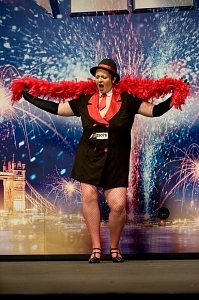
    Four months wentinsert by and I received a letter inviting me to the live auditions in Birmingham to striptease in front of Simon Cowell, Amanda Holden and Piers Morgan. The Alexandra Palace held an audience of 2,500 people. The last time I danced in front of an audience of this size was when I was competing for the World Disco Dance Champion. Ant and Dec were in the wings with me, and wished me luck as I walked on the stage. All I could concentrate on was the judges. The judges had their questions for me and wished me well with my audition. The music started and I was so nervous, but I thought this is it: the last chance to dance again. Adrenaline was pumping through my veins, I felt sexy, in control and powerful. I had not felt this way since I was in my early 20s. Before I knew it, one of my nipple tassels flew off, so I threw it to Simon Cowell, hoping he would laugh but at the end of my act, he came up on stage and placed my tassel back on my breast for me, that made my day! I was so lucky, I made it to the semi-finals and danced to my favourite 80s track Flashdance … What a Feeling.

    I was subsequently discovered by Sharon Kay, the director and CEO from Burlesque Baby TM, http://www.burlesquebaby.com/ I danced at her burlesque show in London and that was my very first experience of being welcomed into the burlesque community. Since then, I have also hosted Burlesque Baby hen parties in Oxfordshire and the Cotswolds during weekends. I recently won HEAT 2 of the Neo Burlesque Awards 2014, run by Burlesque Baby. This competition is open to all burlesque and boylesque performers from around the world and it is a fantastic event. The audience get to be involved in the judging process along with the judges. Burlesque has changed my life for the better. I have lost seven stone in weight since I started dancing again. My self-esteem and confidence are much greater now. I am also more involved in the burlesque community and really enjoy meeting everyone with the same passion. I feel powerful and sexy again !!!

    I have recently connected with a burinsert3lesque legend from the US known as “Satan’s Angel”. She too, has taken me under her wing. I’m very excited to be competing in the Neo Burlesque Awards on 20 November 2014 at Madame Jo Jo’s, Soho, London. In addition, I have entered myself in the Miss Pinup UK 2014, which is a modelling competition. I love burlesque because I am my own choreographer, costume designer, hair and makeup stylist. I am in control of my act, no one can put their hands on my body as my body is my art. Any women out there reading this article, if you are thinking about trying a burlesque class, I’d say ” GO FOR IT”.


    Fabia Cerra aka Signorina Fabialosa
    http://pinupuk.com/girls/signorina-fabialosa/
    Please visit http://www.vaudevilleworld.com/ for more information about burlesque


    Images courtesy of Fabia Cerra

    Join SimplySxy’s forum discussions now on Society
    Do not miss another article on SimplySxy!  Follow us on Facebook and Twitter for our latest updates!

  • I Do, Do You?

    I Do, Do You?

    Being a gay guy with quite a fair bit of failed relationships does not mean that the notion of marriage (or civil union or whatever you call it) does not cross my mind every once in a while. Not that I would picture myself in a wedding dress, but I do think about how my wedding ceremony and dinner will be like, what kind of band I am going to hire and what sort of food I am going to serve to my guests (yes, my guestlist is almost done with a few amendments). With each failed relationship, the dream wedding seemed to be further away, but I never did give up hope as I foresee my future with a partner till the end of time (or at least till death do us part).

    Indeed, just merely two weeks ago, I was proposed to by my then-partner-now-turned-fiancé during our second anniversary celebration. Not really a tear-jerking moment or how I would have imagined it to be (there was no kneeling down or romantic scene and/or music playing at the background), but it served its purpose and I was touched, to say the least. However, many questions followed—Will there be a wedding? Should we start planning the reception now? Do we need to find a venue? Who can officiate at our wedding? Apparently according to my partner, the proposal is the ultimate peak of the relationship and we can now spend eternity together (I can almost hear the thunder in my head roaring). I pretty much guessed that there are fundamental cultural differences and misunderstandings between us (oh, did I mention that he’s Filipino and I am a true blue Singaporean).

    A few of my close friends told me that since I have “chosen” this unconventional route of being with a guy, I would have to live without a wedding and that the marriage certificate is just a “piece of paper”. I gave them quite an earful, but not to the extreme. First of all, I did not “choose” to be with a guy as no one with a sane mind would choose a lifestyle where one has to struggle against peer pressure and social norms (basically to swim against the current just to find love). Second of all, I do not care about the certificate to be very honest, as I do not need the government to recognize the love I have for my man and vice versa. So why a wedding you ask? Simply because I want to share the joy and love of the holy matrimony with close friends and families and isn’t this what most weddings (regardless conventional or not) are about?

    So like any good relationship’s advice, I “communicated” with thy fiancé and after extensive discussions with him, I can understand his reasons as to why a wedding is not in the line-up of events in our lives. He focuses on the more practical issues: saving up to get a place of our own and living happily ever after, as compared to “throwing” money into one big party with no practicality to speak of (now you know why I can marry this guy). Despite understanding his viewpoint, I feel that a wedding is still important (to me), even more so for a gay and interracial couple.

    So as you are reading this article, I may have whispered enough in his ears to convince him of a mini wedding ceremony and reception. I may be a semi-closeted gay; I do need to put my head out once in a while to breathe in some fresh air.

    Image courtesy of Shutterstock

    Join SimplySxy’s forum discussions now on Society
    Do not miss another article on SimplySxy!  Follow us on Facebook and Twitter for our latest updates!