Author: Sarah Calleja

  • “The Future of Sex” – Closing Insights from Sarah Calleja

    “The Future of Sex” – Closing Insights from Sarah Calleja

    The future of sex has arrived

    Have you explored virtual sex toys that promise ‘interactive sex’ with another person over the Internet? Would you consider sex with a robot? What about ‘Smart insertables’ which help women train their pelvic floor muscles with games? Have you heard US regulators have just approved the release of “female Viagra”, a drug known as Addyi?

    Welcome to the future that’s customizing individual sexual options.

    The New York Toy Collective believe that consenting adults should be able to have whatever kind of sex they want, with whoever they want, regardless of the body they or their partner were born with. They specialize in self-affirming products for all forms of sexual expression and are the first and only company to use 3D scanning technology to allow consumers to create sex toys modelled after their own bodies.

    For those who own a 3-D printer, the site MakerLove offers all types of free sex toy designs for downloading for people who want the freedom to privately own their own                                                                                          pleasure. 

    For those wanting more than the standard sex robot, at between $US6,000 to $US60,000 Hermaphrodite-doll enthusiasts can order removable genitals so they can go back and forth between genders. A Pew Research Centre report claims that by 2025 robot sex will be “commonplace.”

                     HappyPlayTime's Mascot!
    HappyPlayTime’s Mascot!


    Apps like SexPositive, developed by the University of Oregon, teach safe sex practices though a fun, nonjudgmental interface. The cartoonish app HappyPlayTime tries to take the stigma out of female masturbation by guiding women through the process.

    Dating apps can provoke anxiety with users when people are unsure how to best manage protocols like writing their bios; including photos; being honest about age; exaggerating positives or considering outright lying.

    Some people worry about being shamed when on various dating sites or exposed by hackers on sites like Ashley Madison. It would be interesting to have a discussion why up to 31 million on Ashley Madison alone are not so concerned about internet privacy and will pay for the opportunity to explore sexual fantasy with a random stranger and not their partner.

    Technology can also be used to enable healthy sexual expression. Safe sex apps are readily available to facilitate a healthier sex life.

    Award winning educational apps like Parents, tweens and sex app enable and empower parents and their tweens to improve communication and advocacy when discussing confronting sexual issues.

    Explore Women’s sex allows users to appreciate the clitoral anatomy and how they are involved in sexual arousal.

    Dating IRL (In Real Life) anymore?

    In the recent past, lengthy surveys designed to figure out who you are made predictions for compatibility. Now, intuitive technology learns your preferences based on your actions. Online dating trends reveal almost a quarter of online daters find a spouse or long-term partner through online dating but, women get a ton more attention than men.

    While in the past we met prospective partners through work, family or a shared interest, the new wave of ‘meet ups’ which are independently-run and based on single people’s quirks and interests are responding to people’s desire to meet IRL.

    When people meet IRL, they can read facial and body cues when interacting with other people. Grooming, hygiene, socio-economic status and capacity to communicate are also considerations for people when assessing a prospective partner.

    IRL separates digital fiction from reality.

    Does technology help relationship sex – you know the type between live, consenting adults across the sexual spectrum? Or, is technology the new ‘secret affair’ that demands our attention and disrupts, corrupts and interrupts love?

    To be the best lover, you must be ‘present’ and ‘in the moment’ with your partner, to activate all your senses, smell, touch, sight, sound and hearing. This allows you to be fully present, in thought, word and deed. It isn’t about sex toys; it’s about connecting, being curious, reaching out, experimenting, tuning in and responding in kind. It’s about being desired and validating your capacity to be pleasured and to do the pleasuring. It’s about getting off on the chemistry.

    Or, we could choose to have sex with (compliant) robots and a future where sex devices interact with a movie or a computer avatar.

    Or both….

    My personal and professional experience has been that we all value physical and emotional intimacy too much to give that up. It seems like the future trend is IRL, because a virtual relationship isn’t sustainable. Playing with technology helps us to engage our curiosity, play and experiment with our casual or long term partners in ways that were never possible in the past, but –

    If a time came when a robot could give us more pleasure than a human, then we humans should be trying harder!


    Sarah Calleja is a Counselling Psychologist and Clinical Sexologist, media consultant, author, and app developer.

    When Sarah isn’t hard at work as a counselling psychologist and clinical sexologist, or consulting for the media, she loves being a trendsetter in the field of sexology. Sarah regularly presents at international conferences and creates training sessions for health professionals.  She writes opinion-editorials for a variety of media and personal blogs can be viewed on her website.

    Sarah’s new app, ‘Parents, Tweens and Sex’, a first of its kind app for the iPad designed in collaboration with Swinburne University and featured as a finalist in the digital design category of the 2013 Premier’s Design Awards. This interactive app empowers parents and tweens with the necessary resources to make informed choices to be mindful, comfortable, respectful and responsive when they choose to engage in sexual relationships.

    Sarah is also a wife, mother, mentor, friend and the proud owner of laugh lines!


    This article has been republished with permission by Sarah Calleja. To view the original post, read it here

    Images courtesy of Nina Calleja
    Have an amazing experience or tips you like to share on SimplySxy? Drop us an email at editorial@SimplySxy.com!

     

  • Why is defining sex so damn complicated? Sarah Calleja kicks off SEXtember!

    Why is defining sex so damn complicated? Sarah Calleja kicks off SEXtember!

    SEX….well, it’s inspiring, thrilling, pleasurable, awkward, painful, embarrassing, confusing and provocative – it’s complicated!

    The Merriam-Webster definition defines sex as ‘the state of being male or female’ and ‘physical activity/touch that is related to and often includes sexual intercourse.’ However, a study from the Kinsey Institute found that no uniform consensus existed when it came to defining sex.

    As the pioneering sex researcher Alfred Kinsey put it, the only universal on human sexuality is variability itself.

    In response, I have invited the sexologists who are contributing to SEXtember, to include their definitions to reveal the diversity of cultures and opinions.

    Feeling acknowledged as a sexual person contributes significantly to our sense of well-being and our identity so it is significant that we are now inclusive of lesbian, gay, bisexual, transsexual, intersex and queer (LGBTIQ) people. Many organisations now provide an Ally support service which affirms the experience and rights of these diverse sexual identities. We also acknowledge Asexual people as part of the sexual spectrum.

    As a Counselling Psychologist and Clinical Sexologist, I wanted to clarify individual sexual perspectives to avoid confusion by re-framing the discussion of sexuality in the context of informed consent.

    To avoid confusion, I respect my clients and colleagues by asking them their personal definitions of sex, then I have clarity and I can proceed to work with that understanding.

    My VISION is to take control of sexuality away from the extremists and profiteers and create an awareness and respect for sexual diversity, curiosity and experimentation. We want adults to role model to our children the concept of Sexual Integrity – when equal privilege embraces equal responsibility with curiosity and humour.

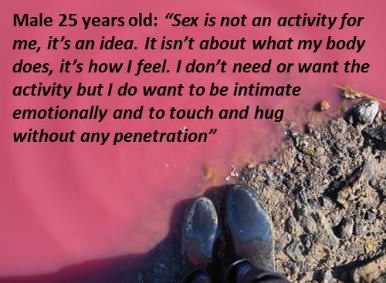
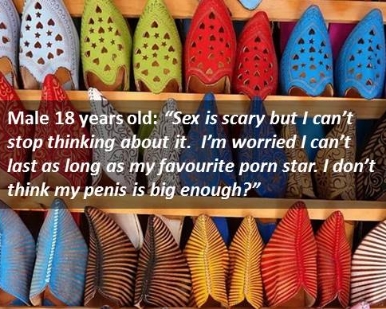
    My intelligent, insightful clients have shared with me their wisdom and reflections:

    1

    2

    3

    4

    5

    6

    7

    ……..It’s a matter of perspective isn’t it?

    So, my personal definition of sex?

    “Touch that is joyful and sensuous between consenting adults who celebrate mutual responsibility and privilege”

    At the end of the day, healthy sexual relationships are about connecting in real life – touching that special someone’s body and heart to create warmth and intimacy. It is creating romance and investing in companionship where you equally feel desired, valued and safe. Sex is fundamentally the difference between a friendship and a relationship.

    What I share with my clients about sex is “If you’re not having fun, then you’re not doing it  right!”


    Sarah Calleja is a Counselling Psychologist and Clinical Sexologist, media consultant, author, and app developer.

    When Sarah isn’t hard at work as a counselling psychologist and clinical sexologist, or consulting for the media, she loves being a trendsetter in the field of sexology. Sarah regularly presents at international conferences and creates training sessions for health professionals.  She writes opinion-editorials for a variety of media and personal blogs can be viewed on her website.

    Sarah’s new app, ‘Parents, Tweens and Sex’, a first of its kind app for the iPad designed in collaboration with Swinburne University and featured as a finalist in the digital design category of the 2013 Premier’s Design Awards. This interactive app empowers parents and tweens with the necessary resources to make informed choices to be mindful, comfortable, respectful and responsive when they choose to engage in sexual relationships.

    Sarah is also a wife, mother, mentor, friend and the proud owner of laugh lines!


    This article has been republished with permission by Sarah Calleja. To view the original post, read it here

    Images courtesy of Nina Calleja
    Have an amazing experience or tips you like to share on SimplySxy? Drop us an email at editorial@SimplySxy.com!

  • Are Bert and Ernie Gay? :)

    Are Bert and Ernie Gay? 🙂

    Bert and Ernie. Gay? Why is this important?

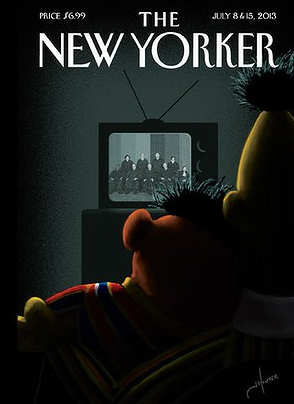
    I was horrified to read years ago that Noddy and Big Ears were forced to deny ‘improper relationship’ in Toy Town. Not to be outdone, it appears that Bert and Ernie, the iconic residents (and roommates) of the long-running children’s TV series Sesame Street, have been ‘outed’ over their (assumed) sexual identity by no less than the New Yorker magazine in the wake of the US Supreme Court’s landmark ruling to overturn the Defence of Marriage Act.

    newyorkerIn the cover image featured on the left, the couple are sitting on a couch with Bert’s arm wrapped around Ernie and Ernie’s head nestled against Bert’s shoulder. They are watching the Supreme Court decision granting same-sex couples the “equal liberty” guaranteed by the US constitution’s Fifth Amendment.

    As the US grapples with serious economic and social challenges, the release of the cover image has provoked fierce debate, about the sexual orientation of this couple and the potential for litigation by Sesame Workshop—which owns the characters—against the magazine.

    I loved the denial by Sesame Workshop back in 2007 opining: “[Bert and Ernie] are not gay, they are not straight, they are puppets. They do not exist below the waist.”

    The characters Noddy and Big Ears and Bert and Ernie demonstrate friendship and conflict resolution in a manner that children can positively relate to. Is it really important that these characters have a label for their sexual orientation? Is the fact that these characters are friends not enough? Are these characters less educational, less relevant and potentially despicable if they exist below the waist?

    What then is the optimum age to start to discuss the issue of sexual orientation with our kids?

    I had an unexpected answer tcentero this question during a recent visit to Israel; I was privileged to view a kindergarten session in a unique programme designed in collaboration with the national education system and the kindergarten departments in several city municipalities. In the gay centre in Tel Aviv, I was drawn to the delightful sound of children’s laughter as their male kindergarten teacher was blowing giant bubbles for the children to play with in the shade of the Meir Gardens next to the centre.

    The notion that education begins in the kindergarten years takes on a real currency here as a team of psychologists, education counsellors, teachers and representatives of the education system have been developing a unique program, which would help kindergarten teachers’ deal with children who are raised in LGBT(lesbian, gay, bisexual, and transgender) families and acknowledge their special needs.

    With LGBT parenthood on the rise, there is a need to introduce these new and non-traditional families to our community. Any child who is connected to general community media can see or hear discussion about gay marriage. Do we leave them to form their own opinions or do we step up to have conversations with our kids about respect for differences across the board? Do we introduce our kids to the possibility that they can like/dislike or agree/disagree with others while still enjoying mutual respect?

    I believe that in a healthy society, it’s important to acknowledge that some children are part of a non-traditional family or are friends with other children from non-traditional families and to respect diversity while enjoying our individual sexual values.

    As a psychosexual educator, parents often ask me how they can start conversations about sexual diversity with young children. I recommend, as a general rule, to trust kids to ask what they specifically want to know and to respond only to the questions they ask in basic terms. Once your child has processed that answer, and they have felt safe and respected to ask any questions, they will seek more information

    Parents can use specific observations to help children understand differences such as comparison of different toes. Regardless of differences in sizes, shapes and colours of everyone’s toes, most people young and old, can still walk and play. Some people choose to decorate their toes and put them on display and others don’t. Grandma’s toes may hurt her at times but that doesn’t stop her from being loved and valued. Continue to build on that foundation to create discussions when opportune to raise differences in religious beliefs and traditions and the way different people express their love depending on their sexual identity or personality profiles.

    When parents role model their own respect for differences and respond thoughtfully to occasional confusion over something new and different, they will allow their child to feel safe to explore their growing world and engage in further talks about sexuality.

    I realized there was a need for a 21st century tool to help parents and teachers manage the new challenges in communicating sexual respect and diversity. I wrote the sex education app for iPad ‘Parents, Tweens and Sex’ and designed it in collaboration with Swinburne University Design to support parents to have these confronting sexual conversations with their ‘tweens’ (10–13 year olds). I was motivated by my experience as a counselling psychologist and clinical sexologist and also as a parent to support other parents to be comfortable to have these conversations to enable them to share their personal values and ethics with their tweens.

    One conversation starter in the ‘Parents, Tweens and Sex’ app examines the notion of ‘same, same but different’. In addition, it guides parents in discussions around choosing to celebrate people’s sexual differences while delighting in sameness. Go Bert and Ernie!

    Images courtesy of Sarah Calleja, Kathy W

    Join SimplySxy’s forum discussions now on Society
    Do not miss another article on SimplySxy!  Follow us on Facebook and Twitter for our latest updates!