Tag: China

  • ShanghaiPRIDE Film Festival: Kumu Hina《希娜老师》

    ShanghaiPRIDE Film Festival: Kumu Hina《希娜老师》

    Kumu Hina
    Director: Dean Hamer & Joe Wilson
    Country & Year: Hawaii (US), 2014
    English with Chinese subtitles

    Inspiration. Teacher. Cultural icon. Like her native Hawaii, Hina came up out of the lava, a dynamic spirit and proud native of a land in the middle of the Pacific Ocean. Hina occupies her own ‘place in the middle’, between kane (male) and wahine (female) and empowers her students to do the same. As a new generation of native Hawaiians embrace their culture and identity, Hina is a conduit through which a lost past may be channeled into a hope for today, and a future that may not be perfect, but which is filled with potential.

    《希娜老师》
    导演:迪恩·哈默尔 & 乔·威尔逊
    地区及时间:夏威夷,2014
    英语配音中文字幕

    激励人心的存在、导师、文化偶像。像她的家乡夏威夷,希娜也在熔炼中诞生成长。她是太平洋中这片土地上的一缕活跃的灵魂,也是一名骄傲的原住民。希娜在自己的两个身份:凯恩(男)和瓦茜尼(女)之间占据着一个“中间地带”,并鼓励着自己的学生也这样接受自我。作为勇于接受自己的文化与自我认同的新一代夏威夷原住民,希娜将失落的过去、今天的希望和可能并不一定完美但一定充满期待的未来串联在了一起。

    *For ShanghaiPRIDE full list of events please visit www.shpride.com.


    Image courtesy of ShanghaiPride
    Have an amazing experience or tips you like to share on SimplySxy?  Drop us an email at editorial@SimplySxy.com!

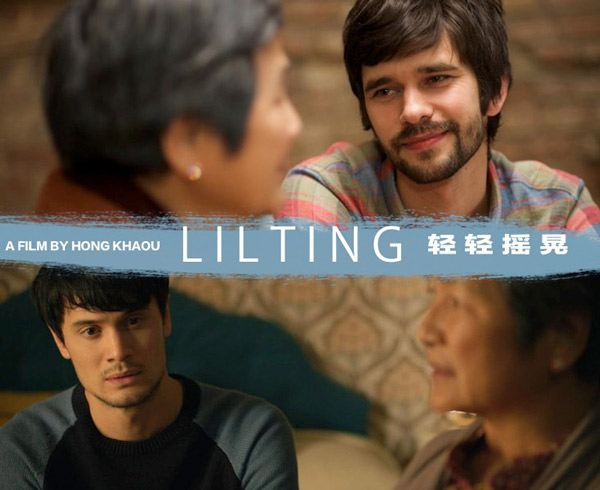
  • ShanghaiPRIDE Film Festival: Lilting《轻轻摇晃》

    ShanghaiPRIDE Film Festival: Lilting《轻轻摇晃》

    Lilting
    Director: Hong Khaou
    Country & Year: UK, 2014
    Starring: Ben Whishaw and Cheng Pei Pei
    Chinese & English with subtitles

    Thirty years after leaving China for England, Junn lives alone in a home for the elderly in London. Her only companion is the memory of her son, Kai, whose untimely death has left her isolated in a culture she never fully assimilated into. Junn’s solitude is disrupted by Richard, whose relationship with her son was not what she had thought. With the help of a translator, Junn and Richard come to know each other in grief. Their mutual love for Kai transcends boundaries of language. “Sometimes, it seems we understand one another.”

    ShanghaiPRIDE Film Festival is honored to present Hong Khaou’s debut feature for its first public screening in Shanghai. Lilting received award nominations at BIFA, BAFTA and Sundance, taking home the 2014 prize for Cinematography.

    《轻轻摇晃》
    导演:洪皓
    地区及时间:英国,2014
    本·威士肖与郑佩佩主演
    双语配音及字幕

    离家30年远赴英国的Junn在伦敦一家老年公寓生活。与她相伴的只有对亡子Kai的回忆。Kai的突然离世也让她在这一从未完全融入的异国文化中无比孤立。然而Junn的的独处被Richard的出现所打破。Richard与她儿子的恋情也是她未曾想到的。在一位翻译的帮助下,Junn和Richard在悲痛中逐渐了解彼此。他们对Kai共同的爱跨越了语言的隔阂:“有的时候,我们似乎都能理解对方。”

    上海骄傲电影节十分荣幸承办洪皓导演这部作品在上海的首次公共放映。《轻轻摇晃》英国独立电影奖、英国电影学院奖和圣丹斯国际电影节中均有提名,并斩获了2014年圣丹斯影节的最佳摄影奖。

    *For ShanghaiPRIDE’s full list of events please visit www.shpride.com.


    Image courtesy of ShanghaiPride
    Have an amazing experience or tips you like to share on SimplySxy? Drop us an email at editorial@SimplySxy.com!

  • Why Do We Need Films Festivals? 我们为什么需要电影节?

    Why Do We Need Films Festivals? 我们为什么需要电影节?

    When Stanley Kwan came out to his mother at the end of Yang±Yin (1998), he framed it in the context of his own teenage desire for cross-dressing actress Yam Kim-Fai. LGBTQ people have found themselves in big screen queer heroes for over a hundred years, but so too has the cis straight world. Kwan’s brilliant documentary traces a century of Chinese cinema, and finds queer characters and desire in every corner of every decade. “It’s normal,” responds Kwan’s mother. She knows lesbian, gay, bi and trans and queer people. She’s been watching them her whole life on the big screen.

    In our inaugural year, ShanghaiPRIDE Film Festival is themed around ‘Queer Family.’ Bring your mom. You will find films on marriage and adoption, on parents and teachers, on queer community. Stories
    of acceptance into institutions, and of reinterpretations of old traditions. You will also find our short film competitors, exciting new voices who we strive to support. Chinese Queer Cinema has long been underground, but thrives on the support of a family. To our family, at ShanghaiPRIDE, across China and internationally, we are thankful.

    There is no shared experience like sitting in the dark room of a cinema. ‘Dark rooms’ hold a very specific meaning in queer male circles. Watching in the darkness, those who gather are not merely an audience,but performers. They reach out and touch, feeling and sharing every fibre of their experience. A cinema should be no different. Touch hearts, share minds. A film festival demands engagement, collaboration and intimacy. This is a festival for our community, for all mothers and queer children. For our queer family.

    By Matthew Baren & Alvin Li (Festival Coordinators)

    10407116_471333286381725_6199208389006496278_n

    当关锦鹏在《男生女相》(1998)一片 的最后向母亲出柜时,他将其构建在了其母年少 时对反串演员任剑辉的崇拜的背景之下。一百多 年来,LGBTQ人群在大荧幕中找到了他们的酷 儿英雄,但异性恋的世界也未尝不是同样。关锦 鹏精彩的纪录片回溯了一个世纪的中国电影,并 在每个年代的每个角落都找到了酷儿角色与欲 望的影子。“这是完全正常的。”关锦鹏的妈妈 回应道。她了解男女同性恋、双性恋、跨性别者 以及酷儿们。她一生都在大荧幕上看着他们。

    尚属首届的上海骄傲电影节今年以“ 酷儿家庭”为主题中心。不妨带上母亲前来参 与,你会找到有关婚姻与收养、有关父母与老 师、有关酷儿群体的各种电影;你会听到关于 个人被群体所接受,关于旧俗新解的故事;你 还会结识我们短片竞赛的参赛电影人们–我 们全力支持着的令人激动的业界新声。中国 的酷儿影线长期处于地下状态,但又在一个 大家庭的支持下壮大着。我们对上海骄傲节、 乃至全国全世界的这个大家庭,怀有感恩。

    没有任何一种体验能与坐在一个影院 的暗室里相比。“暗室”对男性酷儿圈子有着 一个极为特别的含义。在黑暗中观看着、集结 着的不仅仅是观众,更是表演者。他们伸出手 去触碰,感受着并分享着他们的每一丝体验。 影院亦无差别:触碰心灵,分享思想。一场电影 节需要参与度、合作度、以及亲密度。这次电 影节,便是给我们这个群体,给所有的母亲和 酷儿孩子们,给我们整个酷儿大家庭的节日。

    马修·拜伦 & 李佳桓 (电影节策划人)

    *For ShanghaiPRIDE’s full list of events, please visit www.shpride.com.


    Image courtesy of CINEMQ
    Have an amazing experience or tips you like to share on SimplySxy?  Drop us an email at editorial@SimplySxy.com!

  • ShanghaiPRIDE 2015 promotes LGBTQ movement through its inaugural Film Festival

    ShanghaiPRIDE 2015 promotes LGBTQ movement through its inaugural Film Festival

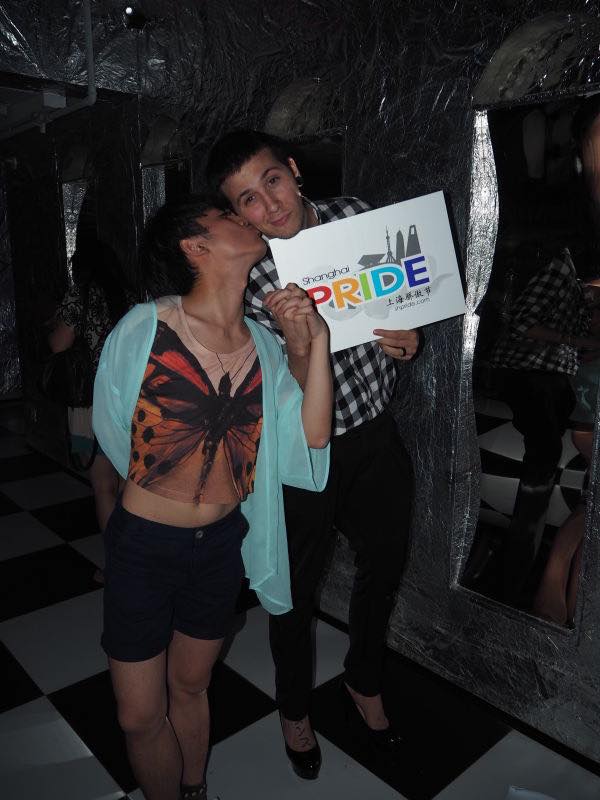
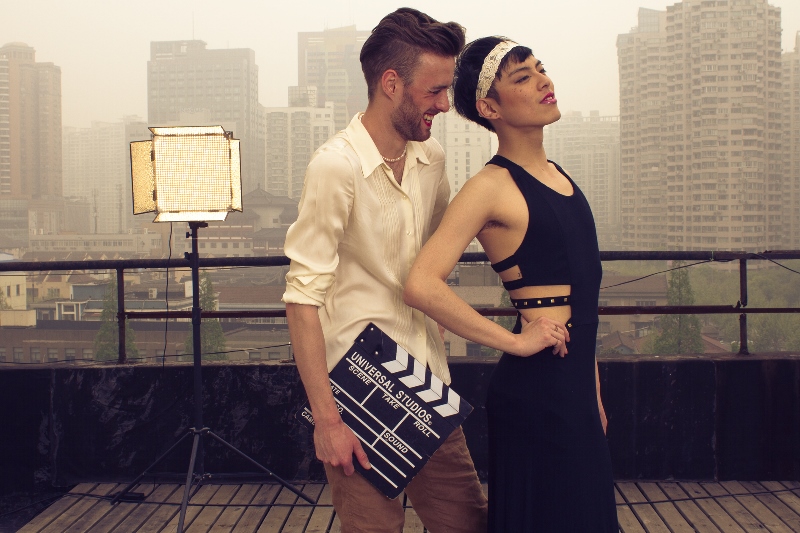
    This weekend, ShanghaiPRIDE will present their inaugural ShanghaiPRIDE Film Festival to celebrate the 7th year of its event. While supporting cultural events has always been the trademark of ShanghaiPRIDE, this year’s festival will be the first full-fledged film festival for ShanghaiPRIDE. According to Matthew Baren, the festival coordinator of ShanghaiPRIDE, film is significant to the LGBTQ movement globally, and Chinese queer film makers has often been the leaders in advancing equality and visibility. This belief pushes ShanghaiPRIDE to become part of this growing force.

    manda (800x533)

    The inaugural festival includes a features program themed around the idea of “Queer Family”. Films in this category explore how LGBTQ people reinterpret the traditional idea of family, find love, raise children and form community through the process. The festival also includes a short films’ program that raises the profile of Chinese queer experience. They hope to help assist Chinese queer experience through cinema and raise the visibility of emerging Chinese filmmakers.

    Among all the featured films, a documentary called “Lesbians Marry Gay Men” that talks about contract marriages for lesbians in northern China is highlighted by the organizers. The director adopts an honest and humorous way to showcase a hidden but fairly common lifestyle among Chinese queer women in rural areas. Women receive lots of representation at this year’s film festival, but the festival maintains its versatility by showcasing stories of all ages, background, genders and sexualities across the Chinese world. Additionally, there are films from Europe, Pacific Islands, and North America that will be showcased throughout the festival.

    As a fully volunteer-based event, it has not been an easy path for staff of ShanghaiPRIDE to organize this year’s events. However, the domestic and international joint efforts from different NGOs and filmmakers have helped to fulfill this year’s ShanghaiPRIDE. They have been hosting a monthly queer cinematic event called CINEMQ since January 2015. It helps the team to secure a sizable local and international fan base. As the first queer cinematic event in Shanghai, the staff expresses optimism about the upcoming film festival.

    “There isn’t really anything like this in Shanghai at the moment, and people seem to want it,” said Matthew Baren.

    smaller (800x533)

    Aside from film screening, the film festival also offers workshops, talks, Q&A sessions and parties for participants. Those who are interested can start downloading a full digital program from www.shpride.com/film and on social media starting June 7. This year’s keynote talk “Queer Cinema and China” invites several key figures to offer their insights into the queer film scene, the culture, the market, debates about the past and future, and advice for aspiring and emerging filmmakers.

    With the slogan championing “Love Is Our Future,” ShanghaiPRIDE hopes to convey the idea that love means many things, and they hope to strengthen the idea through the film festival.

    *For the full list of ShanghaiPRIDE event, please visit www.shpride.com


    Image courtesy of ShanghaiPRIDE
    Have an amazing experience or tips you like to share on SimplySxy?  Drop us an email at editorial@SimplySxy.com!

  • Mainland China and Homosexuality

    Mainland China and Homosexuality

    Nowadays it is difficult for us not to mention China in any subject as it has a prominent role in the international arena. China’s economics has been dramatically growing, subsequent to the amalgamation into WTO in the early twenty-first century. As China began to have an impact on the world, western ideology and practice has also begun to influence the country. One can see, international organizations are swelling, here and there, in cosmopolitan cities such as Beijing and Shanghai, further propelling China to annex its name in the global community. With the Beijing Olympic, China used the platform to demonstrate the extensive pride of China to the global market. Making an impression to international visitors with several grand architectures such as the bird-nest stadium designed by Ai Weiwei.

    For China to achieve its success today, there are many changes it had been going through. The culture and practice of China underwent a considerable adjustment following the downfall of strong socialism by Chairman Mao in 1976 and the policy of “4 Modernizations” by Deng Xiao-ping became effective. Unlike those days during the Cultural Revolution, Chinese people now have more freedom to express themselves; collectivism has made way for individualism. One of many entities to mark greater freedom of the Chinese people is “sexuality”.

    During the extreme socialist era, people’s knowledge and understanding of sexuality by and large leaned towards heterosexuality, that is, intimate relationship between man and woman. Hence, the government attempted to criminalize homosexuality. Suiming (2005:120) wrote about this period saying, “Both [Mao Zedong and Chiang Kai Shek] considered it [homosexuality] as a sort of bad cultural baggage which should be jettisoned as soon as possible, handling offenders prison sentences or long stretches at reforming hard labor.” However, the alleviation of the said patriarchal custom and law came into scrutiny in the wake of Deng Xiaoping in power. Sodomy was abolished as illegal in 1997.

    Chinese socio-cultural practice seems promising but not ideal. Chinese culture in its present day form is steep in Confucianism. The notion of sex as of yet emphasizes on married couples and significantly for the purpose of producing heirs. Beyond that sex is undignified. This definition venerates the conceptualization of traditional family. It is to say, parents anticipate their own children to bare off springs to continue the family name, or better known as chuan-zong-jie-dai (传宗接代). Gay people are pressurized under this culture apparently. Being out of the closet is intolerant with the majority of Chinese families. Chinese gay people create an escape with cooperative marriage, so as to appease their parents. The so-called cooperative marriage is where a gay man weds lesbian, merely in the name, or vice versa. Matchmaking websites and partner-finding applications, such as chinagayles.com, has been booming.

    As seen, the upsurge of the internet, gay people have more ways to liberate themselves, albeit still under a strong patriarchal culture. They have the opportunity to get to know one another via gay websites and organize community events both in online and offline. Nevertheless, it is not at all a bed of roses. The Chinese Communist Party (CCP) is always impeding gay lifestyles, barring homosexuality-related media and its pertinent movement. Surprisingly enough, last year, according to the website “Queercomrade”, the movie Like Love was introduced for the first time to mainland Chinese LGBT-themed movie in mainstream cinema. This is relatively contradicting to what they have done to the LGBT community. This leaves many questions, one of which is whether or not the CCP, which directs the hegemonic culture, remains tolerant to gay culture and people.

    This is a succinct information which may lead you all to comprehend the mainland China and its gay culture. I hope to write some more specific case in next issue. Happy reading!!! 🙂

    Reference(s):
    Suiming, Pan (2005). “homosexuality” Sexuality in China. Nakornpathom: The Rockefeller Foundation.


    Image courtesy of Shutterstock
    Have an amazing experience or tips you like to share on SimplySxy?  Drop us an email at editorial@SimplySxy.com!

  • BDSM, the Chinese way

    BDSM, the Chinese way

    If you think you have seen it all when it comes to unusual erotica, one blog I just discovered could make you reconsider. Chinakunbang, subtitled ‘Chinese jail and bondage culture’ sure is different – at least to our western eyes. Born at the online intersection between historical heritage and uncomprehending emulation, this simple website is the window front of a virtual store selling BDSM erotica… as seen from China, where sexuality remains mostly an unspoken, mysterious topic.

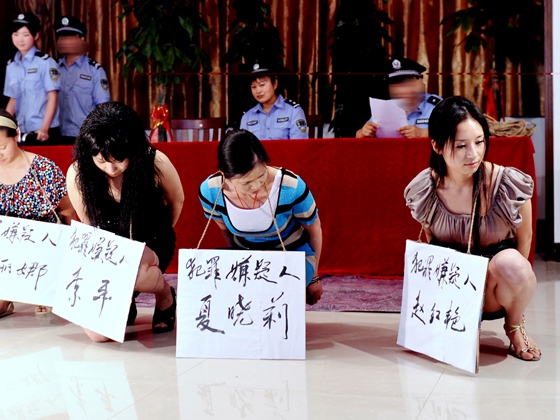
    In accordance to local laws the daily sample pictures are strictly non-pornographic. They somehow remind of the fetish pictures from ‘50s America, when Bettie Page and her colleagues were very careful not to show too much skin and the titillation was in the little details of their costumes or expressions. They also betray very low production values: the dresses are shoddy and occasionally ill-fitting, lighting and composition are unheard of, the backgrounds remind of dirt-cheap school plays and the outdoor shots smell of clandestine, hit-and-run sessions. The subjects, however, are a mesmerizing bizarro-version of every kinky website you’ve ever seen.
    mj081212

    Western BDSM, you see, is the conflation of countless erotic iconographies through the centuries. There are elements of Christian martyrdom, of the writings of de Sade, of medieval punishments, the Inquisition, Nazi atrocities, high literature and pulp, popular movies, fashion, illustration, comics and classic art, porn, theatre, technology, music and much more – all ground up and processed through the interplay of many local cultures from liberal northern Europe to repressed south, from the Puritanical United States to the non-moralism of Japan. What we masturbate to on sites like Kink.com or House of Gord is the distillation of the strongest archetypes from all of these sources, mixed together in a constantly evolving blend.

    Most Chinese, however, never encountered any of this. The refined sexual culture of ancient Chinese nobility was based on an archaic conception of the female role and on a generally pre-technological view of the world. The Cultural Revolution destroyed all of it anyway and relegated sex to a purely reproductive purpose. Even recent generations grew up in a culturally insular country with little or no access to western erotica. Sexual education is lacking, and the “Internet great wall” of State censorship sure doesn’t allow the kind of easy access to porn we are all accustomed to.
    2

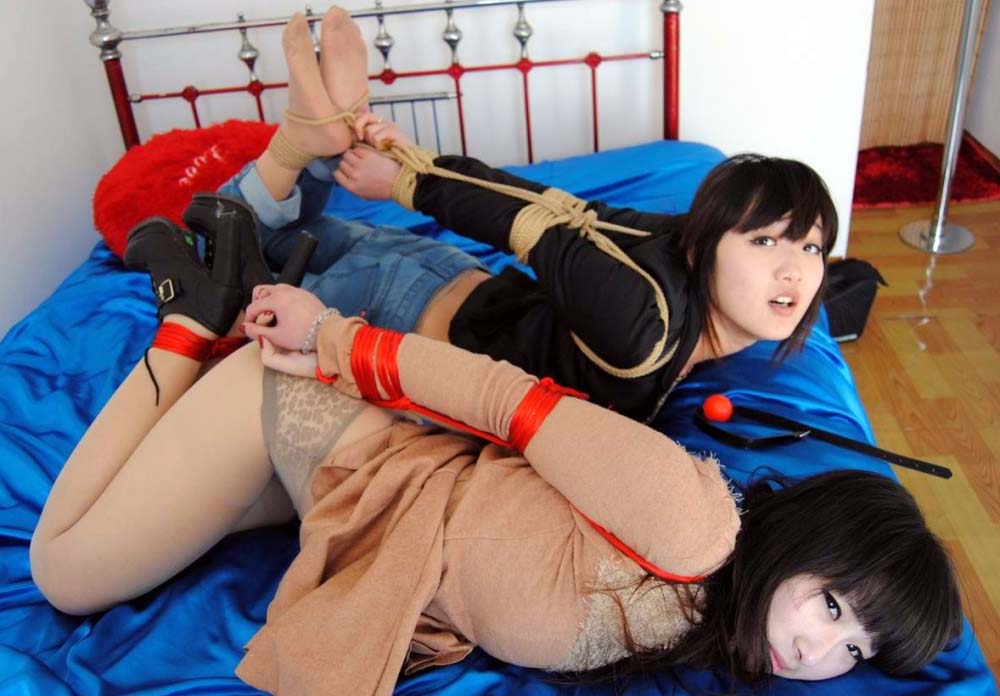
    In this context the idea of erotic power play naturally took a very different form from western BDSM. Browsing the blog you will notice in example that “bondage” is in fact just a couple of standard military punishment ties, with none of the fancy rope work of Japanese kinbaku, nor of American-style restraints. Incidentally, Chinese ties tend to be very dangerous as they often constrict vulnerable points including the neck.

    Talking about other practices, it is shocking to see that while Westerners have a vast vocabulary of sensual pain games, China takes the concept of “torture” very literally, replicating horrors like the infamous tiger bench and even mock executions like they were fashionable turn-ons. With badly applied lipstick “beatings” marks, but no less chilling for that.

    The other aspect I found amazing is also the most evident. Beside the many general, bland “fetish” shoots, three scenarios keep popping up again and again: military and Red Guard abuse of common people, contemporary police interrogations and imprisonments, and historical Imperial-age reenactments. While the photos are clearly staged and the actresses have an amusing habit of maintaining a very professional-looking “no inappropriate touching” attitude, you won’t find much consensual exploration depicted. In this country (and under their laws) doing kink for mutual pleasure is clearly not conceivable. Conversely, abuse of power and the thrashing of human rights are considered normal.
    3

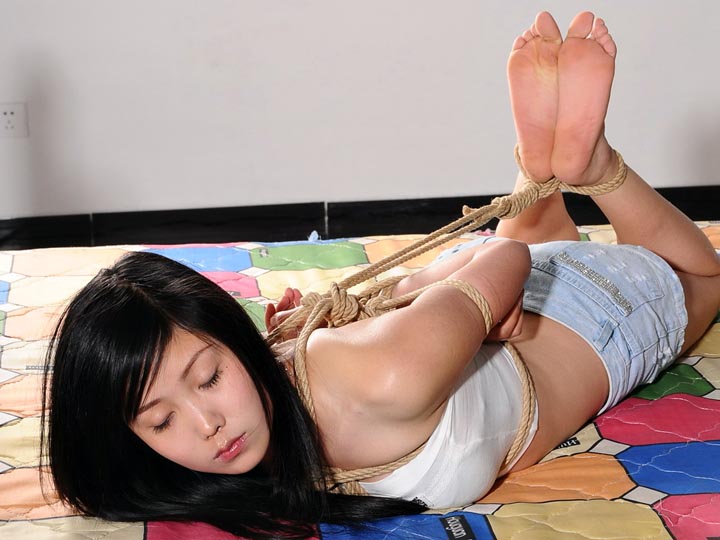
    The helpful tags above every photo are equally fascinating. Probably to differentiate the site from illegal pornography they are very keen of pointing out that all the pictures are ‘cosplay’ or ‘recreeations’, but sometimes they manage to turn a banal photo into a nightmare. The bored girl in the picture above, in example, is explained to be just another victim of a common wartime mode of execution where people was simply left half-buried to die. Thanks for the note, buddy.

    I don’t think Chinakunbang will ever become my fap shop of choice, but as a cultural phenomenon, I find it incredibly interesting. Who knows what they think of ayzad.com in Beijing…


    This article has been republished with permission from Ayzad

    Please visit Ayzad’s website  to view the original post and more of Ayzad’s works.


    Photocredit: Chinakunbang.com
    Have an amazing experience or tips you like to share on SimplySxy? Drop us an email at editorial@SimplySxy.com!

  • Mainland China, Family and Marriage (Mock Up)

    Mainland China, Family and Marriage (Mock Up)

    Marriage is an established institution pervasive in every culture, not even barring Chinese one. Tracking down its history, I notice that Confucianism plays a crucial role in influencing marriage choices, which leads to a focus of the social unit “family”. One may also have heard the proverb jia-he-wan-shi-xing (家和万事兴). It reads: a harmonious family results in success in everything. This core value that derives from Confucianism is dominant in Chinese culture including marriage. Alluding to the word “marriage”, I would like to explicate singly into heterosexual and homosexual cases, along with a brief background of heteronormative marriage in Chinese culture at the beginning.

    Historically, marriage is based on heteronormativity; that is, the basic institution of man and woman. The representation of Confucianism, in the philosophy Yin-Yang (阴阳), validates this conceptualization. Yin (阴)represents woman/femininity; Yang (阳)man/masculinity. In today’s Chinese society, when a man or a woman comes of age, marriage symbolizes success in one’s life. The proverb cheng-jia-li-ye (成家立业), which means “ marry and have a secure career”, substantiates this value. What is interesting, there are some crucial elements to actually manipulate such a marriage. It can also be said, children themselves have no one hundred percent freedom; some cultural values often intervene.

    The Chinese family prioritizes harmony. The word “harmony” in this context designates “filial piety”. It is always the parents who are most influential in the partner-choosing process. Li (2013:71) noted, children’s marriage is part of the parents’ life as well. I further observed parents always prioritize well-to-do prospective spouses. It does not really come as a surprise. Li affirmed, first comes money and then love (72). This phenomenon is considered a normal case to every single socio-economic landscape. Capitalism has been transforming our universal social values to focus on wealth. With regards to marriage, the spouse-to-be would be considered as a materialistic object. Love then remains marginalized as such.

    As for homosexual cases in marriage, there is not much difference between the social factors of “money” and “parental force”. The difference is the fact that in Chinese society, regardless of sexuality, children are expected to marry and have heteronormative marriages. In this case, parental force is significantly authoritative. As known, a substantial number of gay couples seek co-operative marriages and many decide to leave their hometown and their family to live on their own home with their same-sex partner(s). It is, nevertheless, not all pessimistic. Some parents, albeit still minority of the Chinese families, celebrate sexual diversity of gay children as seen in the documentary film “Mama Rainbow” (dir. Fan Popo, 2012).

    All in all, mechanism of marriage and family in mainland China is too deep into the Sino-philosophical principle “Confucianism”, for preference philosophy Yin-Yang. This core value is driven by capitalism, leading the culture into the materialistic juncture. While both“Confucianism” and “capitalism” are promoted by the government, the Chinese Communist Party. As Jackoben (2002) noted, “family values may be emphasized by states as a response to the perceived determining of family structure by capitalism”.

    I may end this issue here and next issue will be of more clarification of the ways in which the CCP have been manipulating the said factors. Happy reading!!! 🙂

    List of References

    Jacobean, Janet (2002) “Can Homosexuals End Western Civilization as We Know? Queer Globalization: Citizenship and the Afterlife of Colonialism. Arnaldo Cruz-Malate and Martin F.Manalansan IV.eds. 49-70 New York and London:New York University Press.

    Li, Yinhe (2013) “Money or Love Comes First?” Li Yinhe: My Social Investigation. Beijing: Zhonghuagongshang Press, 71-72.


    Image courtesy of Shutterstock
    Have an amazing experience or tips you like to share on SimplySxy?  Drop us an email at editorial@SimplySxy.com!