Category: LGBTQ

  • ShanghaiPRIDE Film Festival: We Want Kids Too《我们也想要孩子》

    ShanghaiPRIDE Film Festival: We Want Kids Too《我们也想要孩子》

    We Want Kids Too (Wij willen ook een kind)
    Director: Mirella van Markus
    Country & Year: Netherlands, 2014
    Dutch with Chinese & English subtitles

    Filmmaker Mirella van Markus seeks the ideal arrangement of having a child with her wife Claudia. Despite their strong desire to have children, there are worries and doubts. Can they justify raising a child in a family which society doesn’t always look upon with tolerant eyes? And as a co-mother, will Mirella have the same unconditional link with her child as Claudia, the biological mother? Mirella’s quest leads her to lesbian parents, children born of artificial insemination, and a developmental psychologist; she even winds up on the sofa of an adviser who counsels people with a desire to have children. We Want Kids Too is a personal, emotional quest in which two women share their worries, doubts, hopes and disappointments.

    《我们也想要孩子》
    导演:米雷拉·范·马库斯
    地区及时间:荷兰,2014
    荷兰语配音,双语字幕

    电影人米雷拉·范·马库斯寻找和她妻子克劳迪娅生育小孩的理想建构。除去想要孩子的强烈愿望以外,他们有担忧和顾虑。她们能够在一个并不完全兼容的社会中抚养小孩吗? 米雷拉的疑问让她接触了一些女同性恋父母、经人工授精成长的孩子、发展心理学家、甚至那些面对想要小孩之人的顾问。《我们也想要孩子》是一个个人的、充满情感的提问,两个女人分享了他们的担忧、疑惑、希望以及失望。

    *For ShanghaiPRIDE full list of events please visit www.shpride.com.


    Image courtesy of ShanghaiPride
    Have an amazing experience or tips you like to share on SimplySxy? Drop us an email at editorial@SimplySxy.com!

  • Iridescence, love, glamor – ShanghaiPRIDE Film Festival

    Iridescence, love, glamor – ShanghaiPRIDE Film Festival

    Iridescence, love, glamor – ShanghaiPRIDE Film Festival (ShPFF) launched its opening on Sunday 14th June at one of the city’s most historic theatres, The Pearl. Organized entirely by volunteers, ShanghaiPRIDE is able to bring a part of its cultural traditions to a whole new level in its 7th year with the launch of ShPFF. With an immensely diverse audience crowd from within and outside of China and the attendance of industry professionals, the opening night was a huge success.11220913_749452805178268_4275903106542681009_n

    Cheng Peipei, the renowned mainland-born Hong Kong actress, also made her way back to her hometown in support of the first public screening of her work Lilting in China. The spotlight was shared by short film A Straight Journey: Days and Nights in Their Kingdom, winner of Best Film in the ShPFF  2015 short film competition. The directors were in attendance, Beijing duo masamojo.

    A Straight Journey: Days and Nights in Their Kingdom represents the strongest voice in this year’s short film competition of ShPFF and takes home two major awards: Best Film Award and Queer Vision Award. It is ShPFF’s mission as well as challenge to support and provide a platform for emerging Chinese filmmakers in queer cinema worldwide. As part of that commitment, ShPFF will send masamojo’s film to Iris Prize (UK) for a chance to win £30,000 in production funds.1907532_749452531844962_732573035012238867_n

    The night also announced a complete list of award winning short movies, all of which will be screened free to the public throughout the week at different venues of the city.

    During the screening of Lilting, Cheng Peipei sat at the balcony as the audience below dived into the melancholy of her character in the film. The crowd broke into waves of applause as Peipei walked up to the stage afterwards for a Q&A. When asked about the theme of the work, Cheng Peipei expressed that the Lilting had transcend the mere discussion of sexuality and self-identity, but rather touched the core of all barriers among people, which is a lack of communication and the refusal to accept love. The response largely resonated with ShPRIDE’s theme for the year: Love is Our Future.

    The Opening Party kicked off shortly after the Q&A, featuring a staple of Shanghai party scene, Mau Mau. Electro house beats filled the vintage theatre to celebrate the opening of a whole week of queer cinematic delights.

    written by Jack Yan


    Image courtesy of ShanghaiPRIDE
    Have an amazing experience or tips you like to share on SimplySxy?  Drop us an email at editorial@SimplySxy.com!

  • ShanghaiPRIDE Film Festival: The Circle (Der Kreis)《圈子》

    ShanghaiPRIDE Film Festival: The Circle (Der Kreis)《圈子》

    The Circle (Der Kreis)
    Director: Stefan Haupt
    Country & Year: Switzerland, 2014
    German with Chinese & English subtitles

    Based on true stories, The Circle (Der Kreis) is a docudrama about the lifelong romantic relationship between Ernst and Röbi, who met through Switzerland’s first gay association – Der Kreis. With interviews of the now elderly gentlemen, historical footage from the 50s, and dramatized representations based on their accounts on the gay life in postwar Zürich, the film looks back from the present to the time of Der Kreis’ rise and fall. Ernst, a schoolteacher, and Röbi, a flamboyant drag queen, later became one of the first to enter registered partnership in Switzerland. Besides depicting their love story, the film further serves as a powerful testimony to the legacy of Der Kreis, which remains one of the world’s most important journals promoting the legal and social rights of gay men.

    https://www.youtube.com/watch?v=u_qO03QFGT8

    《圈子》
    导演:斯特凡·霍普特
    地区及时间:瑞士,2014
    德语配音,中英文字幕

    基于真实故事的《圈子》是一部关于恩斯特与罗比一生浪漫情感的文献片。恩斯特与罗比第一次相遇是在瑞士的首家同性恋组织 — “圈子”。利用对已是暮年的几位绅士的采访、对50年代历史影像的发掘、和对战后苏黎世同性恋生活的夸张再塑,这部电影的视角从当今跨越至“圈子”的兴衰。恩斯特,一位教师,和罗比,一位艳魅的变装皇后,随后成为了瑞士首批登记伴侣关系的一对。除了描绘了两人的爱情故事之外,电影还是“圈子”遗产的一个有力证明。“圈子”至今仍是当今世界上支持同性恋法律及社会权益的重要期刊之一。

    *For ShanghaiPRIDE full list of events please visit www.shpride.com.


    Image courtesy of ShanghaiPride
    Have an amazing experience or tips you like to share on SimplySxy? Drop us an email at editorial@SimplySxy.com!

  • Pink Dot 2015: Reflecting on Where Love Lives

    Pink Dot 2015: Reflecting on Where Love Lives

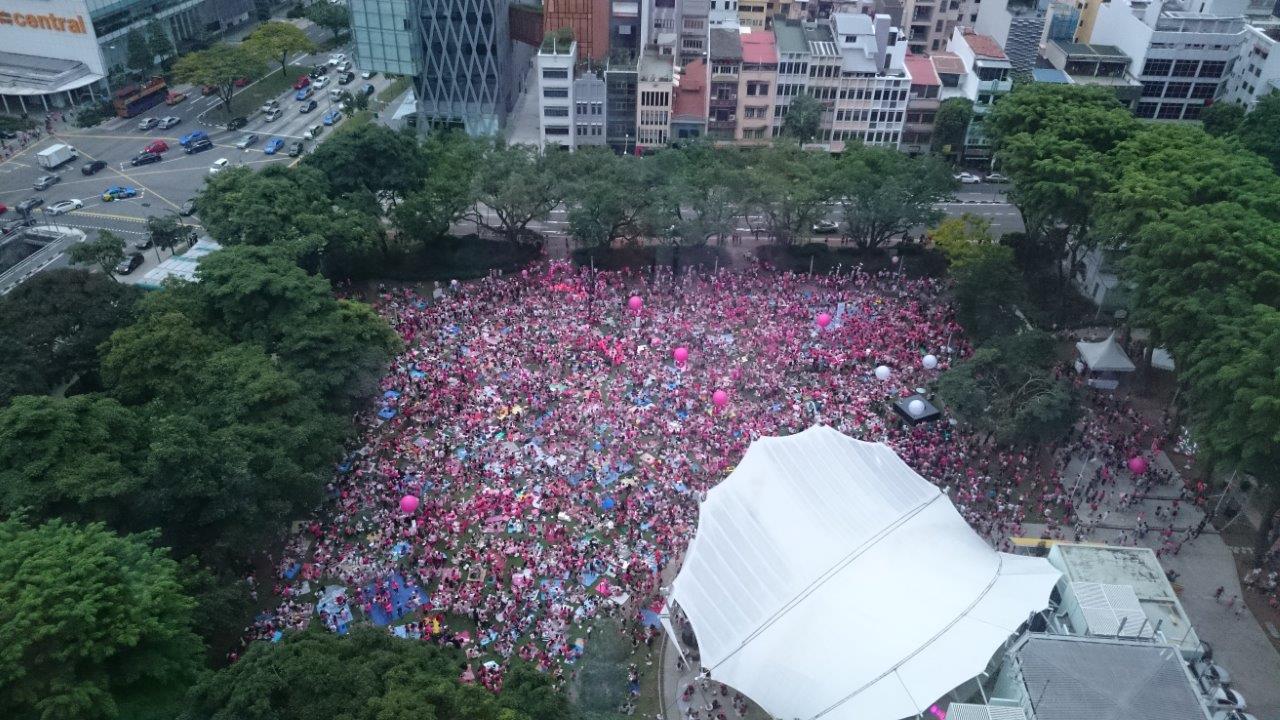
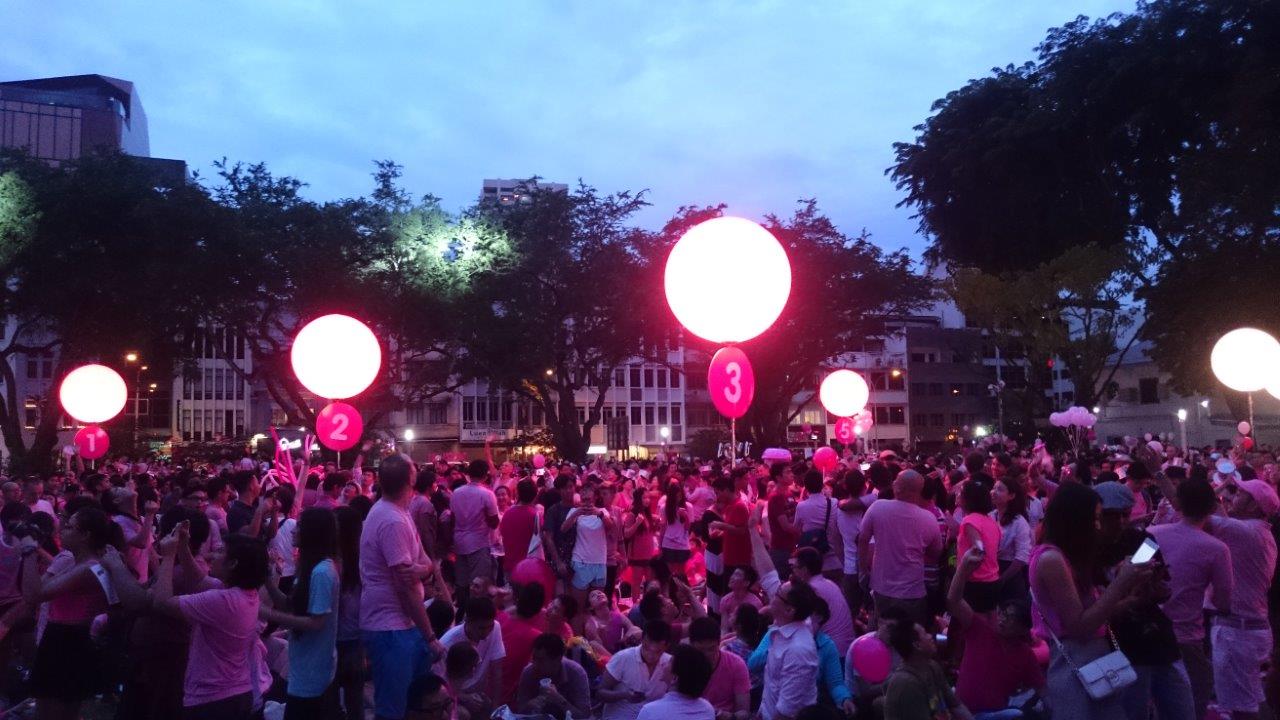
    More than 28,000 people gathered at Hong Lim Park to celebrate the freedom to love at Pink Dot 2015 last Saturday. The success of the event was due to the massive support from the public as well as local business and corporate sponsors. Twitter, Bloomberg and Cathay Organisation joined the returning sponsors Google, Barclays, Goldman Sachs, BP, J.P. Morgan and The Gunnery. Local shops and outlets such as Settler’s Café, Elevate Gym, Asia Wine Network and D’Bell Singapore threw on their pink hats to form a new ‘Pink Street’ where people could enjoy drinks, food, make friends, and purchase Pink Dot merchandise.

    DSC_1286

    During the press conference, there was a discussion on the verdict by the Court of Appeal rejecting the constitutional challenges to Section 377A of the Penal Code in October 2014, which criminalises physical intimacy between men. Local artist and Pink Dot’s 2015 ambassador Patricia Mok shared her interactions and experiences with families with a queer family member. She mentioned that many older generations whom she has interacted with believe that love is love and people should be left alone with their choice on who to love. Radical religious groups aside, why is the large amount of support that we are seeing contradictory to the claims by the state that Singapore is not ready for the LBGTQ community.

    This contradiction had me wondering if the state is indeed ready. Hirzi; one-half of YouTube comedic duo Munah & Hirzi and Pink Dot’s 2015 ambassador, mentioned that they have met many LGBTQ youths during a YouTube FanFest. From these interactions and his own personal experience, he felt that schools do not have the support infrastructure to help LGBTQ youths cope with the challenges of the queer adolescence. Other segments of the state like Health Promotion Board (HPB) is also feeling the pinch, having faced criticism over their FAQ on sexuality in February of 2014. Having Section 377A active makes it difficult to create cohesive polices or campaigns as segments of the Singapore community has to be intentionally left out.

    DSC_1319

    It was also revealed during the press conference that a 15-second pre-event advertisement for Pink Dot that was meant to be screened in cinemas on Friday, June 12, was refused a rating by the MDA (Media Development Authority Singapore) after a two-month wait, effectively banning it. The MDA cited the reason that “it is not in the public interest to allow cinema halls to carry advertising on LGBT issues, whether they are advocating for the cause, or against the cause.” It took some time for everyone at the press conference to make sense of MDA’s statement as the said advertisement was just a clip of Pink Dot’s light up with the date of this year’s event. However, the reason does make sense. If they were to allow ads that support the LGBTQ cause, then conversely they should also allow ads that are against LGBTQ cause. This would then add to the complication simply because there is no anti-discrimination law against the LGBTQ community.

    There is a need to prevent hate crimes towards the LGBTQ community in Singapore especially with the recent online attacks towards The Chiongs; a lesbian couple raising their daughter in Singapore. To abolish 377A and to pass an anti-discrimination law is a definitely not an easy task for the state. Due to these gaps the Singaporean community has organically grown; with Pink Dot having its biggest turn out to date, together with the growing numbers of LGBTQ support groups.

    DSC_1336

    In spite of the record breaking turnout for this year’s event, there is still a need for a better understanding of the Pink Community. In the words of Pink Dot SG Spokesperson Paerin Choa, “We recognise that the journey towards inclusivity and diversity in Singapore is still some way off, but we are confident that we will be able to achieve this together, one day in the near future.”


    Image courtesy of Pink Dot
    Have an amazing experience or tips you like to share on SimplySxy?  Drop us an email at editorial@SimplySxy.com!

  • ShanghaiPRIDE Film Festival: Kumu Hina《希娜老师》

    ShanghaiPRIDE Film Festival: Kumu Hina《希娜老师》

    Kumu Hina
    Director: Dean Hamer & Joe Wilson
    Country & Year: Hawaii (US), 2014
    English with Chinese subtitles

    Inspiration. Teacher. Cultural icon. Like her native Hawaii, Hina came up out of the lava, a dynamic spirit and proud native of a land in the middle of the Pacific Ocean. Hina occupies her own ‘place in the middle’, between kane (male) and wahine (female) and empowers her students to do the same. As a new generation of native Hawaiians embrace their culture and identity, Hina is a conduit through which a lost past may be channeled into a hope for today, and a future that may not be perfect, but which is filled with potential.

    《希娜老师》
    导演:迪恩·哈默尔 & 乔·威尔逊
    地区及时间:夏威夷,2014
    英语配音中文字幕

    激励人心的存在、导师、文化偶像。像她的家乡夏威夷,希娜也在熔炼中诞生成长。她是太平洋中这片土地上的一缕活跃的灵魂,也是一名骄傲的原住民。希娜在自己的两个身份:凯恩(男)和瓦茜尼(女)之间占据着一个“中间地带”,并鼓励着自己的学生也这样接受自我。作为勇于接受自己的文化与自我认同的新一代夏威夷原住民,希娜将失落的过去、今天的希望和可能并不一定完美但一定充满期待的未来串联在了一起。

    *For ShanghaiPRIDE full list of events please visit www.shpride.com.


    Image courtesy of ShanghaiPride
    Have an amazing experience or tips you like to share on SimplySxy?  Drop us an email at editorial@SimplySxy.com!

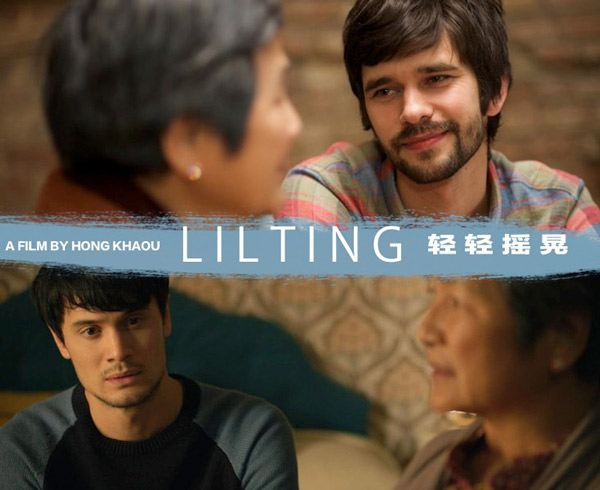
  • ShanghaiPRIDE Film Festival: Lilting《轻轻摇晃》

    ShanghaiPRIDE Film Festival: Lilting《轻轻摇晃》

    Lilting
    Director: Hong Khaou
    Country & Year: UK, 2014
    Starring: Ben Whishaw and Cheng Pei Pei
    Chinese & English with subtitles

    Thirty years after leaving China for England, Junn lives alone in a home for the elderly in London. Her only companion is the memory of her son, Kai, whose untimely death has left her isolated in a culture she never fully assimilated into. Junn’s solitude is disrupted by Richard, whose relationship with her son was not what she had thought. With the help of a translator, Junn and Richard come to know each other in grief. Their mutual love for Kai transcends boundaries of language. “Sometimes, it seems we understand one another.”

    ShanghaiPRIDE Film Festival is honored to present Hong Khaou’s debut feature for its first public screening in Shanghai. Lilting received award nominations at BIFA, BAFTA and Sundance, taking home the 2014 prize for Cinematography.

    https://www.youtube.com/watch?v=u6LO7fGmezc

    《轻轻摇晃》
    导演:洪皓
    地区及时间:英国,2014
    本·威士肖与郑佩佩主演
    双语配音及字幕

    离家30年远赴英国的Junn在伦敦一家老年公寓生活。与她相伴的只有对亡子Kai的回忆。Kai的突然离世也让她在这一从未完全融入的异国文化中无比孤立。然而Junn的的独处被Richard的出现所打破。Richard与她儿子的恋情也是她未曾想到的。在一位翻译的帮助下,Junn和Richard在悲痛中逐渐了解彼此。他们对Kai共同的爱跨越了语言的隔阂:“有的时候,我们似乎都能理解对方。”

    上海骄傲电影节十分荣幸承办洪皓导演这部作品在上海的首次公共放映。《轻轻摇晃》英国独立电影奖、英国电影学院奖和圣丹斯国际电影节中均有提名,并斩获了2014年圣丹斯影节的最佳摄影奖。

    *For ShanghaiPRIDE’s full list of events please visit www.shpride.com.


    Image courtesy of ShanghaiPride
    Have an amazing experience or tips you like to share on SimplySxy? Drop us an email at editorial@SimplySxy.com!

  • Why Do We Need Films Festivals? 我们为什么需要电影节?

    Why Do We Need Films Festivals? 我们为什么需要电影节?

    When Stanley Kwan came out to his mother at the end of Yang±Yin (1998), he framed it in the context of his own teenage desire for cross-dressing actress Yam Kim-Fai. LGBTQ people have found themselves in big screen queer heroes for over a hundred years, but so too has the cis straight world. Kwan’s brilliant documentary traces a century of Chinese cinema, and finds queer characters and desire in every corner of every decade. “It’s normal,” responds Kwan’s mother. She knows lesbian, gay, bi and trans and queer people. She’s been watching them her whole life on the big screen.

    In our inaugural year, ShanghaiPRIDE Film Festival is themed around ‘Queer Family.’ Bring your mom. You will find films on marriage and adoption, on parents and teachers, on queer community. Stories
    of acceptance into institutions, and of reinterpretations of old traditions. You will also find our short film competitors, exciting new voices who we strive to support. Chinese Queer Cinema has long been underground, but thrives on the support of a family. To our family, at ShanghaiPRIDE, across China and internationally, we are thankful.

    There is no shared experience like sitting in the dark room of a cinema. ‘Dark rooms’ hold a very specific meaning in queer male circles. Watching in the darkness, those who gather are not merely an audience,but performers. They reach out and touch, feeling and sharing every fibre of their experience. A cinema should be no different. Touch hearts, share minds. A film festival demands engagement, collaboration and intimacy. This is a festival for our community, for all mothers and queer children. For our queer family.

    By Matthew Baren & Alvin Li (Festival Coordinators)

    10407116_471333286381725_6199208389006496278_n

    当关锦鹏在《男生女相》(1998)一片 的最后向母亲出柜时,他将其构建在了其母年少 时对反串演员任剑辉的崇拜的背景之下。一百多 年来,LGBTQ人群在大荧幕中找到了他们的酷 儿英雄,但异性恋的世界也未尝不是同样。关锦 鹏精彩的纪录片回溯了一个世纪的中国电影,并 在每个年代的每个角落都找到了酷儿角色与欲 望的影子。“这是完全正常的。”关锦鹏的妈妈 回应道。她了解男女同性恋、双性恋、跨性别者 以及酷儿们。她一生都在大荧幕上看着他们。

    尚属首届的上海骄傲电影节今年以“ 酷儿家庭”为主题中心。不妨带上母亲前来参 与,你会找到有关婚姻与收养、有关父母与老 师、有关酷儿群体的各种电影;你会听到关于 个人被群体所接受,关于旧俗新解的故事;你 还会结识我们短片竞赛的参赛电影人们–我 们全力支持着的令人激动的业界新声。中国 的酷儿影线长期处于地下状态,但又在一个 大家庭的支持下壮大着。我们对上海骄傲节、 乃至全国全世界的这个大家庭,怀有感恩。

    没有任何一种体验能与坐在一个影院 的暗室里相比。“暗室”对男性酷儿圈子有着 一个极为特别的含义。在黑暗中观看着、集结 着的不仅仅是观众,更是表演者。他们伸出手 去触碰,感受着并分享着他们的每一丝体验。 影院亦无差别:触碰心灵,分享思想。一场电影 节需要参与度、合作度、以及亲密度。这次电 影节,便是给我们这个群体,给所有的母亲和 酷儿孩子们,给我们整个酷儿大家庭的节日。

    马修·拜伦 & 李佳桓 (电影节策划人)

    *For ShanghaiPRIDE’s full list of events, please visit www.shpride.com.


    Image courtesy of CINEMQ
    Have an amazing experience or tips you like to share on SimplySxy?  Drop us an email at editorial@SimplySxy.com!
  • ShanghaiPRIDE 2015 promotes LGBTQ movement through its inaugural Film Festival

    ShanghaiPRIDE 2015 promotes LGBTQ movement through its inaugural Film Festival

    This weekend, ShanghaiPRIDE will present their inaugural ShanghaiPRIDE Film Festival to celebrate the 7th year of its event. While supporting cultural events has always been the trademark of ShanghaiPRIDE, this year’s festival will be the first full-fledged film festival for ShanghaiPRIDE. According to Matthew Baren, the festival coordinator of ShanghaiPRIDE, film is significant to the LGBTQ movement globally, and Chinese queer film makers has often been the leaders in advancing equality and visibility. This belief pushes ShanghaiPRIDE to become part of this growing force.

    manda (800x533)

    The inaugural festival includes a features program themed around the idea of “Queer Family”. Films in this category explore how LGBTQ people reinterpret the traditional idea of family, find love, raise children and form community through the process. The festival also includes a short films’ program that raises the profile of Chinese queer experience. They hope to help assist Chinese queer experience through cinema and raise the visibility of emerging Chinese filmmakers.

    Among all the featured films, a documentary called “Lesbians Marry Gay Men” that talks about contract marriages for lesbians in northern China is highlighted by the organizers. The director adopts an honest and humorous way to showcase a hidden but fairly common lifestyle among Chinese queer women in rural areas. Women receive lots of representation at this year’s film festival, but the festival maintains its versatility by showcasing stories of all ages, background, genders and sexualities across the Chinese world. Additionally, there are films from Europe, Pacific Islands, and North America that will be showcased throughout the festival.

    As a fully volunteer-based event, it has not been an easy path for staff of ShanghaiPRIDE to organize this year’s events. However, the domestic and international joint efforts from different NGOs and filmmakers have helped to fulfill this year’s ShanghaiPRIDE. They have been hosting a monthly queer cinematic event called CINEMQ since January 2015. It helps the team to secure a sizable local and international fan base. As the first queer cinematic event in Shanghai, the staff expresses optimism about the upcoming film festival.

    “There isn’t really anything like this in Shanghai at the moment, and people seem to want it,” said Matthew Baren.

    smaller (800x533)

    Aside from film screening, the film festival also offers workshops, talks, Q&A sessions and parties for participants. Those who are interested can start downloading a full digital program from www.shpride.com/film and on social media starting June 7. This year’s keynote talk “Queer Cinema and China” invites several key figures to offer their insights into the queer film scene, the culture, the market, debates about the past and future, and advice for aspiring and emerging filmmakers.

    With the slogan championing “Love Is Our Future,” ShanghaiPRIDE hopes to convey the idea that love means many things, and they hope to strengthen the idea through the film festival.

    *For the full list of ShanghaiPRIDE event, please visit www.shpride.com


    Image courtesy of ShanghaiPRIDE
    Have an amazing experience or tips you like to share on SimplySxy?  Drop us an email at editorial@SimplySxy.com!
  • Why Gay Men Retire to Palm Springs

    Why Gay Men Retire to Palm Springs

    I recently vacationed in Palm Springs with my husband, who was curious about the resort community. I had vacationed there several decades ago, enjoying the time spent with other gay men. What I most remembered was the exhausting, hot, humid weather of August, during the monsoon season, and the heat from sexual escapades with other gay men. Typically the weather is hot and dry, and so it was on our recent vacation. I have known many gay men, from San Francisco especially, who have retired to Palm Springs, and I wanted to know what attracted them to spend their time there. One definite attribute is the weather. A nearly year round climate of hot, dry days and comfortable, warm nights is to be expected; a big draw for anyone who enjoys a more stable weather pattern.

    In talking to the men who reside there, I found them more laid back and relaxed than in the big cities. The men who retire there adapt easily to the heat, finding the dry, hot days and warm nights a better choice than hot, humid summers and cool, wet winters. When my husband and I were there the temperatures were in the eighties.  The locals found it almost too cool in the mornings, where as we enjoyed the relief from the heat. They like the quiet atmosphere, and the lack of sirens and noise from construction and traffic. The affordability and the cost of living, like housing, is another plus. They also enjoy the ease of traffic and less congestion, unlike in overpopulated cities.

    The off-season in Palm Springs begins in May and lasts through October, the hottest months of the year. In November the snowbirds arrive; retired folks who run to milder climates from places like Canada. Many annual vacation events take place in Palm Springs, like spring break when college kids from all over the world throw wild parties and have little inhibition.  There is also the White Party, an annual event catering to the LGBTQ community, so named because party-goers are encouraged to dress in all white. On these occasions some locals either hibernate or leave town to vacation or return to visit friends in the cities they left behind. The Coachella Valley Music and Arts Festival also brings tourists to Palm Springs. The downtown area is an array of upscale restaurants and shops. The trendy and friendly gay bars have modest prices and are laid back during the day. We were not there during a weekend to experience the nighttime crowd, but I am sure, much like Streetbar, they were packed with revelers. All of these attractions are within walking distance while in the midst of downtown. We saw regulars at Starbucks getting their morning coffee, and then again in the bars when we went in the afternoon. Uptown has a shopping district full of designer studios and boutiques. The town also has a plethora of golf courses, if the men are inclined.

    There are plenty of swimming pools for getting a year round tan or just to cooling off, and Indian casinos offer gambling for those who are inclined. For those gay men who have fatter wallets, they can rub elbows with movie stars and the jet set by buying prime real estate in the area. The houses, for the most part, are single story compounds with hedges and rock or concrete retaining walls surrounding the property for privacy. Now what gay man wouldn’t be attracted to the glamorous lifestyles of people from the stage, film, music, and television, who have had houses here since Hollywood’s hay day? For those interested in the arts there is a museum, and a performing arts center is under construction. The surrounding desert is mostly inhabitable, so fishing, waterskiing, and swimming in a lake or river are not available. Residents say Palm Springs is a ghost town on weekdays during the prime season but swells to a crowded, gay mecca on weekends, bringing in men who travel for weekend getaways to lounge by the pool and enjoy the busy nightlife for cruising and partying.

    I asked a friend why they retired to Palm Springs but then left after only a few years. He and his longtime partner thoroughly enjoyed vacations there, even buying a house in Palm Desert. They lived there for several years but found they were bored and limited in the activities they enjoyed. They liked entertaining, but it was too long of a drive for their guests, at least ten miles, who lived in Palm Springs. Most of their socializing revolved around cocktails, which rather excluded them since they are light social drinkers. They did not golf, and the summer heat found them staying inside, dealing with the sting of high electric bills from the constant use of air conditioning. It was also difficult to find affordable medical care, which as a retiree is most important. They found cultural stimulus lacking too. After deciding they needed more, they sold their house, bought a condo in Long Beach, a city they thoroughly enjoyed, with a comparable sized, per capita, gay community, and more of the amenities they needed from an urban culture.

    It appears Palm Springs would be a nice place to retire for older gay men who are looking for predictable weather and would be content with what is offered. I readily enjoy the four seasons and love rain we have in our region. I also like a diverse community to interact with. I tolerate the congestion and rapid pace of the urban lifestyle. But when I need to escape, I visit places like Palm Springs to relax and enjoy the slower pace of life there. I can see, however, why gay men who live in the Northeast, the South, and the Midwest enjoy their retirement in Palm Springs.


    Image courtesy of Shutterstock
    Have an amazing experience or tips you like to share on SimplySxy?  Drop us an email at editorial@SimplySxy.com!

  • It’s Not You, It’s The Other Straight People: Heteronormativity, Allyship, and Trauma

    It’s Not You, It’s The Other Straight People: Heteronormativity, Allyship, and Trauma

    A lot of people don’t understand why microaggressions wear marginalised folks down a lot. Many people also don’t understand why sometimes, queer personal politics mean that queer folks are constantly wary of allies and others who proclaim that they’re not oppressing you but supporting you instead. (Read: my personal politics are aligned along this vein too.) An incident that just happened to me illustrates the above two points exactly, so I hope people read this.

    A while back, my three friends and I faced a dilemma about our bi-weekly movie night. Should we watch Pan’s Labyrinth, or The Way He Looks instead?

    The only distinction we made between the two movies was this: the latter, The Way He Looks, was a gay film, and the former — Pan’s Labyrinth — was not. Of my three friends, one is gay (friend 3) and two are straight (friends 1 and 2). I consider myself queer on the twin axes of gender and orientation, and hence I strongly supported Friend 3’s request for The Way He Looks — Friend 3 rarely has movies he wants to watch, and I was heartily tired of seeing straight romances on-screen anyway.

    Somehow, someone said: “We can watch Beauty and the Beast after watching The Way He Looks to recover.”

    Usually, I’m privileged enough to forget that I’m in the company of straight friends because my (lack of a) sexuality/sexual orientation is a non-issue, and so is my (queer) romantic orientation. But sometimes, things like this crop up, and the usual plain sailing makes microaggressions, when they occur, all the more painful.

    Friend 3: “Recover? You need to recover?”

    Me: “They need to recover from seeing a relationship that doesn’t closely mirror their own desires on-screen, despite seeing relationships that match what they want everywhere and on-screen all the time.”

    Friend 2: “Not recover. Recover was the wrong word.”

    Me: “Really? Oh, maybe recalibrate then. You need to recalibrate your minds away from the gayness.”

    Friend 1: “No… It’s just a gay movie, with a homosexual relationship…”

    Me: “Gay. It’s a gay relationship. And why are you so uncomfortable with the idea of seeing a gay relationship on-screen when everyone expects those of us who aren’t straight to be ok with watching straight romance in a movie?”

    Friend 2: “Why do I get the feeling that this is going to end with all of us not talking to each other.”

    Me: “I’m just winding up Friend 1 and being mean, don’t worry.”

    Friend 2: “But you’re being mean to me too…”

    Me: “Ok! It’s the OTHER straight people, not you two! Other people!”

    I didn’t think much of our conversation at the time, but it’s startling upon introspection, because it perfectly illustrates heteronormativity, allyship, and the concept of queer trauma.

    ~

    (1) Heteronormativity

    Heteronormativity is when a heterosexual relationship is deemed to be the norm — aka, when everyone is assumed to be straight, and everything around you (media, advertisements, products…) is catered for the straight masses — aka, status quo.

    Heteronormativity leads to the assumption that because straight relationships are the (constructed!) “norm”, everyone should be alright with them. This relegates non-het relationships to the fringe, resulting in things like straight friends (Friends 1 and 2) never considering the possibility that Friend 3 and I could even be, maybe, just a tiny little bit uncomfortable with straight romances and sex scenes on-screen because it’s not an accurate representation of who we are and it’s compounded by how we’re constantly bombarded by these representations with which we have no recognition in real life and on-screen.

    We either never see people like us, or see people like us portrayed negatively or the flat-out villain. And when you sideline our identities and the kinds of relationships we have and deem them “non-mainstream”, what are you telling us? That we’re unworthy of the same screen time or of seeing ourselves reflected back at us because of something pretty intrinsic within us? Thanks, heteronormativity. Thanks very much.

    (2) Allyship

    I’m referring mainly to the last two sentences in this conversation here:

    “You’re being mean to me too…” and my reassuring reply “It’s other straight people.”

    It is not about you. It is not about your feelings. Not when your feelings are the ones considered all the time. Not when you get to see people with similar feelings around you and reflected in art all the time.

    Heteronormativity is something straight people benefit from because they have straight privilege, and my friends didn’t understand it. For them, their understanding of gayness starts and stops at their friends liking people of the same gender rather than a different (binary) gender. I’m not being mean to you when I’m telling you about what your privilege does for you. Being mean would be telling you that you’re scum because you’re privileged.

    Why do I have to constantly reassure straight people (not just these two friends, either) that the kinds of behaviour and thought I dislike belong to OTHER straight people, and that I don’t include them when I say ” straight people, ugh”? They know their own personal politics best, and if they’re decent, they should be sufficiently secure in their own decency and not require the marginalised folks around them to hold their hands and tell them they’re wonderful human beings every single time privilege comes up.

    If you consider yourself to be an ally, stop asking us to prop you up with kind words whenever you do something good. Or when you do something wrong, apologize and move on. You should be using your privilege to prop us up instead.

    (3) Trauma

    I really, really detest the notion that watching a queer relationship on-screen is traumatic for straight people. Unless, of course, they have a huge epiphany about how seeing straight romances literally every-fucking-where is incredibly traumatic for queer folks and shut up about it forever after that.

    But straight people always have to have the last say (see: heteronomativity).

    If you’re privileged enough to have your relationships reflected around you everywhere, viewing one piece of art that bucks the trend isn’t traumatic. This queer trauma belongs to us.

    I’m getting a little tired of repeating this, but sometimes straight people just don’t get it. Why is it important that we have accurate, fair representation for queer people on-screen? Because sometimes media (like songs, movies, TV shows etc) are the only ways in which queerness is accessible for some queer people. It’s important for queer people (especially those just coming into their nascent queer identities) to know that they’re not a singular oddity in their area — there are other people, in other places, who feel similarly and have similar experiences. When you don’t show queer people on-screen, we’re erased.We’re invisible. We don’t exist, and it’s because the people with the money don’t think people like us are worthy of screen time.

    And if you show queer people on-screen and you fall back on the time-honoured tropes of the “slutty bisexual” or the “HIV-positive gay man” or the “man-hating butch lesbian” or the “transgender sex worker”… If I had to count on fingers and toes the number of times that I’ve seen an L/G/B/T character being the punch line of a joke (thankfully, not the literal PUNCH line), I could round up all the people I know to borrow their digits and I still wouldn’t have enough. Do you have no creativity or decency at all, or are you just hell-bent on telling folks that being cishet is the only way to go? That’s incredibly detrimental, especially for closeted young queer youth who don’t have many sources of information. I remember thinking that I would be expected to grow up and fall in love with a man and turn feminine, because the storylines of TV dramas I watched as a child that featured tomboys or women who weren’t stereotypically feminine had them all follow the same trajectory. I was expected to grow up and fall in love with a man and be feminine — but what TV told me was that it was the only way. I had to figure out on my own that discarding this narrative was a viable path to take, too. (That took a long time and a lot more introspection, but that’s not the point of what I’m saying now.)

    ~

    There is very real trauma caused by erasure. There is very real trauma caused by misrepresentation. There is very real trauma caused by the unintended incidents where people reinforce that we’re not the norm. And this trauma? It’s caused by heteronormativity. It’s caused by people misunderstanding allyship and perpetuating microaggressions instead of actual allyship. And this trauma is queer — it belongs to queer people and is actively done to queer folks, so please leave your privileged selves out of it and be glad you don’t know what the fuck we’re talking about.

    For the original article please see https://medium.com/@in__flux/it-s-not-you-it-s-the-other-straight-people-heteronormativity-allyship-and-trauma-ef60de58d394


    Image courtesy of Shutterstock
    Have an amazing experience or tips you like to share on SimplySxy?  Drop us an email at editorial@SimplySxy.com!