There is a certain catharsis that arises from the act of age-playing. While age-play is not inherently related to BDSM, the catharsis felt from it is not unlike the catharsis described by dominants and submissives in the BDSM community after a “play session”. Not only is age-play itself not a direct cause of negative feelings, it can also act as a form of therapy. It generally requires a very calm and tranquil atmosphere, and can also incorporate the participation of individuals that you care for and trust immensely. Age-playing allows one to show their most vulnerable side to another human being who is under a silent, understood oath to value that vulnerability rather than abuse it. Age-playing is about unconditional love, nurturing, patience, extreme kindness, and simplicity. These aspects are most easily achieved through (in general terms) a “Little/Caregiver dynamic”.
Part I on How my interest in Ageplay came about
Part II on The difference between Ageplay and Pedophilia
“Little” can be used as a blanket term that describes any individual age-playing as younger than their biological age, or it can be used as a more specific term to describe one classification of age-player. Some of the major categories under this term are “AB/DLs”, “Littles” (as a specific classification), and “Middles”. While there are no hard-and-fast rules and guidelines as to what exactly constitutes each of these terms, there do exist a few large, sweeping themes generally present in each category.
Broadly speaking, an “AB/DL” (adult baby/diaper lover) in relation to age-play is an adult who role-plays as a toddler or infant. On the surface, this appears to simply be the use of infant and toddler paraphernalia by adults (diapers, bottles, bibs, pacifiers, adult-sized infant clothing). In actuality, the core of AB/DL style age-play is more dependent on the activities and intentions involved. For most individuals, the attraction to this style of age-play is the amount of tender love, care, and attention it requires. When one is role-playing as someone who would be completely dependent on a caregiver, there is a tremendous amount of trust involved. To participate in this activity and have that trust honored, as well as to be cared for in such an intense and pure fashion, is incredibly rewarding to the parties involved.
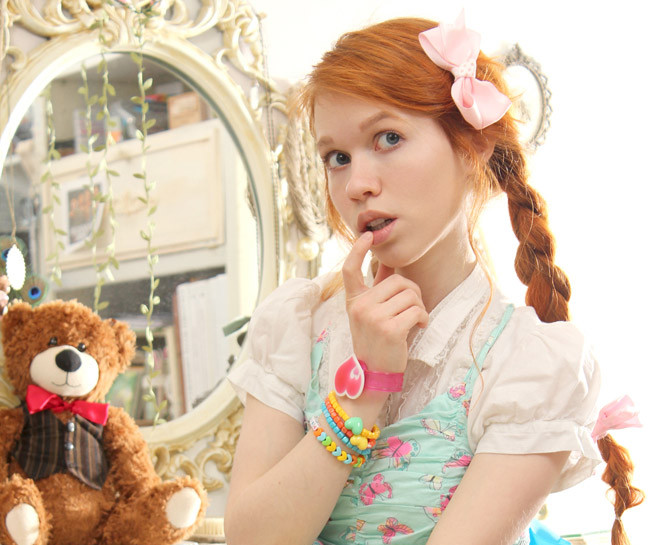
A “Little” in relation to age-play is an adult who role-plays as being older than diaper-wearing ages, yet younger than teenage years. The lines between AB/DLs and Littles, as well as the lines between Littles and Middles are quite easily blurred because a Little, in simple terms, role-plays somewhere in between AB/DL and Middle styles of age-play. Littles generally do not use infant or toddler paraphernalia, although the use of these items by a Little is not unheard of. Typically, Littles gravitate more toward older activities and clothing styles, such as grade school associated clothing, dolls, higher level coloring books, stuffed animals, dress up, action figures, toy cars and trucks, etc. Being a Little generally involves a slightly more verbally sophisticated level of communication with the caregiver and provides for more boundary testing. Littles are usually more independent than AB/DLs while role-playing, and this can in some cases provide a situation that involves even more patience on the part of the caregiver.
“Middles” are adults who role-play as teenagers. Some activities enjoyed by your average Middle include going to parties and concerts, skateboarding, going to the mall, listening to music, reading, writing, and creating art. Middles typically still play with toys whilst age-playing, but rather than dolls or pacifiers, these are generally older toys such as suction-cup dart guns, paint-ball guns, skateboards, etc. There is often an increased interest in electronic devices such as laptops, MP3 players, tablets, cell phones, and digital cameras. Some Middles cite craving structure while still enjoying their freedom as being their reason for enjoying this particular role.
The term “Caregiver” or “Big” is granted to those who play roles that are traditionally given to adult role-models and authority figures. Some examples of these roles might be as specific as teachers, parents, aunts and uncles, grandparents, babysitters, or nannies, or as general as “designated adult”. Littles and Caregivers do not always define their dynamic with specific titles. Caregivers sometimes create rules for the Littles designed to help the Littles achieve their dreams and goals, grow as a person, and gain life-perspective and confidence. These rules may be as simple as telling a Little not to jump on the couch to teach them respect for personal property and patience, or as specific and fine-tuned as instructing a Little who is an aspiring writer to write at least one paragraph each day as practice, or even telling a Little with body-image issues that they are to say ten things they like about themselves in the mirror each night before bed to boost their self-confidence. Rules can be enforced through various methods, but by far the most popular is spanking. Other examples of repercussions for breaking the rules might be time out, being denied dessert, having a favorite toy taken away, or canceled trips to fun places.
Caregivers are not only there to punish. They are also there to reinforce good behavior by rewarding their Little. Rewards range from physical affection (hugs, kisses, piggy-back rides, massages, etc.) and small gifts (crayons, accessories, foil stars, stickers), to large gifts and trips. Caregivers help to build a Little’s confidence, teach them not to base their self-worth on others’ opinions, teach responsibility, respect, independence, and personal accountability, as well as provide them with a safe place to vent their frustrations and the knowledge that they have someone they can trust fully and rely on in any situation.
In return for this special love, care, and attention, the Little makes the Caregiver feel appreciated, helpful, and loved as well. Many Caregivers want to feel needed and have a long-lasting, positive effect on the lives of those they care about. Age-play gives them a paradigm in which that can be accomplished and properly appreciated. Caregivers fulfill Littles by providing a sense of security, stability, and unconditional love, while Littles fulfill caregivers by helping them to appreciate the small things in life, making them feel instrumental in the positive growth of another individual, and providing them with unconditional love and trust. Put simply, Little/Caregiver dynamics are symbiotic relationships that provide for a deeper emotional satisfaction than could otherwise be achieved by these individuals through a more generic relationship..
The final part on What I like about Ageplay is next!
Images courtesy of Shutterstock
Have an amazing experience or tips you like to share on SimplySxy? Drop us an email at editorial@SimplySxy.com!
 e cases even aggressively excluding it, the adult entertainment industry has not only silently reinforced the misconceptions surrounding age-play, but they have also caused only a small sliver of the age-play spectrum to be visible, making age-players who don’t fit the porn industry’s idea of what an age-player is feel further isolated. I wanted to create adult content that didn’t revolve solely around the marginally-tiny themes that are regarded as “more acceptable” by our closed-minded society. There are so many facets to age-play that are entirely ignored in the industry’s portrayal of it that I simply had to fill the gaps. My goal was to represent age-play in the most honest, real-world light possible so that other unrepresented Littles didn’t feel as though they had to fit a standardized set of guidelines to “earn” the title of “Little”.

 me being sexually attracted to adults. To put it into perspective, I like to use the following example: Joe enjoys seeing his 25 year old girlfriend wear a snakeskin mini-skirt. Joe would not suddenly find a child sexually attractive simply because someone put the child in the same snakeskin mini-skirt. Joe is a cis-gendered heterosexual male who enjoys seeing his girlfriend in lacy bras and thongs. Joe would not suddenly be more willing to have sex with a cis-gendered male simply because that male was wearing a lacy bra and thong. Pedophiles will not suddenly become attracted to adults simply because they are wearing clothing traditionally worn by children in the same way that Joe would not become attracted to a child simply because that child was wearing garb traditionally donned by an adult. If Joe’s girlfriend puts on a onesie and wears pigtails, it will not change the fact that her physical appearance differs greatly from that of a child; it will not change her mental development and life experience. In short, age-playing or not, Joe’s girlfriend is an adult, and pedophilia by definition is sexual attraction to children. This makes it impossible for any attraction to Joe’s girlfriend to be used as an indicator that an individual may suffer from pedophilia, regardless of what she is or isn’t wearing.